
Table of Contents
Buy flower seeds and bulbs here!
As the chill of winter recedes – FINALLY!!!, and the world begins to warm again – FINALLY!!!, spring emerges with splashes of colors: pretty blooms and young green leaves popping up. I’m bringing you a delightful way to engage the children with this beautiful season: a Spring Flowers Scavenger Hunt! This activity not only helps to develop a greater appreciation for nature but also encourages physical activity, outdoor adventures and learning. Scavenger hunts are so much fun!
What is a Spring Flowers Scavenger Hunt?
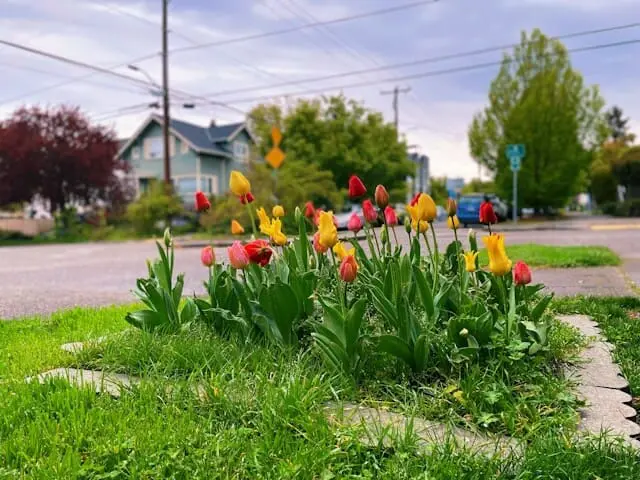
A Spring Flowers Scavenger Hunt is an outdoor challenge where the little participants can search for various flowers in bloom during the spring season. All we have to do is, create a list of flowers to find and perhaps a camera or sketchpad if we want to take the activity any further or trying to involve older children too perhaps. Location can be local parks, botanical gardens, or even our own gardens and neighbouring streets to locate these beautiful blooms. It’s a delightful way to enjoy the fresh air, connect with nature – bonus: screen-free time!
Planning Your Spring Flowers Scavenger Hunt
Choose the Location
Choose a suitable location for your scavenger hunt. Parks, botanical gardens, and nature trails are excellent choices where you can find an array of spring flowers. Like I mentioned, even your own garden and the neighbouring streets can work.
Prepare the List of Flowers to Find
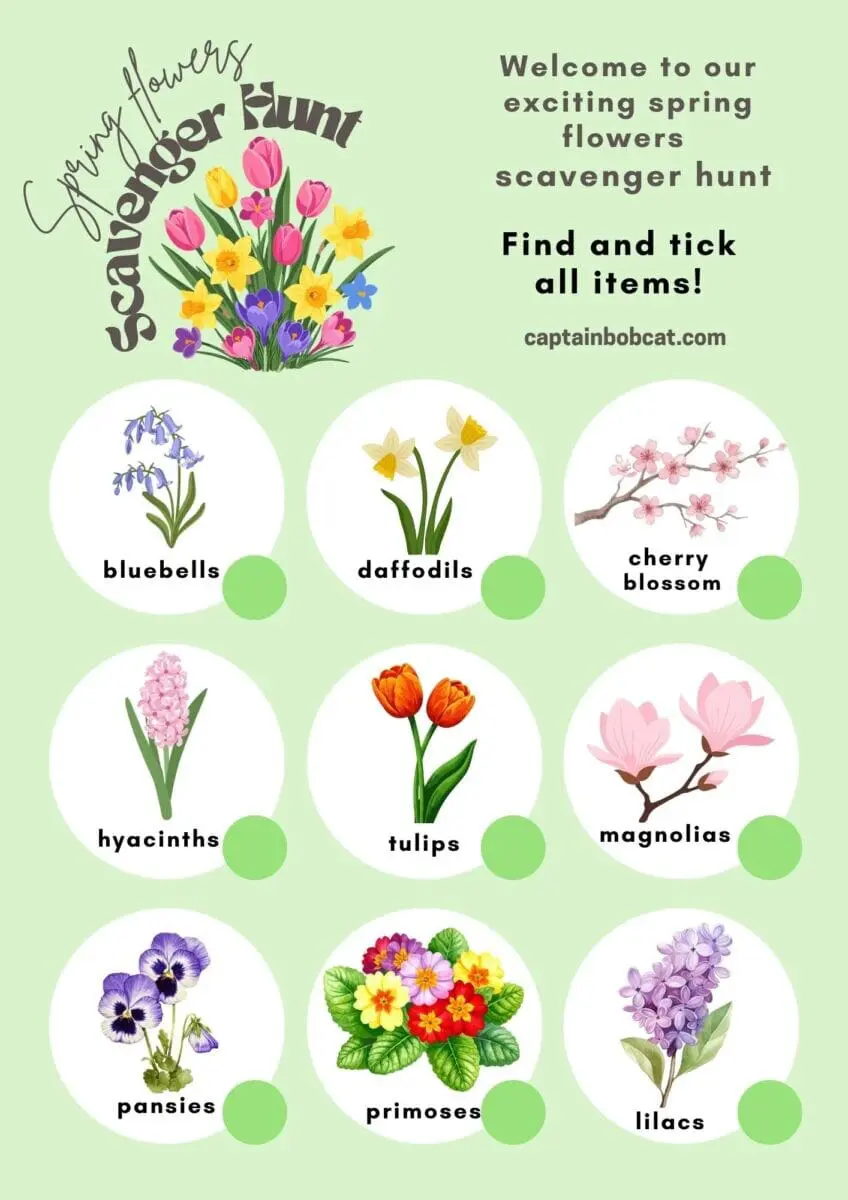
Create a list of flowers that are likely to be found in your chosen location during spring. Feel free to add local varieties or blooms specific to your area, and consider including some wildflowers if you are choosing a wild location. Some popular spring flowers include plus some educational information about them:
Daffodils
They are native to southern Europe and North Africa, and there are over 36 species of them exist! Grown from bulb (which you have to plant in the previous autumn) they are perennials, meaning they will return year after year at the same spot.
Tulips
There are over 100 species of them and they belong to the family of lilies. Grown from bulb (which you have to plant in the previous autumn) they are perennials, meaning they will return year after year at the same spot. What colour of tulips are your favourites?
Hyacinths
Colorful (blue, pink, white) and fragrant spring bulb, planted the previous Autumn to flower in spring. They are part of the asparagus family!
Cherry Blossoms
Cherries are grown all over the world where winter temperatures are not too cold and summer temperatures are not too hot. They do need winter cold though, in order to blossom in spring. What are your favourite ways to eat cherries?
Magnolias
There are 225 species of them and some of them come from the Himalayas! Did you know you can make magnolia syrup with their petals and use it as cordial? It’s delicious!
Buy flower seeds and bulbs here!
Bluebells
A native wildflower in the UK – you can also spot them in woodland areas. They come in blue and sometimes pink and white colours.
Pansies
Mostly annuals (other word is perennial) – so grown from seeds, usually occur in combinations of blue, yellow, and white and have five petals. Also known as viola.
Lilacs
Shrubs and small trees that are part of the olive family. The small lilac coloured four-petalled flowers are arranged in large oval clusters. The fruit is a leathery capsule. Colours range from dark purple to lilac and white.
Primoses
Mostly annuals (other word is perennial) – so grown from seeds. The flowers have a tube with five spreading corolla and may be red, pink, purple, blue, white, or yellow.
Set Up the Rules for Your Spring Flowers Scavenger Hunt
Establish the rules for your scavenger hunt: how many children are participating —will they work individually, or in teams? Will they take pictures of flower finds, or check them off a list you can print – (see my example printable below)? Define the time limit and and prizes for the most flowers discovered. Of course it’s a good idea to reward all children in some way, so think about how could you do that. Everyone who completed the checklist, the best photographs, the fastest team to complete, the most flowers spotted etc.
Educational Elements
Well, as parents, we often feel like we have to add an educational element to EVERY activity. It’s not always recommended, however, sometimes the children just can enjoy the fun! However, in this case it’s fairly simple to hide educational twists to your spring flowers scavenger hunt by including interesting facts about the flowers on your list. They will learn how to identify the different flowers, name of them, how to spell them, understand their ecosystems, and gain insight into the importance of conserving native plants and habitats.
Buy flower seeds and bulbs here!
Make a Day Out of The Spring Flowers Scavenger Hunt
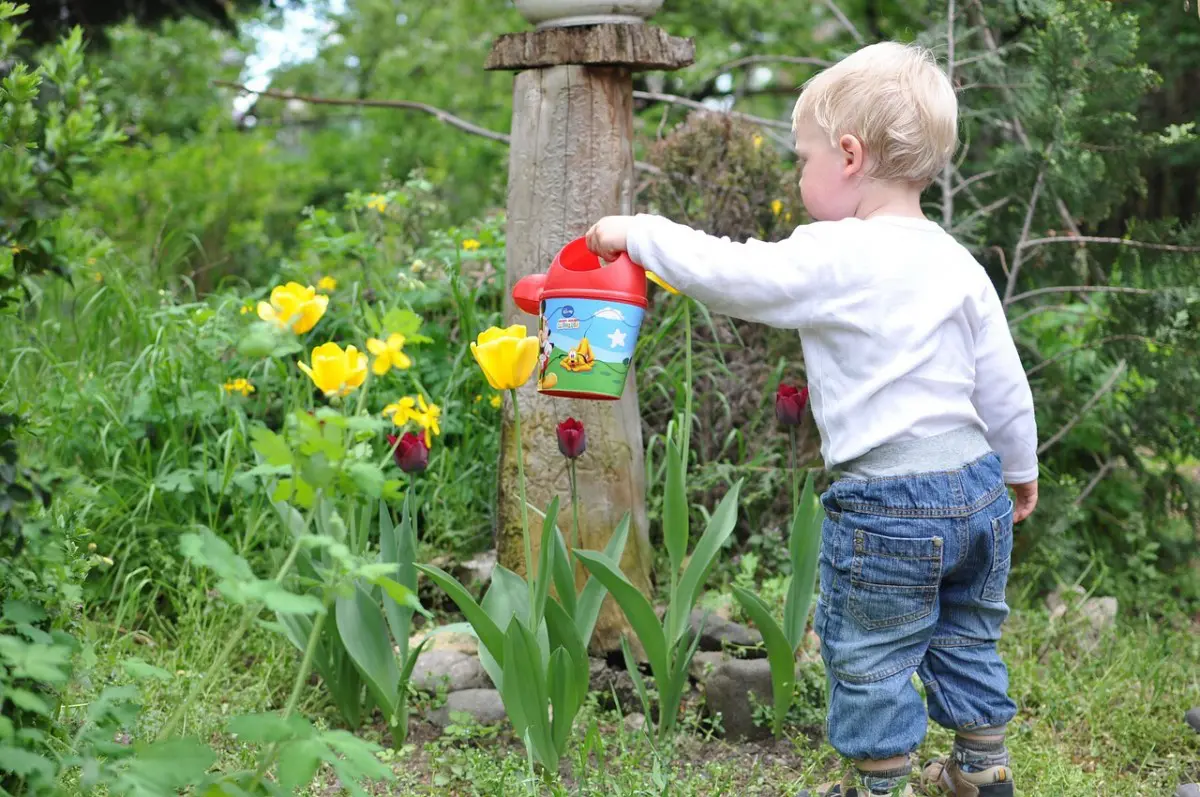
You can turn your Spring Flowers Scavenger Hunt into a few hours of fun: a spring picnic spot can serve as a perfect space for lunch or stopping for snacks. Take magnifying glasses to examine flowers closely, the pollinators around, and other critters. Hand out little notebooks for drawing.
Celebrating the Findings
After everyone has finished, gather back at your starting point for a celebratory wrap-up. Share stories about the different flowers discovered and the fun experiences had during the hunt. If you’ve brought refreshments, enjoy a spring picnic while discussing favorite moments.
To further connect everyone with nature, consider planting a flower or a tree together as a lasting memory of your adventure. This not only beautifies your chosen location but also contributes to a greener ecosystem.