
Table of Contents
I just recently published a guide to edible garden flowers in the UK and Europe and since I’ve been experimenting with edible flowers and petals, plus the magnolia trees are in full bloom, I thought I’ve got to try making these beauties into something edible. I love magnolias so much, they are one of the most beautiful blooms there are and they bloom in March and early April, so a true messengers of the arrival of spring. I knew magnolia flowers are edible and I’ve read a lot of articles using them in recipes.
Which Magnolias are Edible?
First of all, basically all magnolias are edible as there is no known toxicity to magnolia, unless you are allergic to it, of course. There are many varieties that are great for culinary purposes:
- Magnolia Liliflora (Lily Magnolia)
- Magnolia x Soulangeana (Saucer Magnolia)
- Magnolia Grandiflora (Southern Magnolia)
- Magnolia Coco (Coconut Magnolia)
- Kobus Magnolia (Magnolia kobus)
The colour of the petals is also an indication to their flavour:
- Dark pink or fuchsia coloured magnolias tend to be taste as gingery or even chilli-like
- Pink with white blossoms tend to me gingery with flavours of cardamom
- White magnolias taste more lemony and subtle, sometimes floral
Cooking with Magnolia Blossoms
There are a few different of ways to eat magnolia petals and they can work well in a variety of dishes: savoury or sweet. They can be eaten raw in salads, pickled, dried and powdered, or turned into a syrup, sauce, pickled and as a tea.
One of the most popular ways to enjoy magnolia blossoms is to pickle them and serve them as you would serve pickled ginger.
Magnolia Syrup Recipe
Learning the colour coding of the blossoms, I chose mainly dark pink petals – Lily Magnolia (from the neighbour’s garden – thanks Pat!) and a few pink-white ones to balance it in flavours. I love a ginger cordial and I hoped the flavour would be similar to the spiciness of the ginger.
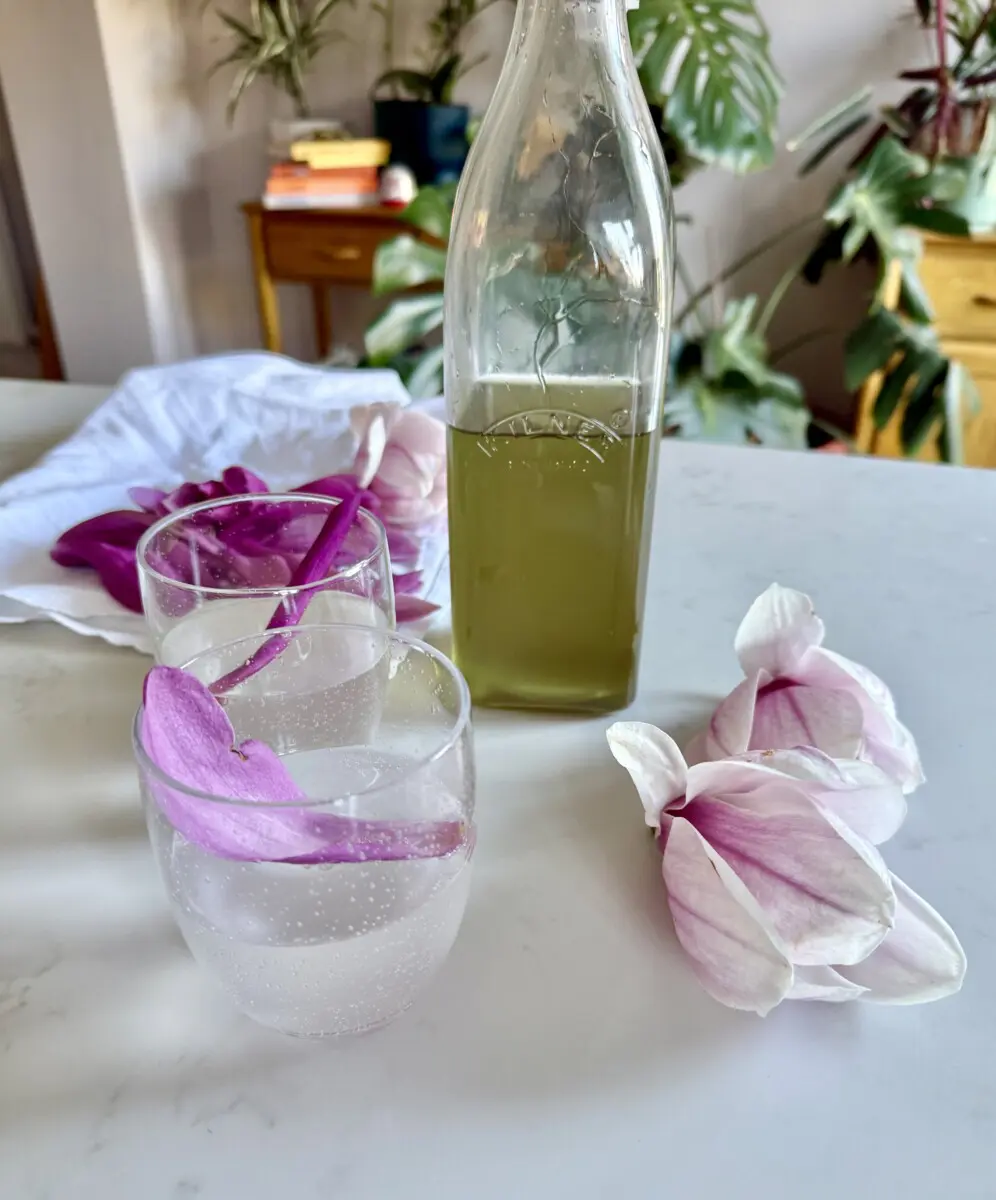
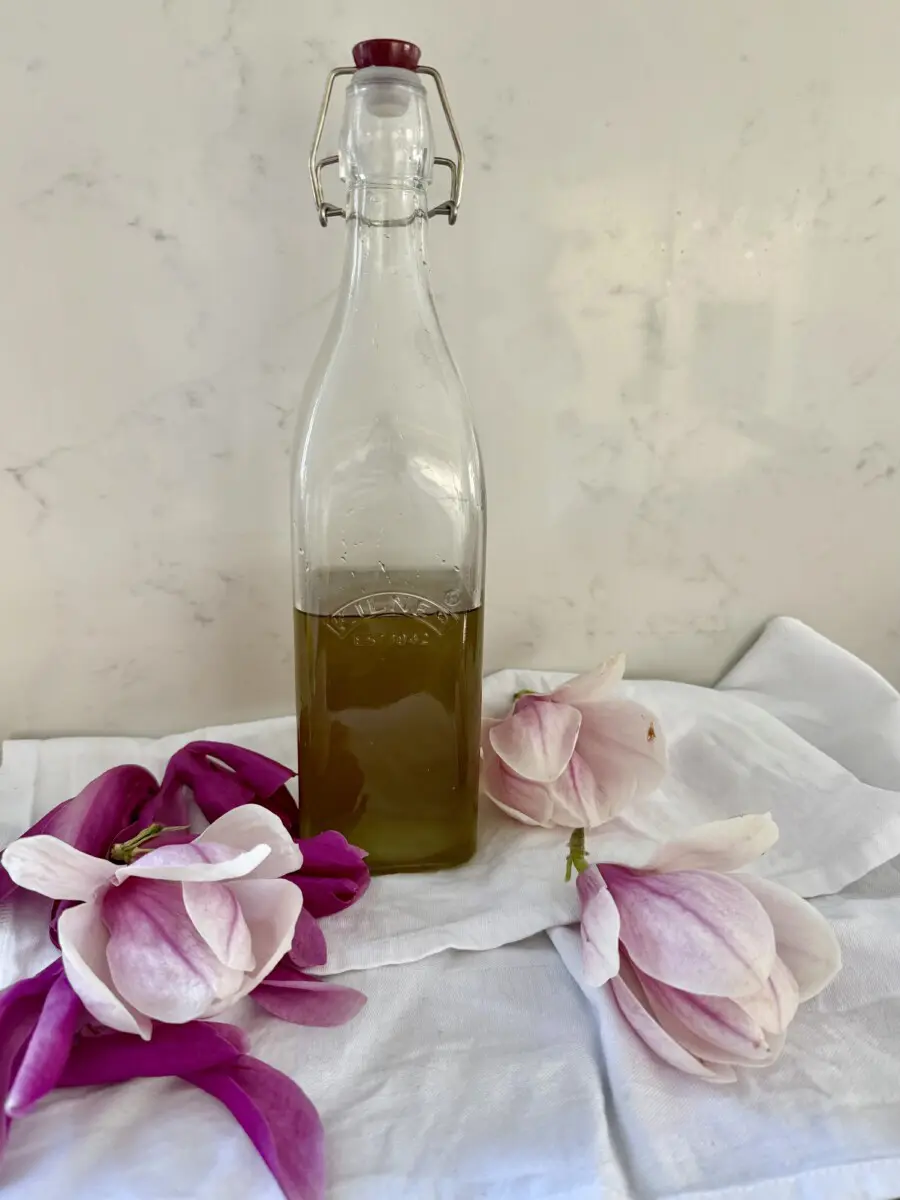
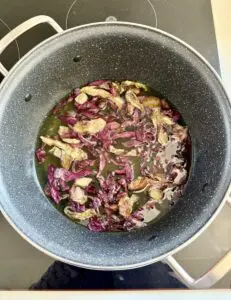
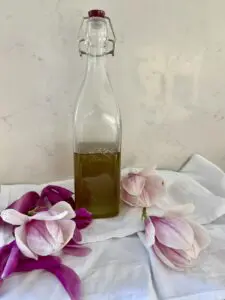
I was right and the beautiful dark pink petals gave me a a spicy, gingery-type of syrup (which can also be used as a cordial), however the syrup turned green boiling the dark pink petals! Interestingly, it didn’t matter when adding the syrup to sparkling water: it turned light pink again! The children loved this.
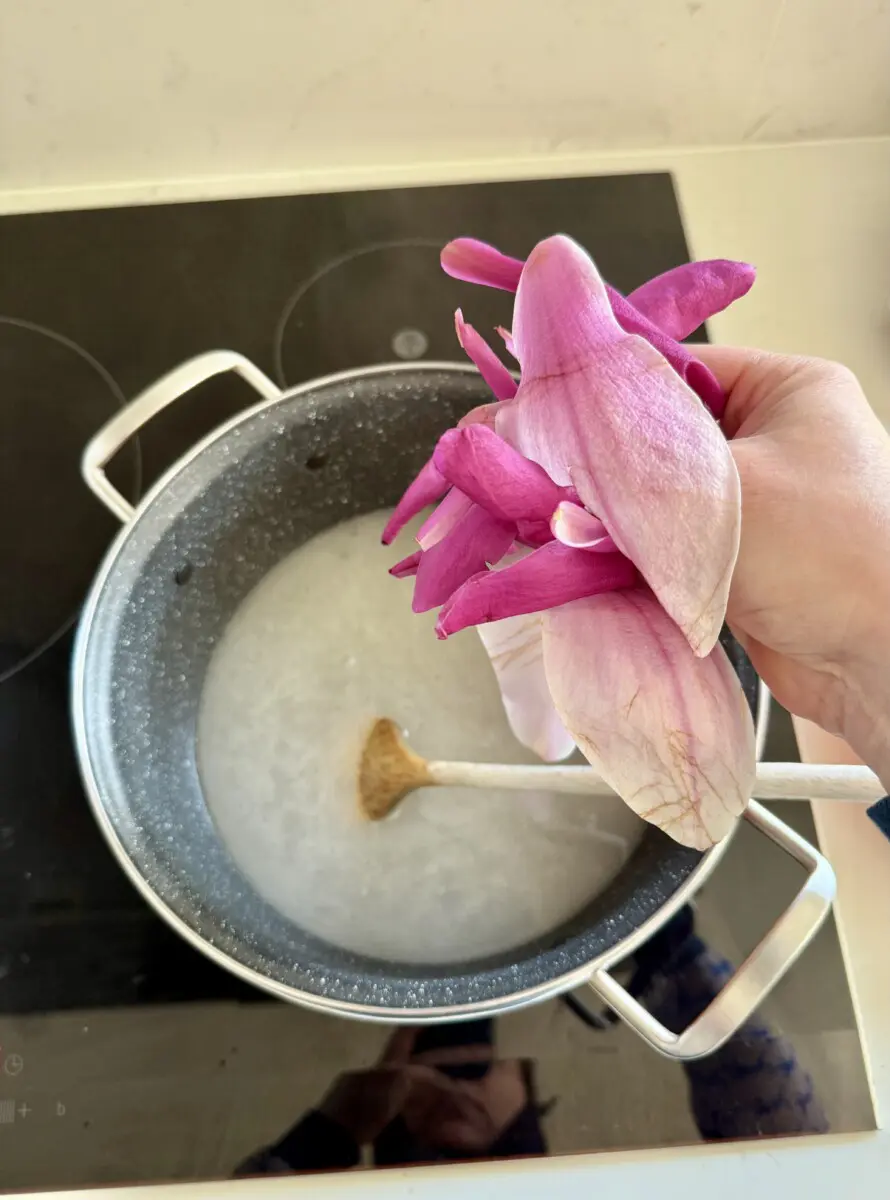
Making the syrup is very straight forward, just measure out equal amount of water and sugar for every 50g petals (that’s about 4 handfuls) and this will give you about 1/4 of a litre. Just heat the water and mix the sugar is first, until the sugar dissolves. Add the petals and simmer for 20 minutes – then strain and pour the syrup into sterilised bottles. Keep refrigerated.
Magnolia Syrup Uses
It can be used in beverages, such as cocktails, iced teas, and lemonades, enhancing their aromatic profiles. You can also drizzle it over pancakes, waffles, or mix it into yogurt for a delightful breakfast treat. Magnolia syrup also works well in marinades and salad dressings. For desserts, it serves as an excellent topping for ice cream or adding it into cake and pastry batters.
Magnolia Flower Syrup
Ingredients
- 50 g magnolia petals
- 300 g caster sugar
- 300 ml water
Instructions
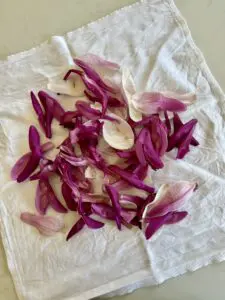
- Separate the petals from the core and discard all the ovaries and everything else - we just need the petals.

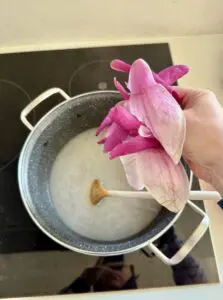
- Add the water to a large pan and bring it to boil. Turn it down to low temperature and add the sugar when it's just simmering. Add the sugar and stirring it let it dissolve.Add the magnolia petals.
- Let the petals simmer on very low temperature for about 20 minutes, almost as if you just want to infuse the syrup. Stir it occasionally.
- Strain the syrup with a sieve, straight into a sterilised bottle. Let it cool.
If you liked this recipe, check out my other vegan recipes:
Vegan Chocolate Sponge Cake With Amarena Cherries