
Table of Contents
Watching my dad gardening all his life – and now following his footsteps. Well, compared to his lifelong expertise as an agricultural engineer, I will be forever a novice but I’ve learnt a few things from him and now putting that knowledge into use in my own garden. One principle that I always liked that you don’t have to give up beautiful plants for an edible garden and vica versa. They can live together just wonderfully: flowers and vegetables. However, if you want to separate them and still get a little more out of your gorgeous flower beds – it’s also possible. And this is because a lot of flowers are edible. Indeed, there are thousands of edible flowers on the planet. In this blog post, we will focus on the ones we can plant and are native or cultivated for hundreds of years in the UK and Europe. So here’s a guide to edible, decorative flowers you can plant in your garden.
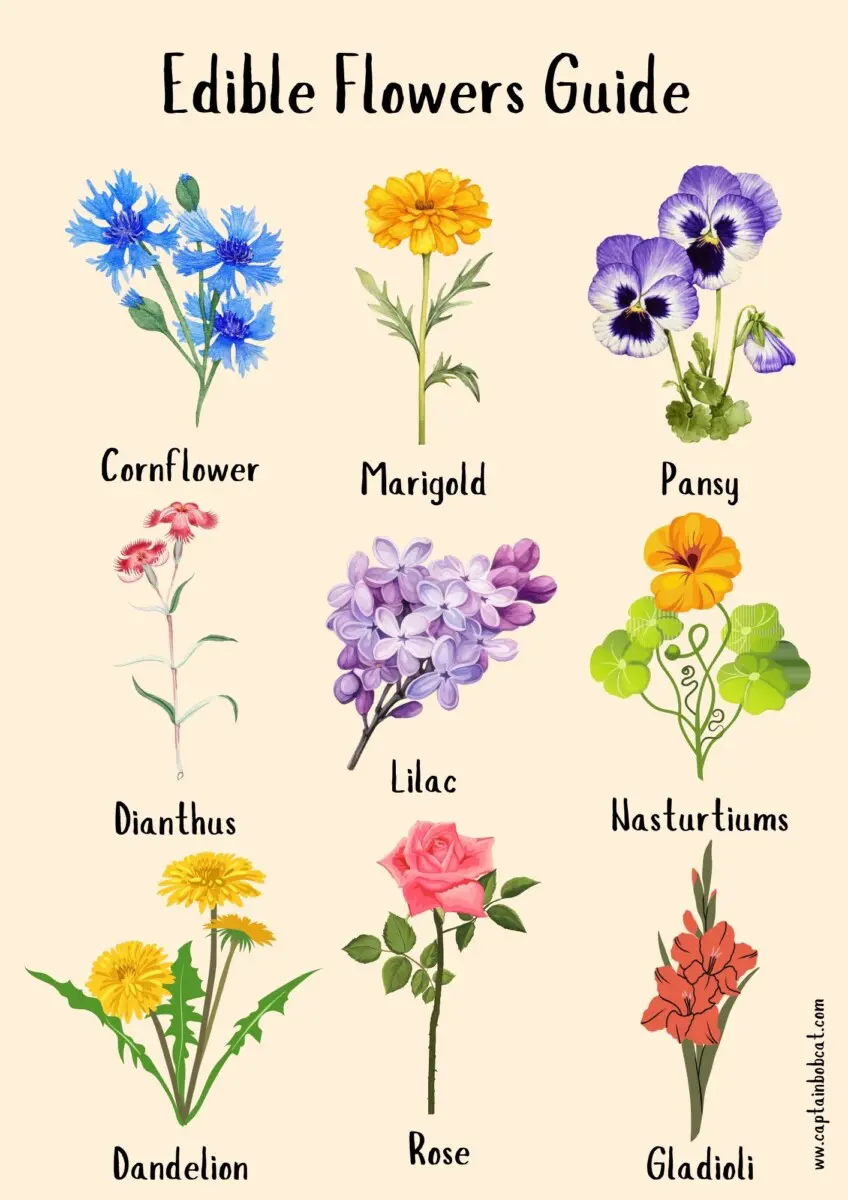
Pansy
Mostly spotted topping salads and smoothies: colourful pansies are popular! Can be eaten both fresh and candied/sugar coated for cakes. Pansies taste pleasant, with a sweet flavour and have a silken texture.
Nasturtium
They are quite popular these days, you can spot them topping salads and buddha bowls in trendy cafes and bistros. It is because they aren’t only very pretty and cheerful but they also have a delicious, peppery taste similar to rocket. Actually, both the flowers and the leaves can be eate and have a similar taste. Even the seeds are edible: pickled, they taste like capers. (Capers are flower buds too… did you know?)
Marigold
This vibrant yellow flower can be used topping and decorating dishes – it tastes fresh and zingy or cooking with it for making dishes more colourful (often referred as “poor man’s saffron”) However, not all marigold cultivars are edible. If you decide to grow culinary marigolds, check the seed packet to ensure the variety is edible. Marigold also have wound-healing properties.
Lilac
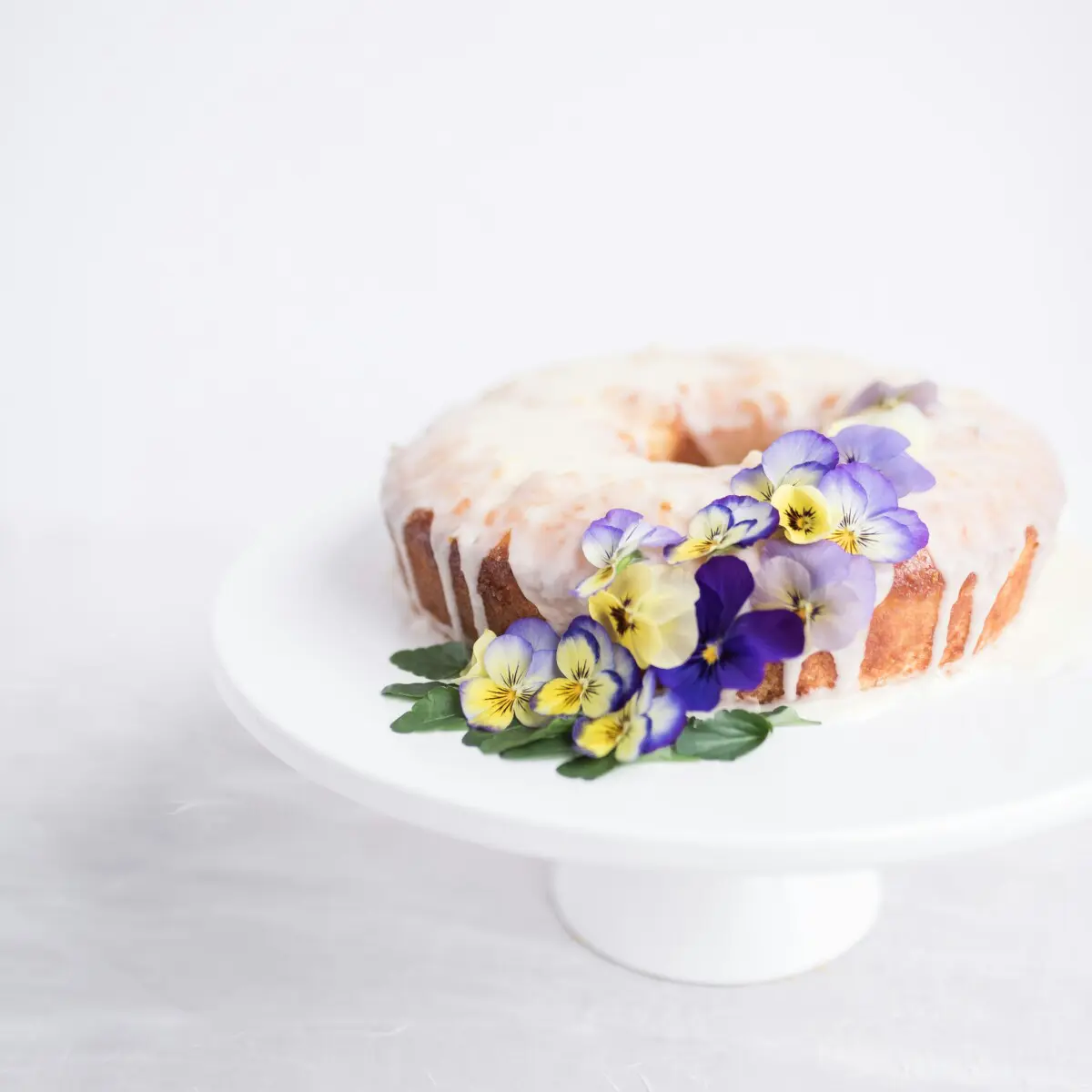
Lilacs are part of the olive family, very short flowering and it tastes just as beautiful and delicate as it smells. Often used as cake decorations and garnishes for drinks, you can also use it to infuse sugar, gin or ice-cream. If you are picking lilacs it is best to pinch off the flower heads when most the individual flowers have opened.
Dianthus
Most dianthus varieties have a pleasant spicy, similar to clover in taste and the entire flower is edible. They are perfect for decorating cakes, garnish salads and pretty smoothie bowls. Not only that, but varieties of the flower have been used for centuries to calm the nervous system and reduce inflammation and swelling.
Nasturtiums
These flowers aren’t just for decorating: they can be part of your leafy salad for their peppery taste similar to rocket leaves. You can also pickle the flowers and great in garlic-based dishes or used in tea. Nasturtium furthermore has antibacterial, antiseptic and antibiotic qualities, so it has many medicinal uses.
Rose
Using rose petals for food decoration and even as food itself isn’t new: people have been making rose jam (here’s my rose petal jam recipe), crystallising them or using as cake decoration for centuries. Their aroma is similar to their scent: once I got to try rose ice cream – and that was very interesting! If using home-grown rose petals, make sure that they haven’t been exposed to any chemicals or sprays.
Cornflowers
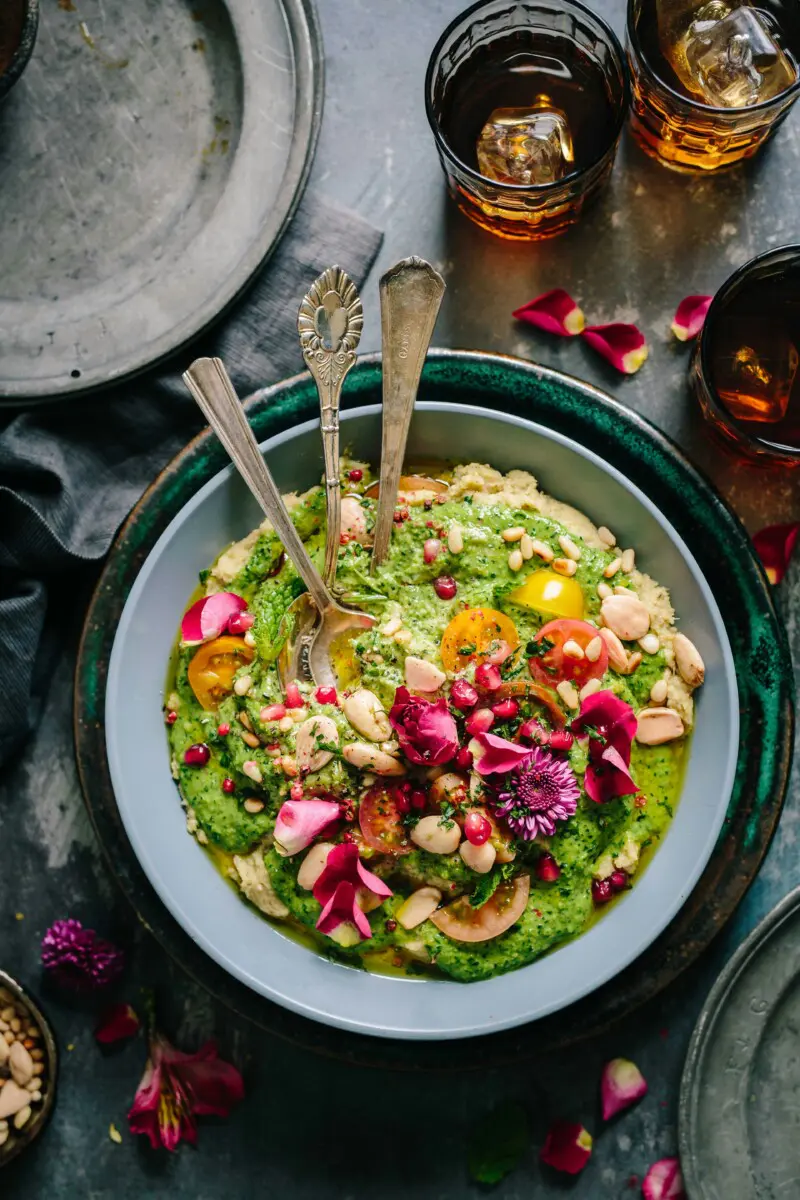
Cornflowers have a slightly sweet and spicy, Slightly sweet, herbaceous and mildly perfumed. They can also be used crystallised or candied, as cake toppers. The dried version of them also very pretty as they keep their bright blue hues so it can be used for cake decorating that way as well.
Lavender
A firm favourite in many English and European gardens, lavender’s flowers and leaves can both be eaten. It provides a pleasant yet slightly bitter flavour. Though most lavender is edible, culinary lavender is especially cultivated for eating, so they have a lot less oil than aromatic lavender used in perfumes or soaps.
Gladioli
Gladioli can be primarily used as decoration for their beautiful and strong colours and infusing drinks. The individual flower petals can also be eaten alone, and have a mild lettuce-like taste, plus all parts of the plant are indeed edible: even the corms can be peeled, sliced, and cooked in various ways.
Dandelion
Dandelions are entirely safe to eat: all parts of the plant, including the roots, leaves, and flowers. Though, technically they are weeds and not flowers (which seems like an injustice) the flowers can be dried and used as tea or even dandelion soup. You can also turn them into “dandelion honey” (dandelion flowers, sugar, lemon and water). The green leaves slightly resemble arugula with their peppery taste so they are great in salads. And because they are pretty and cheerful, they can also be used as food decoration.
Honeysuckle
As the name suggests, the blossoms are fragrant and sweet, so honeysuckle has been used for jams, jellies, cakes and other sweet treats for a long time. The flowers can be used as an attractive garnish, or they can be dried as well. You can even stir fry them!
Antirrhinum
Or as we call it in the UK: snapdragon (because the flower looks like a dragons head). The flowers have a slightly bitter flavour that resembles chicory, so flavour-wise it’s more suitable for savoury offerings but you can create great decorations with it for cakes, cocktails and smoothies too.
Chrysanthemums
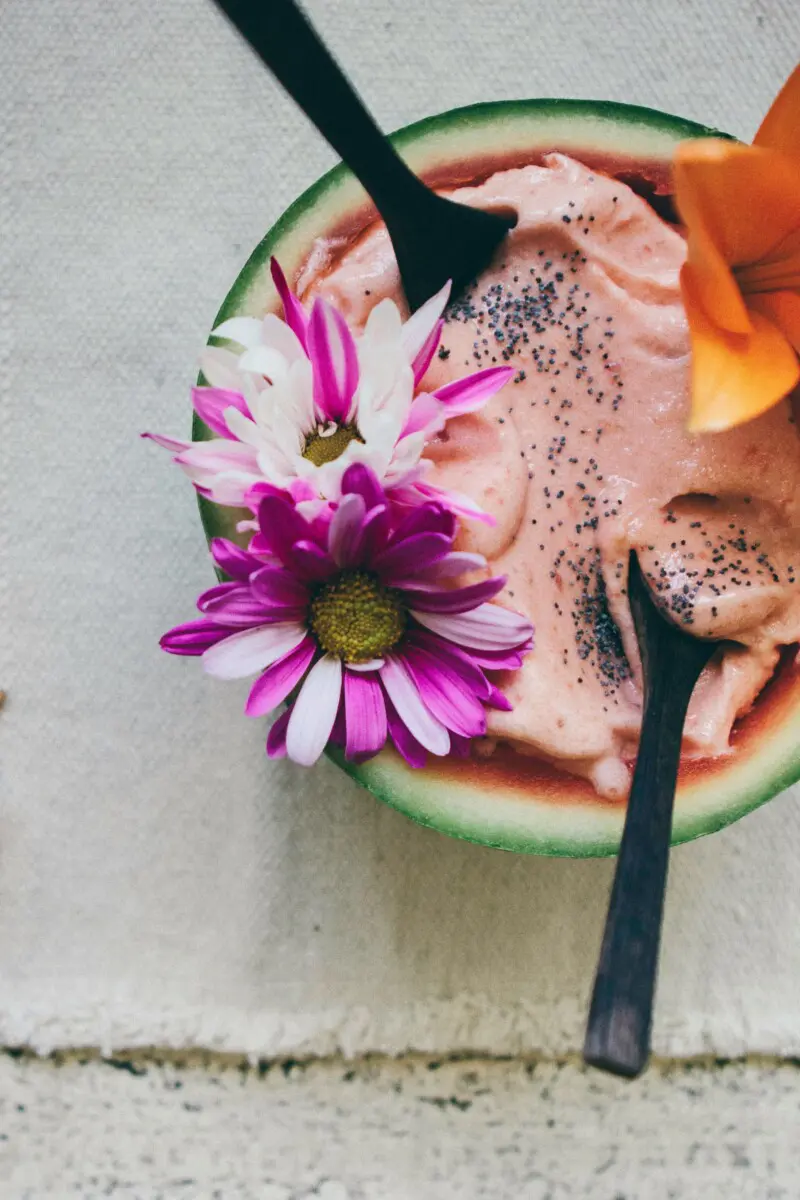
Cultivated for a long time in Europe, all chrysanthemum flowers can be eaten, however some varieties can taste VERY differently. Some are peppery, some much milder, and some even sweet. Used in the Chinese cuisine for example, the leaves edible too, and the flowers make a delightful tea. The stalks are edible too: you can add them to salads.
Viola
Often mistaken by pansies, here’s how to differentiate them: if the flower has two petals pointing upward and three pointing downward, it is a viola. Violas are also smaller than pansies. I’ve even seen these sold in the supermarket in boxes! You can add violas to salads for extra flavour and colour, or crystallise them. Either way, you can add them to cakes, desserts or drinks for decoration.
Tulips
Eating tulip bulbs and petals was born out necessity during times of famine in the last year of World War II in the Netherlands. The petals have a sweet lettuce flavour but with a slight peppery aftertaste and can be used in salads or decorating dishes with them. The bulbs are also edible, however, remove the bitter, yellow core of the bulb as it is poisonous.
Sunflowers
We all know sunflower seeds – but did you know, that the petals of the sunflower are also edible? They can be added to salads or used to make tea. Can be used to add flavour and texture to different dishes, even cordials and butters. They have a bittersweet taste. Also, the unopened flower buds can be steamed in the same way as you prepare the artichoke.
Allium
You can eat the leaves and flowers in a salad and the leaves can also be cooked in a soup for flavouring. They taste like mild onion, so savoury dishes are the ones you can used them in.
Daisy
They are perfectly edible, but pretty tasteless. For this reason, they can decorate any salad or even desserts. Just make sure you are picking them right before you use them as the petals close up fast after picking, you only have a few hours window.
Gardenia
Gardenia has an intensely fragrant, beautiful white/cream blossom that can used for decorating dishes. They have been cultivated in the UK and Europe for a long time. You can make fragrant and sweet syrup, tea, can be consumed raw, pickled, or preserved. However, it can cause mild gastrointestinal upset if consumed in large quantities!