
Table of Contents
I’ve had a bumper crop of herbs this past summer. When we moved into our house 2 and half years ago, I planted a lot of different, hardy herbs that seemingly love their spot and thriving: rosemary, mint, sage and some more – all surviving the winter and growing in size too, the third year coming up. Two years ago, I did preserve some of them but only in olive oil portions in the freezer, using ice cube trays.
Last year I also air dried them. As it turns out, a lot of them can be preserved this way very easily and they stay fragrant and potent durning the winter. Compared to the herb jars bought in the supermarket they are so much more tastier! It could be that they are just fresh into their dried stage and they only stay fresh for 8-10 months, so until next the next crop comes around for preserving. It could be that they are just beautiful, organic herbs I looked after and so they are just better quality.
What is the best way to preserve herbs?
I have tried different methods as well:
- freezing them in containers, simply chopping them up beforehand. This is a great method too, perfect for most cooking methods: soups, stews, pastas, anything but garnish really. It works with most herbs.
- freezing them, but in portions of olive oil, using ice cube tray. This method only works if you use them later in a pan when frying some food they will go with. It works with all types of herbs.
- air drying and hanging up the herbs is my new favourite method: they stay fragrant, fresh and can be used for any cooking methods. However, not all herbs are suitable for air drying
Is air drying herbs easy?
Air drying herbs is the simplest method when it comes to preserving them for the winter months. All you need is a bit of a jute string and a mostly cool, dry and dark place to hang them up.
I always use this method because it’s hassle free, no need to bake them in the oven or air-fryer on low temperature for hours. No need to buy extra gadgets, like a dehydrator. It’s simple and frugal: cost no money at all as it uses no energy. So, in my view it’s got to be the best way! This technique is straightforward and can be done using a variety of herbs.
What herbs can be air dried?
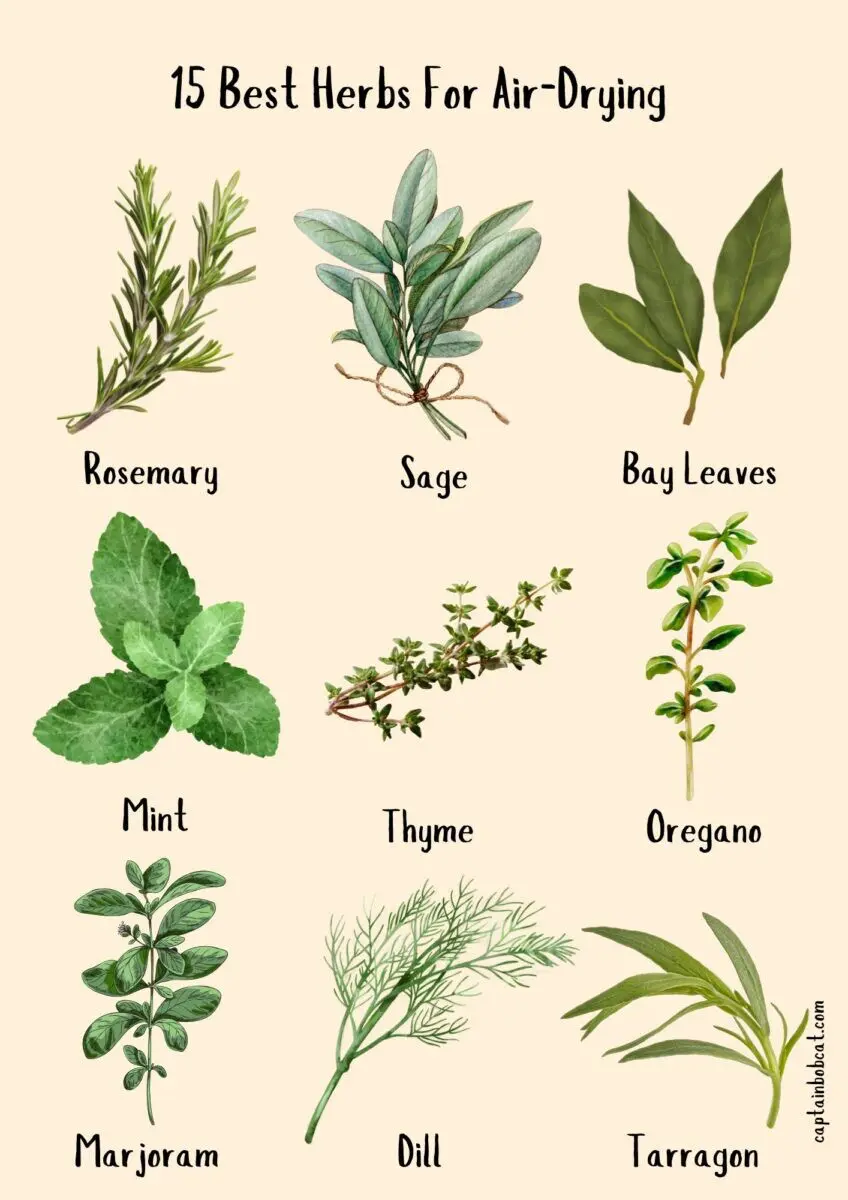
Here’s a list of 15 herbs that are perfect for air drying – most of them you can even grow in your window sill -, along with some tips on how to do it effectively.
Thyme
This hardy herb retains a robust flavor when dried. Its mall leaves dry quickly too. To air dry, cut stems and bundle them together. Hang the bundles upside down in a cool, dark place with good airflow.
Rosemary
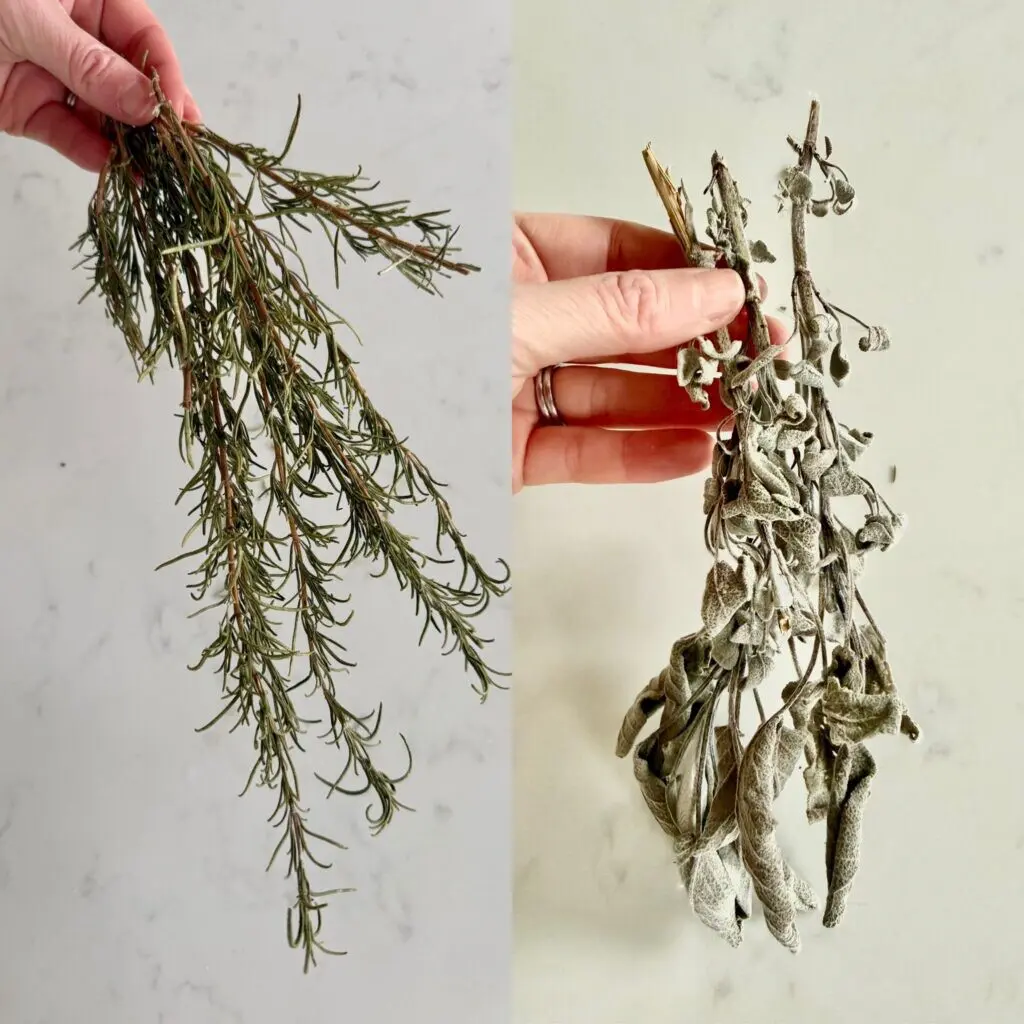
Another woody herb, rosemary has a strong aroma that stays intensive after being dried. It is easy to grow and harvest and it preserves its aroma very well when air dried. It takes a little bit longer to dry because if its woody stems: around 3 weeks. Cut long stems and tie them into small bunches, then hang them similarly to thyme.
Sage
Sage is known for its earthy flavor and velvety leaves that turn silver grey colour when air dried. Cut entire stems and hang them up to dry. Just 2-3 weeks in a dry location will yield wonderful results.
Oregano
Oregano dries well and is often used in Italian and Mediterranean cuisine. It has a slightly bitter flavor when fresh but that softens when dried. Gather about 5 sprigs and hang them in a well-ventilated spot to maintain their flavor.
Basil
While basil dries quickly, it’s best to air dry it in small bunches to prevent mold. While fresh basil is often nicer, dried basil still holds some flavour and great in many recipes. Consider drying it away from direct sunlight to preserve color and fragrance.
Lemon Balm
This citrus-scented herb adds a refreshing flavor to teas and desserts. Bundle the sprigs and hang upside down to dry in a shaded area, it dries fairly quickly. It’s not as potent dries as it is when fresh – but still a lovely flavor.
Mint
Ideal for teas and garnishing, a versatile herb. Mint can be air dried quickly and keeps its cool and refreshing taste. Trim the stems and spread them out in a single layer on a screen or hang them.
Chives
Although the flavor is best fresh, you can still dry chives for later use, it preserves some of the fresh spring onion -like flavor. Cut the green tops, tie them in bundles, and hang them for a week or 10 days. It hasn’t got a long shelf-life as the flavor start to diminish soon, so it won’t last too long after drying.
Tarragon
This herb has a distinct anise flavor, a staple in many French dishes. Air drying is best by bundling the stems and placing them in a dark, warm area. It dries quickly.
Dill
Dill’s feathery fronds dry well, quickly and can enhance pickles and fish dishes. Gather the stems and tie them, then hang upside down to dry. Its delicate leaves crumble easily once dried, but it’s no issue when using it – will just need a clean tea cloth to catch them when placing the dried herb into containers.
Marjoram
This herb has a sweet and mild flavor, perfect for drying. Easy to grow, it preserves its delicate taste, dries quickly, which pairs well with many dishes. It can be harvested and bundled, then hung up to dry.
Cilantro
Although it is more commonly used fresh, cilantro can be dried by tying the stems together and hanging them in a cool, dry place.
Parsley
Dried parsley can be a handy seasoning. In fact it’s probably the most often used herb in my kitchen! Easy to grow and dry. Gather fresh parsley, tie it in small bunches, and dry it out of direct sunlight.
Bay leaves
If you have a bay hedge like many houses do in the UK – you’ll never run out of this herb. This evergreen is a staple herb and you just have to harvest a handful of leaves, air dry them by placing them on a piece of paper. Dried bay leaves keeps vey long!
Anise hyssop
Anise hyssop is a flowering herb, loved by pollinators and is versatile in the kitchen, and has an incredible scent. Use it in tea blends, add the flowers to salads, or create your own potpourri blend for gift-giving.
Tips for Air Drying Herbs
- Choose fresh herbs: Only pick healthy herbs with no signs of disease or pests. The best time to harvest is in the morning after the dew has dried.
- Ventilation is important: Ensure good airflow around your herbs to prevent mold. Hanging them in a well-ventilated area with low humidity is ideal.
- Avoid sunlight: Prolonged exposure to sunlight can diminish the flavor and color of the herbs. Dry them in a shaded, airy spot instead.
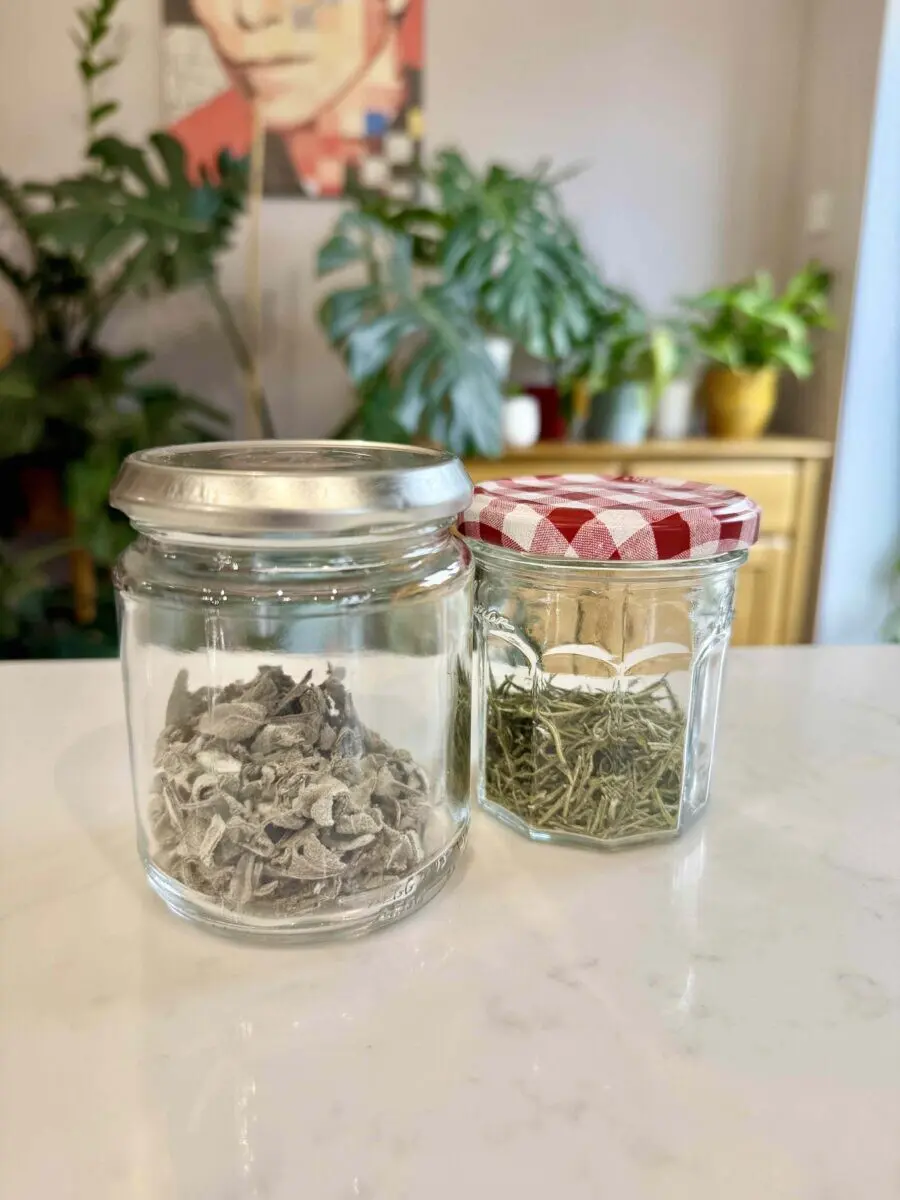
- Store properly: Once dry, store your herbs in airtight containers, away from light and moisture. This will keep them fresh longer.