
Table of Contents
I was making a a spicy soup the other day: roasting a butternut squash to go in there and adding red lentils. Gorgeous recipe, I thought – you can find it here. I just skim read it the day before and I thought, oh great, I’ve got all the ingredients to make the soup. And so the next day, I started to make the soup, expecting the spice section will say some cumin seeds and chilli flakes, maybe some ground ginger. But no, the recipe said a spice mix: Ras el hanout. Well, as it turns out, I did not have the spice blend I normally buy in the supermarket – I ran out of it. Which meant one thing: I will have to make do what I had at home and try to re-create the spice mix myself. Now that I have made my own – I will not have to buy it again.
What is Ras El Hanout
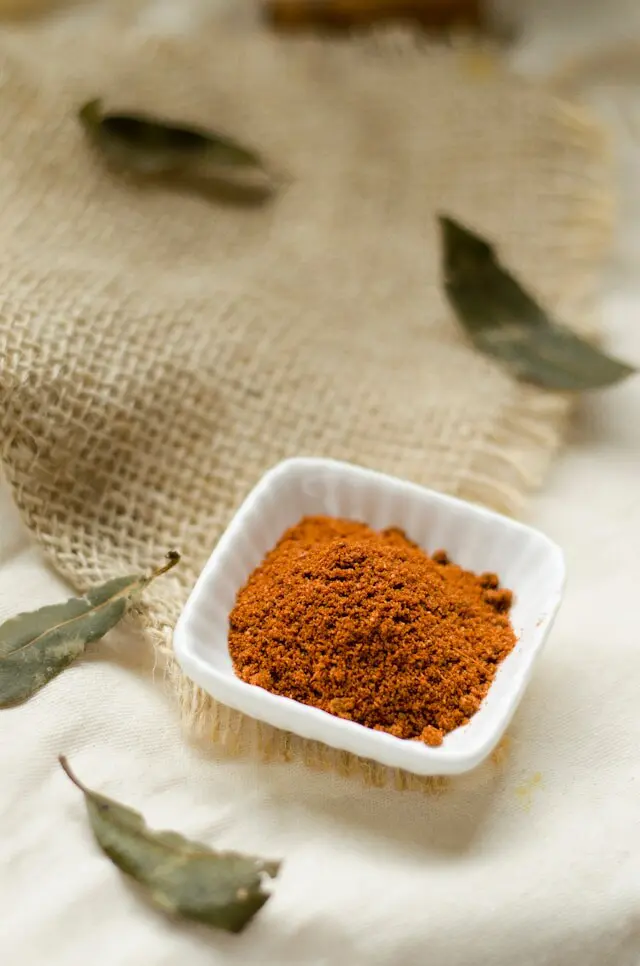
Translated from Arabic as “head of the shop,” is a well-known, yet mysterious North African spice blend that combines an array of fragrant and flavorful spices. It is a pantry staple in Moroccan cooking and the actual ingredients can vary from one recipe to another. It’s a complex spice with lots of ingredients.
Origins of Ras El Hanout
Its origins can be traced back to Morocco and North Africa, to the markets where merchants and spice traders sought to craft the perfect combination of flavors for their customers. The phrase “Ras El Hanout” translates to “head of the shop,” indicating that this blend is made from the best ingredients available, often a mixture that can contain up to 30 different spices. Traditionally, each family may have its own unique recipe, reflecting regional tastes and personal preferences. Common spices include cumin, coriander, cinnamon, and ginger, among others. The blend is used in a variety of dishes, enhancing meats, vegetables, and tagines with its aromatic profile.
Is Ras El Hanout very spicy?
Not typically a hot spice mix, but often chilli or cayenne pepper added to it as well as a decent amount of black pepper so it can be hot too.
In What Dishes Ras El Hanout is used?
It can be used in many dishes!
- soups
- tagines and stews
- as a marinade for grills
- roasting vegetables
- mix with grains
- dips and sauces
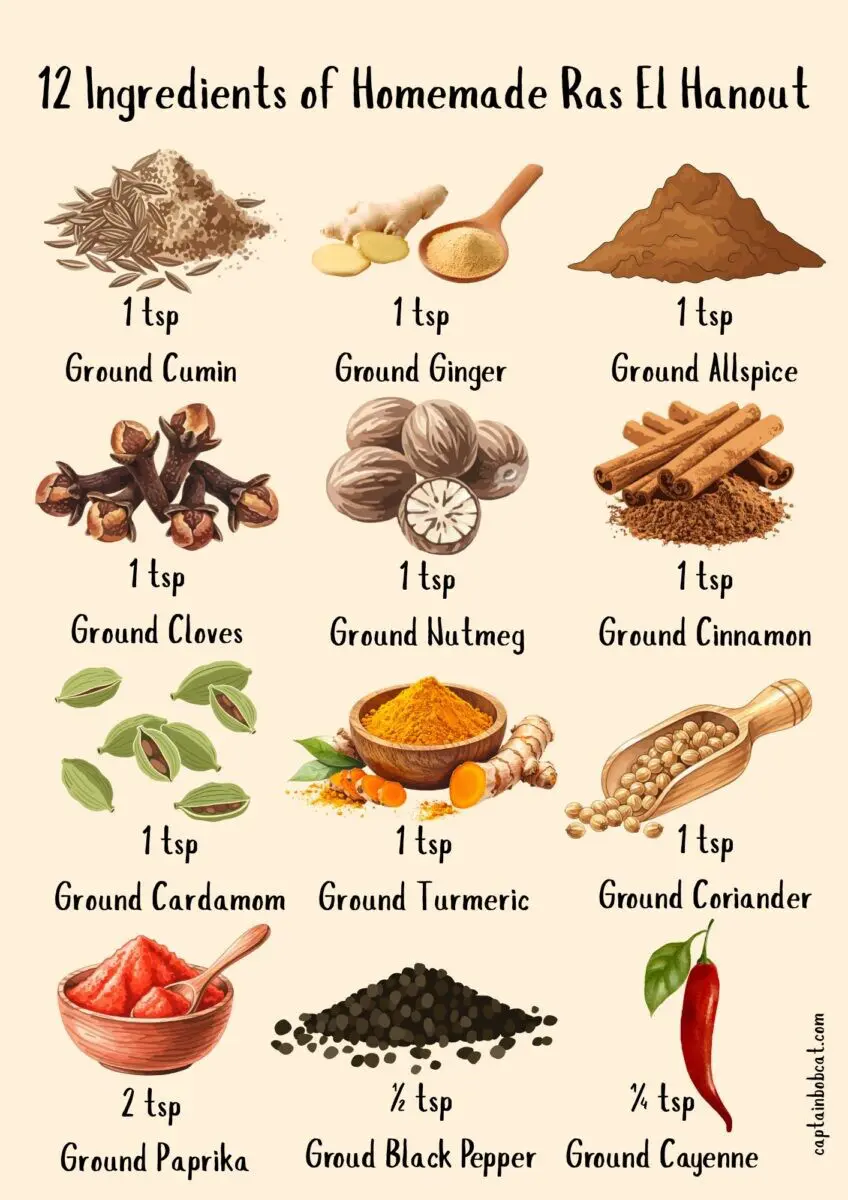
The 12 Aromatic Ingredients of Ras El Hanout
1. Cumin
Cumin seeds are one of the foundational spices in Ras el hanout. They possess a warm, earthy flavor with a subtle hint of sweetness. Cumin is often ground into a powder before being mixed, which makes its rich aroma richer – especially if freshly ground.
This spice is also known for its health benefits, including aiding digestion and possessing antioxidant properties.
2. Coriander
Coriander seeds also feature prominently in Ras el hanout. With their citrusy and floral notes, they add a refreshing brightness to the blend. Ground coriander has a warm, nutty profile that pairs well with the earthiness of cumin.
In addition to its culinary uses, coriander is recognized for its potential to lower blood sugar and improve heart health.
3. Paprika
Paprika not only contributes color but also a gentle sweetness and smokiness, depending on whether it is sweet or smoked paprika. This spice is made from ground-dried peppers and provides a mild warmth that enhances the overall flavor of Ras el hanout. The smoky variant is particularly popular, infusing dishes with a deep, rich depth of flavor.
Rich in antioxidants, it helps combat oxidative stress and supports overall health. The capsaicin found in paprika can boost metabolism and may aid in weight management. Additionally, this spice is known for its anti-inflammatory properties.
4. Cardamom
Cardamom is another spice that enhances the aromatic profile of Ras el hanout. This exotic spice has a sweet, floral, and slightly spicy flavor. In Ras el hanout, it offers a fragrant note that balances the blend beautifully.
Cardamom is known for its digestive benefits and is often used in various desserts and beverages as well.
5. Cinnamon
Cinnamon adds a warm sweetness to Ras el hanout, with its distinctive fragrance and flavor that evokes comforting warmth. The type of cinnamon used can vary; Ceylon (true cinnamon) is sweeter and more fragrant, while Cassia cinnamon has a stronger, spicier flavor.
This spice may also help regulate blood sugar levels and has anti-inflammatory properties.
6. Ginger
Ground ginger is a common addition that provides a zesty kick to the spice blend. Its warm, spicy notes contrast beautifully with the sweeter spices.
Ginger is well-known for its anti-nausea effects and has been used as a medicinal spice for centuries.
7. Turmeric
Adding a bright yellow hue and an earthy, slightly bitter flavor, turmeric is a powerful ingredient in Ras el hanout. Turmeric lends not just flavor but also potential health benefits in every dish it graces.
It contains curcumin, a compound celebrated for its anti-inflammatory and antioxidant properties.
8. Cloves
Cloves bring a warm, sweet depth to Ras el hanout. Their intense flavor adds complexity to the mix. Just a small amount of ground cloves can elevate the entire blend, but they should be used carefully due to their strong profile.
Cloves are also known for their analgesic properties and can aid in digestion.
9. Black Pepper
Black pepper, often called the “king of spices,” adds a pungent heat to Ras el hanout. Its inclusion brings a robust flavor that enhances the other spices.
Black pepper is also known for its health benefits, including improved digestion and enhanced absorption of nutrients.
10. Nutmeg
Depending on the blend’s origin, nutmeg might also be included. Mace, the outer covering of the nutmeg seed, contributes a warm, slightly sweet flavor similar to nutmeg but with a more delicate aroma. Both spices are associated with digestive health and add an intriguing twist to the overall flavor profile.
11. Cayenne Pepper
Adding colour and a spicy kick, cayenne pepper is more than just a culinary favorite.
Packed with capsaicin, it offers numerous health benefits. This compound is known for its ability to boost metabolism, and can help improve circulation and support heart health by reducing cholesterol levels.
12. All Spice
I have included all spice because I used it for my mix to create my Ras el hanout. Typically includes a combination of warm spices such as cinnamon, nutmeg, allspice, and sometimes cloves.
Other spices you can add to Ras El Hanout
Anise Seeds
With their sweet, licorice-like flavor, anise seeds contribute an intriguing layer to Ras el hanout. While not always included, they can enhance the aromatic quality of the blend.
Anise is often associated with digestive benefits and has a history of use in traditional remedies for various ailments.
Mint
While dried mint isn’t always included, it offers a refreshing contrast to the robust spices, prevalent in regional variations of Ras el hanout. The addition of mint brings a cooling effect and brightens dishes, especially those rich in meat or vegetable stews.
Rich in vitamins and antioxidants, mint can aid in digestion, alleviating symptoms of indigestion and bloating.
Rosebuds and lavender
Dried rosebuds and lavender are sometimes added to the spice mix for some floral notes.