
Table of Contents
This is a collaborative post.
Feeling overstimulated often? You’re not alone. Modern life feels overwhelming even at the best of times, but especially when you’re constantly stressing about your job, family, finances, and the state of the world on top of it all. And if you work from home, the problem gets worse. You’re living and working in the same space, often without clear boundaries. Of course, you’re feeling tense and anxious! But you don’t need to be – if you make your home a place that actually supports you and your family’s wellbeing. Now, don’t worry, we’re not talking about remodeling your entire house and turning it into some kind of spa retreat. To create a calm, nurturing environment, you don’t actually need that much money or effort – you just need to build a setup that works better for your mental health. Here is how exactly you can do that.
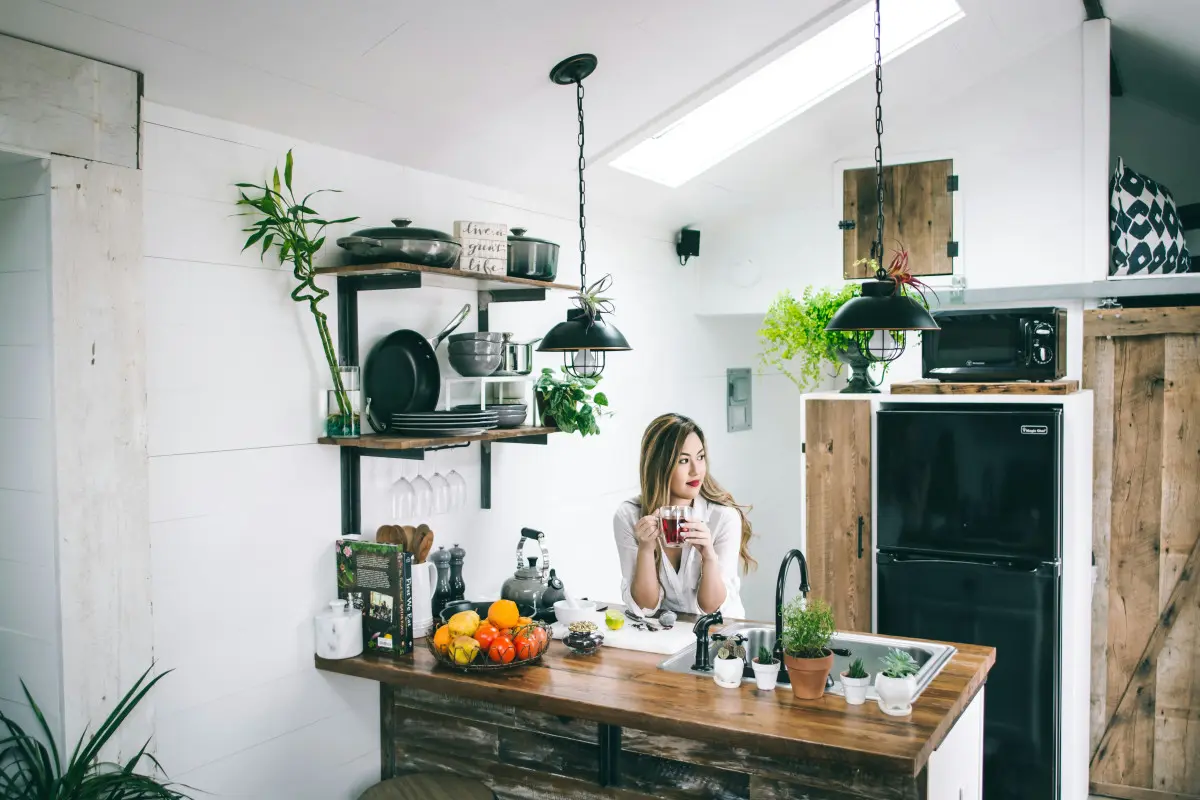
Use Natural Materials Around You
Using natural materials wherever possible in your home is always a good idea, but you don’t need to overhaul your entire space if you’re just starting out. Remember, this is about creating a calm space that supports your physical and mental health, not aggravate it, so don’t aim for perfection.
One of the simplest things to start with is to choose materials that feel real. So things like wood, stone, cotton, wood….in other words, things that don’t off-gas plastic fumes or reflect artificial light like a TV studio.
Then, use them with what you touch most: furniture arms, bed linens, rugs, etc. It’s best to start with these things because when you replace synthetic textiles with breathable ones, it will change how your body physically reacts to the space.
Research supports this claim: one study found that even touching wood can induce calming physiological responses, including decreased heart rate and blood pressure (yep, you read that right).
Again, this doesn’t mean gutting your entire flat or house. A cork bath mat, an unvarnished oak nightstand, or linen curtains can do more than you’d expect.
Create Areas That Give You Mental Boundaries
Open-plan living is great until you’re eating dinner next to a work project and falling asleep three feet from where you had a tense client call. If your space is pulling double (or triple) duty, it’s best to define zones, even symbolically. You don’t even need walls (but it’s great if you have them). You can use a room divider, a rug, or even a change in lighting temperature to mark transitions.
Cooler light for work is great, while warmer tones are perfect for rest. Even such a subtle change can help cue your brain to switch gears. And the same goes for scent. Essential oil diffusers not only smell great, but they can also help anchor routines.
For example, lavender or vetiver in the evening signals wind-down time, while citrus in the morning gets your brain firing. You can also use the former in your bedroom and the latter in your workspace.
Incorporate Mindfulness Without Making It a Production
Mindfulness doesn’t need to be performative or plastered all over a vision board in order to work. You just need moments that invite you to notice your body and environment instead of scrolling. That could be a five-minute break with your coffee on the balcony or a quiet corner with nothing but a floor cushion and soft light.
What’s key here is consistency. Daily rituals help re-regulate your nervous system and support long-term wellbeing. As for the how, it’s flexible: ten minutes of box breathing, reading your favorite book before bed, guided meditations from a favorite app, or even calling a wellness provider for guidance.
Whatever works for you personally. And yes, even something like a short session with a trusted spiritual advisor can help here, especially if you’re working through emotional weight.
Some find that the advantages of psychic phone readings lie in that very convenience: they provide insight without needing to leave your space. It can be a good way to check in with your emotional wellbeing, especially if you prefer intuitive guidance over clinical paths.
Keep Routines That Tell Your Brain It’s Safe
Your brain handles stress better when it knows what’s coming next, a.k.a. when you know (even subconsciously) you’re safe. This is why it’s so important to have daily and weekly routines that work for you.
Start with wake-up and wind-down anchors. Keep them simple: sunlight first thing, no screens an hour before bed, meals at regular times. You can also build in low-stakes rewards.
For example, a short walk after lunch, a phone call with a friend on Thursdays, or watering your plants every Sunday. These are all small rituals, but they carry weight because they tell your brain, “This is familiar. I know what to expect.”
Do this for a few weeks, and you’ll notice you have fewer racing thoughts and you sleep better.
When Buying Things, Focus on Comfort Over Looks
Finally, we recommend ignoring what looks good in magazines and simply buying things that make your day easier and better (and ideally more eco-friendly). In other words, if, say, a chair looks great but makes your back hurt, it’s a bad fit.
Sure, aesthetics can support calm, but don’t mistake style for serenity. The goal is to create a comfortable, peaceful space for you and your family, so choose function first, looks second (or third).
After all, you’re not aiming for a perfect home. You’re aiming for one that makes life easier to manage. That’s more than enough.