
Table of Contents
Want to completely transform your room without breaking the bank? There’s one simple home decor element that can instantly elevate any space and make it look like you hired a professional interior designer. Most homeowners think area rugs are just decorative afterthoughts. They grab whatever’s on sale at the local store without considering how it impacts their room’s overall aesthetic.
However, the right area rug can be the difference between a room that feels “thrown together” and one that looks like it belongs in a magazine. In fact, the global area rugs market reached USD 36.5 billion in 2024 and is expected to grow significantly because people are finally realizing how powerful these pieces can be.
What you’ll discover:
- Why Size Matters More Than You Think
- The Color Psychology Behind Perfect Rug Selection
- How to Use Texture to Create Visual Interest
- Placement Tricks That Interior Designers Use
- Common Mistakes That Ruin Room Aesthetics
Why Size Matters More Than You Think
Most people get this completely wrong… They walk into a room, see empty floor space, and think “I need a rug.” Then they buy the first one that catches their eye without measuring anything. They will then end up with a tiny rug floating in the middle of your room like a sad little island. Or worse, you get something so massive it overwhelms the entire space.
The secret? Follow the 8×10 rule for living rooms and make sure your rug is large enough for at least the front legs of your furniture to sit on it. This creates a cohesive look that pulls everything together.
Think of your rug as the foundation of your room’s design. Everything else should build from there.
The Color Psychology Behind Perfect Rug Selection
Colors have a massive psychological impact on how we feel in a space. Research shows that 30% of consumers favor minimalist designs with neutral palettes because they create a calming environment.
But that doesn’t mean you have to stick to boring beiges… Here’s how to choose colors that work:
- Neutral tones (grays, creams, soft browns) create a timeless foundation
- Bold colors can serve as your room’s focal point
- Patterned rugs add visual interest without overwhelming the space
- Monochromatic schemes create sophisticated, cohesive looks
The key is understanding your room’s existing color palette and choosing a rug that either complements or intentionally contrasts with it.
For example, if your room has lots of neutral furniture, a bold jewel-toned rug can add that pop of personality you’re missing. If your space already has colorful artwork and accessories, a neutral rug keeps things balanced.
How to Use Texture to Create Visual Interest
Texture is just as important as color when it comes to creating a room that feels expensive and well-designed. 78% of interior designers now use technology to help clients visualize how different textures will look in their spaces.
Here’s why texture matters:
Smooth, sleek furniture needs something with texture to create balance. Think jute rugs, shag carpets, or anything with a visible weave. If your room already has lots of textured elements (exposed brick, woven baskets, knit throws), a smooth, flat-weave rug can provide the perfect contrast.
The goal is to create layers that make your room feel rich and interesting rather than flat and one-dimensional.
Placement Tricks That Interior Designers Use
Ready for some insider secrets? Professional designers have specific tricks for placing area rugs that most homeowners never think about. These placement strategies can make or break your room’s aesthetic.
The living room formula:
- All furniture legs on the rug (best option)
- Front legs only on the rug (budget-friendly alternative)
- No furniture on the rug (only works with very large rooms)
The bedroom approach:
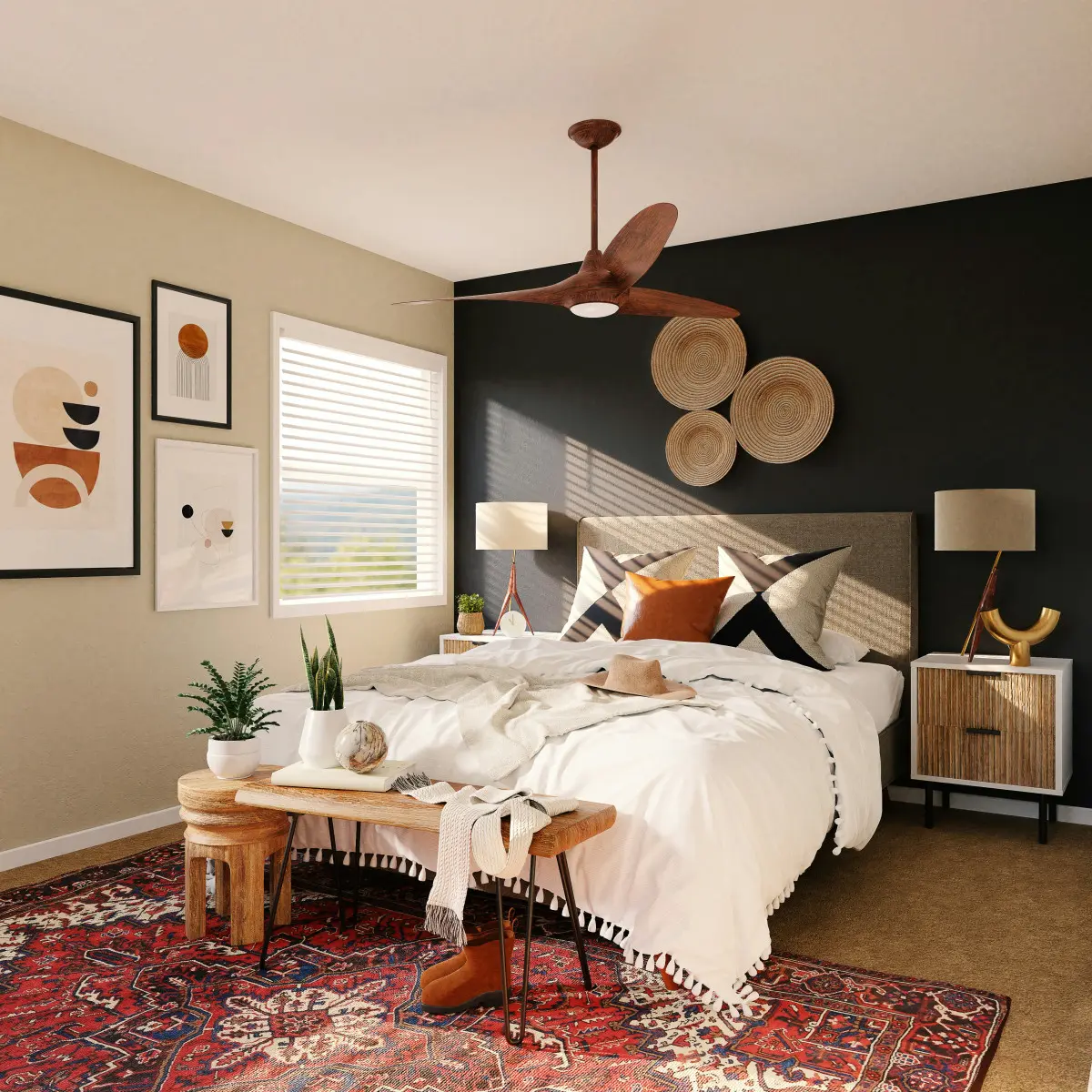
- Large rug under the bed with 2-3 feet extending on each side
- Two smaller rugs on either side of the bed
- One rug at the foot of the bed (if space is limited)
The dining room rule:
Your rug should extend at least 24 inches beyond your table on all sides. This ensures chairs stay on the rug even when pulled out.
Common Mistakes That Ruin Room Aesthetics
Let’s save you from the biggest rug mistakes I see all the time…
Mistake #1: Buying too small. A tiny rug makes your room look smaller and disconnected. When in doubt, go bigger.
Mistake #2: Ignoring your room’s traffic patterns. If you have a high-traffic area, choose a rug that can handle the wear. Delicate materials in busy hallways are a recipe for disaster.
Mistake #3: Forgetting about maintenance. 65% of homeowners prioritize eco-friendly materials these days, but you also need to consider how easy your rug will be to clean.
Mistake #4: Choosing the wrong pile height. High-pile rugs feel luxurious but show footprints and are harder to clean. Low-pile rugs are more practical but might not have the cozy factor you want.
Mistake #5: Not considering your lifestyle. If you have kids, pets, or entertain frequently, your rug choice needs to reflect that reality.
The Psychology of Pattern Selection
Patterns can completely change how your room feels. Geometric patterns create energy and movement. Floral patterns bring softness and femininity. Abstract patterns add artistic flair.
Don’t mix too many patterns in one space. If you have patterned curtains, patterned throw pillows, and patterned artwork, your rug should probably be solid or very subtle.
The rule of thumb? One bold pattern per room, with everything else supporting it.
Investment vs. Budget-Friendly Options
You don’t need to spend thousands to get a rug that looks expensive. But you do need to know where to splurge and where to save.
Splurge on:
- High-traffic areas (living rooms, entryways)
- Natural fibers (wool, silk, cotton)
- Hand-knotted construction
- Timeless patterns and colors
Save on:
- Seasonal or trendy designs
- Rooms with minimal foot traffic
- Temporary solutions
- Experimental color choices
The key is buying the best quality you can afford for the areas that matter most.
Now You’re Ready to Buy Your New Area Rug
Choosing the right area rug isn’t just about finding something pretty…
It’s about understanding how color, texture, size, and placement work together to create a cohesive, aesthetically pleasing space. The right rug can make your room feel larger, cozier, more expensive, or more relaxed – depending on what you’re trying to achieve.
Remember these key points:
- Size matters more than you think
- Color psychology affects how your room feels
- Texture creates visual interest and balance
- Proper placement follows specific rules
- Avoid common mistakes that ruin the look
With the area rug market growing rapidly and more options available than ever, there’s no excuse for settling for something that doesn’t work for your space. Take the time to measure, plan, and choose wisely.
Your room (and your guests) will thank you for it.