
Table of Contents
This is a collaborative post.
Does your bathroom space urgently need a renovation? Or maybe you have fallen in love with the modern wet room designs? Whatever the case, we will accompany you in the process of clearing up some doubts. Below, you will learn how top-notch shower trays vary from each other and what it means in practical terms.
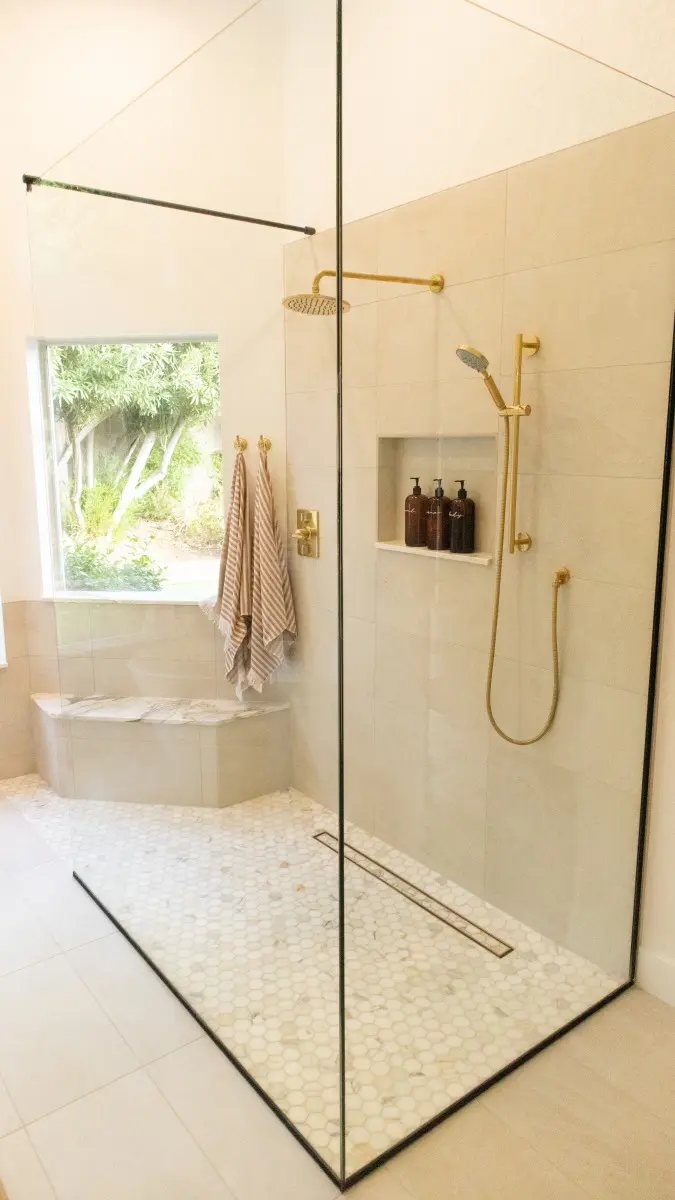
Bathrooms with seamless shower trays
Seamless shower areas are very fashionable. They look minimalistic and provide comfort in a safe and practical way. It’s easy access for everyone, especially for the elderly or those with reduced mobility. Open wet rooms with 1200 x 800 shower trays, for example, deepen the feeling of space by reducing the visual and architectural barriers of a conventional bathtub. Multiple options of custom-cut tiles support the idea additionally because they allow maximum freedom of designs.
Guaranteed safety
The safety of seamless showers strongly depends on the floor. New materials and manufacturing processes ensure a wide range of non-slip surfaces in line with fashionable trends. And, as it is a wet area, it is important to consider the manufacturing material, since the non-slip properties vary according to their composition. Be sure to choose a product with a certified non-slip guarantee of the highest degree. In order to provide even more safety, consider extra-flat shower trays. They eliminate all possible architectural barriers by being fluently levelled with the floor.
Easy cleaning
Without hard-to-reach areas, the maintenance of a seamless shower tray is extremely simple. The construction of drainage allows water and dirt to flow more efficiently. No steps or other architectural obstacles—that makes washing the whole wet room even faster. A large shower tray takes a lot of water, yet it can be more visible. Wide drainage in the shape of a bar, however, seems to be an elegant solution. It combines both water flow efficiency and aesthetics.
Shower tray materials: characteristics and features
The concept of a seamless shower area is highly recommended nowadays. But, if floor tiles aren’t an option, basins for shower enclosures have a lot to offer too. They can be equally stylish. Nevertheless, the choice of material that provides resistance and safety is especially important.
Resin shower tray
Resin wet room products are a good alternative to consider. A mixture of high-quality substances is the material from which such shower trays are made. Thanks to their plasticity, they allow uniform designs with straight lines and geometry that are fully integrated into floor-level installations. The non-slip surface of resin shower trays remains with its original finish even after using aggressive cleaning solutions. In a warm, soft, and matte texture, this is the material that gives a bit of extra touch to any bathroom design.
Some resin options have an appearance that recalls the roughness of stone shower trays. That provides even more character to the bathroom space, don’t you think? Other products evoke the softness of sand and, in a beige or pearl finish, can transmit a delicate feeling of calm. Such qualities make resin shower trays a top choice in terms of aesthetics.
Porcelain anti-slip shower surface
In terms of practicality, though, porcelain seems to be better. Sanitary porcelain with anti-slip properties is available these days due to special glazing processes. This material offers the highest levels of safety among its more common counterparts. With a slightly rough texture, its surface may have a vitrified glaze, which also ensures total stability against chemical or abrasive agents. Extra-flat drainage installation is also possible. It can be as efficient as an open shower version with just bathroom tiles on the floor. Yet this solution offers more hygiene because of the nature of the material itself.
Acrylic shower tray
Lightweight and easy to install, acrylic shower trays adapt to all types of bathroom spaces. They have high non-slip properties that promote safety when in contact with water and provide a warm sensation to the naked feet. Insulating and resistant, acrylic is the material used to make a decent shower tray. Products made of vitrified porcelain provide less adherence due to their crystallized finish. It can be complemented with anti-slip bottoms, though. Acrylics, on the other hand, improve this property thanks to their satin surface.
Final words
Well, the best of the best solution doesn’t exist. All depend on your particular needs and expectations. A seamless, minimalistic shower area is a top bathroom design nowadays. It can have stainless steel low-profile shower trays incorporated directly into the floor, for example, or a beautiful resin basin that imitates the touch of sand. There are also more practical acrylic products that offer better anti-slip surface properties. All available options vary in terms of aesthetics, safety features, and cleaning. The first one is the least expensive, though.