Table of Contents
The other week, I thought to myself after reading something about blossom end rot and remembering ending up with this disease last summer, I thought I’d do something about calcium intake for my tomato plants. Even though, in the meantime I learnt it, that blossom end rot is a misunderstood tomato problem. The real cause isn’t low calcium, but rather it’s inconsistent watering. Anyhow, I thought a little extra calcium can’t do anything bad and I have lots of eggshells going as my youngest loves her sunny side ups.
The eggshells in our house normally end up in my Reencle composter, like many other food bits. But, similarly to banana peel that I feed my plants with (I make banana peel fertiliser) eggshells can also be used for fertilising plants, and a bit of extra calcium is especially beneficial for tomato plants. It’s an organic fertiliser, most of all, not a synthetic chemical. It’s already likely to be in your kitchen, so you can just use it. Rich in calcium, it helps strengthen the cell walls of plants and improves overall plant health. If you want to prepare your own eggshell powder at home, this guide will walk you through the process step-by-step.
 Why Use Eggshell Powder for Your Tomato Plants?
Before diving into the how-to, let’s briefly discuss why eggshell powder is worthy of your time.
Rich in Nutrients
Eggshells contain about 90% calcium carbonate (approximately 380 mg calcium per gram and 1g ), which supplies calcium to your plants. This is called “lime”. But not only calcium they contain, also other important minerals such as phosphorus, sulfur and essential trace elements such as copper, iron, manganese, zinc, fluorine and silicon.
It’s Cheap
Instead of purchasing commercial (synthetic) fertilizers, you can simply utilize something you would typically throw away (or put it in the compost anyway), so this is a sustainable choice.
It’s Environmentally-friendly
Using eggshells reduces waste and is a natural way to enrich your soil without chemicals. Lime making for agricultural and horticultural use is using mined limestone, so this home made alternative that turns food scrap into fertilizer is a very much zero waster thing to do.
How to Make Eggshell Powder for Your Tomato Plants?
Here’s my step-by-step guide.
Collecting Eggshells
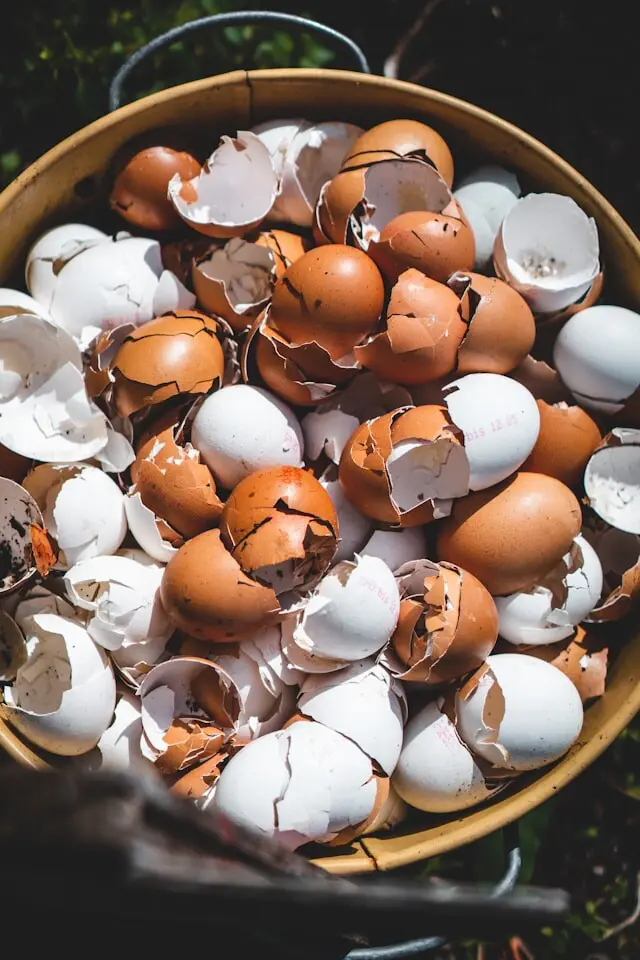
Start by collecting eggshells from your kitchen. Save them in a container until you have enough to make a batch of eggshell powder.
Use Clean Eggshells: After using eggs for cooking or baking, rinse the eggshells under warm water to remove any residue. This helps prevent odors and attracting insects.
Storing the Eggshells: If you can’t use them immediately, store the clean eggshells in a container until you have enough to make powder.
Drying the Eggshells: To prepare the shells for grinding, you need to dry them thoroughly, a day or two in a container will do this for you.
Bake the Eggshells
- Preheat your oven to low temperature, around 220°F/120°C. Spread the rinsed eggshells on a baking sheet.
- Bake them for about 10-15 minutes. Keep an eye on them to prevent burning. The shells should be completely dry and very brittle.
Top tip: you can also do this when using the oven for something else already. For example, if you are baking something anyway and pre-heating the oven, you can use the pre-heating time to quickly put the eggshells in the oven and bake them. Just need to be mindful of the heat and that they don’t burn.
Grind the Eggshells
Once your eggshells are baked, it’s time to grind them into a fine powder. You can use a variety of methods:
Food Processor or Blender: This method is quick and effective. Just add the dried shells and pulse until you achieve a fine powder. Depending on the power of your device, this may take a minute or two.
Coffee Grinder: If you want a finer consistency, a coffee grinder works well. Grind in small batches to avoid clogging.
Mortar and Pestle: For those who enjoy traditional methods, this is a great way to have hands-on control. It may take longer, but you can achieve a fine powder with a bit of elbow grease.
Storing Eggshell Powder
Once you have your eggshell powder, store it in an airtight container to keep it fresh. A glass jar or a plastic container with a tight-fitting lid is ideal. Label the container with the date to remember when you made it.
How to Use Eggshell Powder for Tomato Plants
Now that you have your eggshell powder ready, let’s discuss how to apply it to your tomato plants effectively.
1. Soil Amendment
Mix the eggshell powder into the soil before planting tomatoes. This helps to provide calcium directly to the roots and improves the soil’s nutrient profile.
2. Top Dressing
After planting, sprinkle a layer of eggshell powder around the base of your tomato plants. This can be done every few weeks during the growing season to continually feed your plants. This is a slow release option.
3. Tea Solution
For a quicker calcium boost, you can steep the eggshell powder in water. Combine 1 tablespoon of eggshell powder with a quart of water. Let it sit for 24 hours, then use the liquid as a fertilizer.
4. Mix with Other Fertilizers
You can mix eggshell powder with compost or organic fertilizers to enhance their nutrient content.
Starting Seeds In Eggshells
You can also use the egg shells as growing pod, although it’s a slightly fussy way. Eggshells that have been neatly cracked in two make the ideal growing containers for new seedlings. All you’ll need to do is rinse your eggshell halves to get rid of any egg residue. Then place them in an egg box to hold them upright. Fill them with fresh compost and sow directly into each shell. Care for them as you’d do in any other containers. Once they get too big for their eco-friendly eggshell homes, transfer the budding new plants straight into pots or plant them directly into the ground with leaving the eggshells in place.
Some Extra Tips for Tomato Care
Proper Watering
Ensure that your plants are getting enough water, as inconsistent watering can also contribute to blossom end rot regardless of calcium levels.
Sunshine
Tomatoes need a lot of sunshine, so place them in the sunniest spot in your garden. If you are container gardening, you can move the post around to maximise sunlit hours.
Tomatoes in Containers
Tomatoes are fairly easy to care for and they are happy in containers but they need big containers, because a small pot holds simply less water. A big tomato plant can drink 2 gallons of water daily.
Balance with Other Nutrients
While calcium is essential, ensure that your tomatoes are receiving a balanced diet of nutrients. Consider supplementing with compost or organic fertilizers that provide a well-rounded nutrient profile.