
Table of Contents
If you like drinking herbal tea, just like me (pretty much every evening to relax, a conscious cut down on wine consumption…) you might want to make some space in your garden or even on your balcony, where you can produce your own hers and plants to use for tea. When I was a child, I drank lots of herbal teas my grandma grew in the garden or foraged in the nearby forest. (I’m not going to give you a sentimental story about the emotional connection to herbal teas, nettle-tea in particular which I learned to like.)
You don’t need a big garden or a large balcony to grow herbs for making tea. Windows and patios can work if that’s what you have or a few containers on steps work. What you do need is a desire to grow some tea herbs and a willingness to care for them. Once established, they take very little maintenance, and in exchange will yield fresh herbs for drinking!
Herbal teas are naturally caffeine free, you can drink them straight from fresh herbs and some herbs can be dried too and conserve them for the winter months.
How to Plan Your Tea Garden?
A tea garden is a small, designated part of your garden where you can grow your herbs that you use for herbal teas together. Like with any herbs and plants; you’ll just need sun, decent soil, and a small set of herbs you can pick, dry, and brew into your own blends.
What Herbs and Plants to Grow in Your Tea Garden?
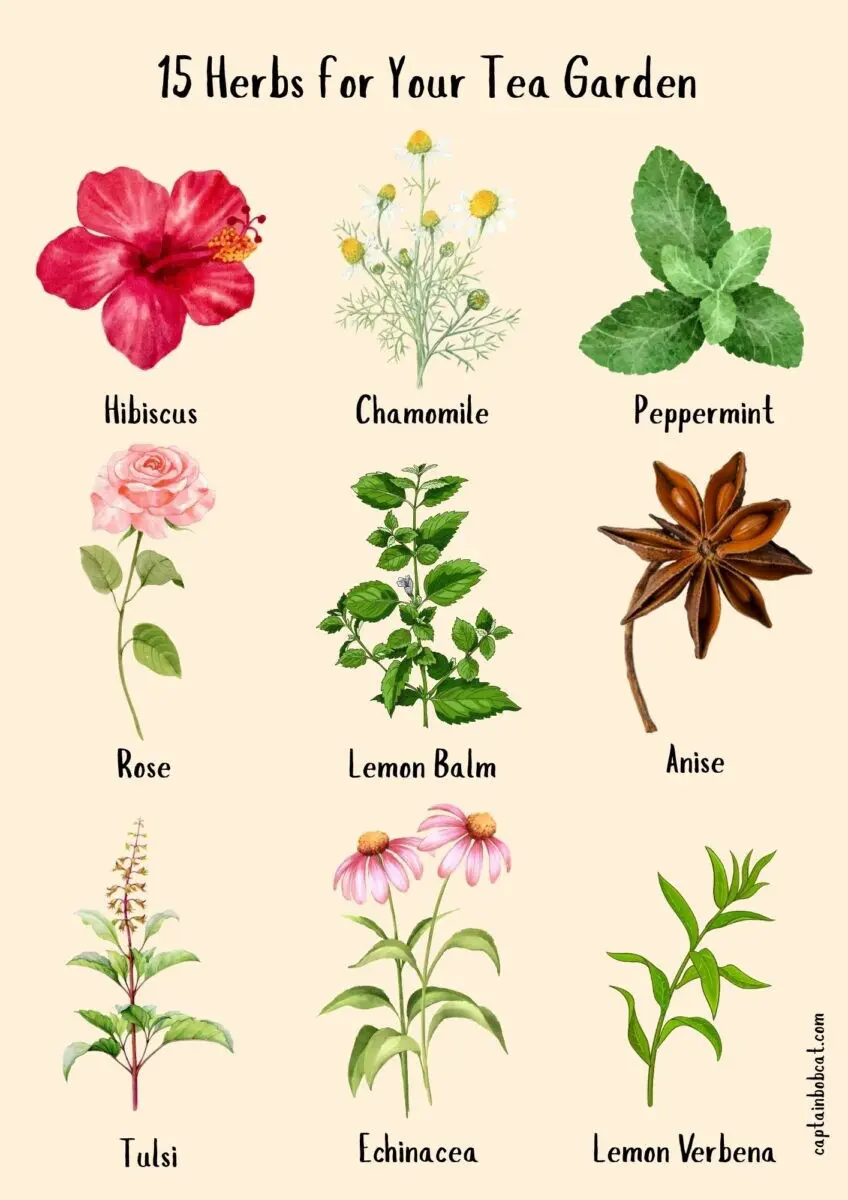
1. Chamomile
Chamomile is one of the most popular herbs for tea. Known for its calming properties, chamomile tea can help alleviate stress and helps to sleep better. The small white flowers are charming and attract beneficial insects like bees and butterflies.
2. Peppermint
Peppermint is a refreshing herb that can be used fresh or dried in tea. Its invigorating aroma is perfect for lifting your spirits, and its digestive benefits are well-documented. Growing peppermint in your tea garden not only provides delicious tea but also contributes to pest control in your garden due to its strong scent.
3. Lemon Balm
Lemon balm is known for its bright lemony flavor and calming effects. It can help reduce anxiety and support digestive health. This herb is easy to grow and can spread quickly, so be prepared to manage its growth.
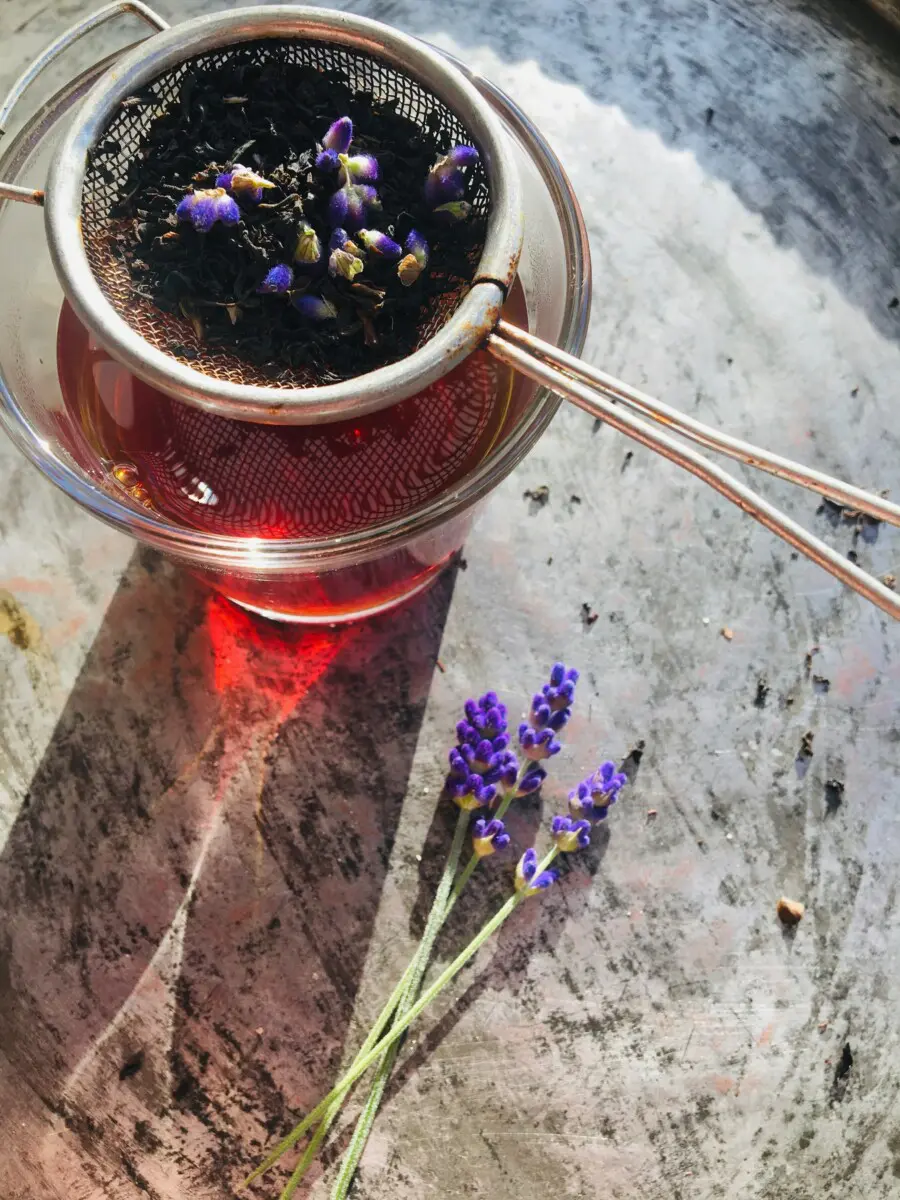
4. Lavender
While lavender is widely recognized for its aromatic and calming qualities, it also makes a unique and flavorful tea. Lavender tea can be soothing and is often used to promote relaxation and helps with sleep quality. Plus, the purple blooms with the indistinct scent covering the garden when in season – it’s every gardeners dream! Lavender needs to be dried in order to use them in herbal teas.
5. Lemon Verbena
Reduces inflammation, soothes nerves and calms stomach. With its lightly lemony flavour it makes a wonderful and refreshing herbal tea. This is plant makes an aromatic foliage, which has a scent of lemon. A pretty plant with delicate pale pink flowers, which appear in late summer.
6. Calendula
Calendula is an all-round medicinal flowering herb, used for all sorts of balms and tinctures – and as herbal tea too. It stimulates lymphatics, reduces inflammation, soothes intestinal lining and mucus membranes.
7. Rosehips
It is rich in antioxidants, vitamin C, and generally support immunity, heart health, weight loss, and skin ageing, the tea is made from the seed-filled bulbs of rose flowers with a bright, slightly tart, fruity flavour.
8. Catnip
Catnip also has human-calming properties, and has traditionally consumed as a warming tea to induce a sweat to shake off seasonal colds, it may help with anxiety, insomnia, and gastrointestinal issues too.
9. Fennel
Fennel brings a sweet, licorice-like flavor to teas and is known for its digestive benefits. Fennel tea can help relieve bloating and promote overall digestive health.
10. Hibiscus
Hibiscus is known for its vibrant red flowers, which not only look stunning in the garden but also make a tangy, refreshing tea. This herb is famous for its potential heart health benefits and can be enjoyed hot or cold. The tartness of hibiscus pairs well with other herbs, making it a versatile addition to herbal blends.
11. Rose
Roses aren’t just for decoration; they can also make lovely tea. Rose tea is often praised for its antioxidant properties and sweet, floral taste. Planting rose bushes in your tea garden will add beauty and fragrance of your space while also providing petals for tea.
12. Echinacea
Echinacea is widely known for its immune-boosting properties. It can be used to make a soothing tea, especially during cold season. The striking purple flowers attract pollinators and make a colorful and long blooming addition to your cottage garden.
13. Nettles
I used to drink (well made to drink) nettle tea in my entire childhood! Nettles may not be the first herb that comes to mind for tea, but they are nutrient-rich and have a mild, grassy flavor. Nettle tea can be beneficial for allergies and overall health. Just remember to wear gloves when handling fresh nettles, as they can sting!
14. Anise
Anise brings a sweet, aromatic flavor that’s often found in baking but can also be enjoyed as tea. Anise tea is known for its soothing properties and can aid digestion. Its unique flavor can add an interesting twist to your tea blends.
15. Tulsi (Holy Basil)
Tulsi, or holy basil, is revered in Ayurvedic medicine for its health benefits. It has a slightly spicy and peppery flavor, making it an excellent option for tea. Tulsi tea can support stress relief and overall well-being, and growing it in your garden brings a sense of tranquility.