
Table of Contents
This is an advertorial post.
In the high-end furniture market, sectional sofas have become a focal point for consumers seeking both comfort and long-term value. Industry data indicate that upholstered furniture accounts for a significant share of household spending, with sofas often ranking as the second-most expensive home purchase after mattresses.
Against this backdrop, the brand Soulfa has positioned itself within the “cloud couch” category, offering made-to-order sectional designs that emphasize durability, material safety, and modular flexibility. Founded in 2015, the company operates as a boutique furniture maker, producing a limited number of units annually while maintaining a direct-to-consumer model.
Soulfa’s manufacturing approach differs from mass-market furniture production. The company reports that each piece is handcrafted in the United States using kiln-dried oak hardwood and high-density foam.
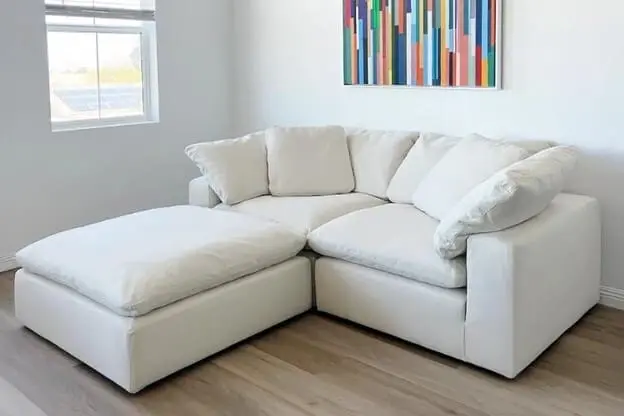
Built for Longevity With Solid Construction and Warranty Support
One of the defining features of Soulfa’s sectional sofas is their structural design. Unlike modular systems that rely on assembly, the company produces sofas as single, solid units. This construction method eliminates the need for tools and reduces the likelihood of mechanical wear at connection points.
Soulfa supports its construction claims with a 20-year warranty, which exceeds the industry average for upholstered furniture. Extended warranties often correlate with higher-quality materials and manufacturing processes. The use of kiln-dried oak is also significant, as this treatment reduces moisture content and minimizes the risk of warping over time.
The company’s limited production model further reinforces its focus on longevity. By avoiding large-scale manufacturing, it maintains tighter quality control. This approach aligns with a broader shift toward “slow furniture,” in which fewer units are produced, with an emphasis on durability rather than rapid turnover.
Material Safety and Non-Toxic Fabric Standards
Material composition has become an increasingly important consideration for consumers, particularly in indoor environments where furnishings can affect air quality. Soulfa addresses this concern by using fabrics and materials free of lead, flame retardants, formaldehyde, and similar chemical treatments.
The brand also emphasizes performance fabrics engineered for stain resistance. According to textile experts, advances in fabric technology have made it possible to combine durability with softness. This addresses a long-standing trade-off in upholstery design. Soulfa’s fabrics are designed to repel liquids before they penetrate the surface, reducing the likelihood of permanent stains.
Comfort Engineering Through Memory Foam Integration
Comfort remains a central factor in evaluating sectional sofas, particularly in the “cloud couch” segment, which prioritizes a soft, sink-in feel. Soulfa differentiates its products by incorporating 1.5-inch high-density memory foam inserts within seat cushions.
Memory foam is widely recognized for its ability to distribute weight evenly and adapt to body contours. Studies in ergonomic design suggest that such materials can improve seating comfort by reducing pressure points. In the context of sectional sofas, this can translate into a more consistent seating experience across multiple users and configurations.
The integration of memory foam also addresses cushion displacement. Traditional down-filled cushions often require frequent adjustment to maintain shape. By contrast, high-density foam provides structural consistency while still delivering a plush feel. This balance between softness and support is a key factor in long-term comfort.
Adaptability Through Washable and Interchangeable Covers
Flexibility is another important consideration for sectional sofa buyers, particularly those in urban environments or rental properties where interior layouts may change frequently. Soulfa incorporates removable and machine-washable covers into its designs, allowing users to maintain cleanliness without professional cleaning services.
The ability to interchange covers also extends the functional lifespan of the product. Instead of replacing an entire sofa, you can upgrade its appearance to match evolving interior styles. This approach aligns with sustainability trends that encourage reuse and reduced consumption.
Washable upholstery can significantly reduce maintenance costs over time. According to home furnishing reports, households that invest in easy-care materials often experience lower replacement rates, contributing to overall cost efficiency.
Limited Production Model and Market Positioning
Soulfa’s market positioning reflects a hybrid approach between luxury and accessibility. While its products are categorized as high-ticket items, the company offers competitive prices that are lower than traditional luxury furniture markups. This strategy is supported by its direct-to-consumer model, which eliminates intermediary retail costs.
The brand’s annual revenue, currently around $800,000 after previously reaching higher levels, suggests a stable but intentionally constrained scale. This aligns with its analogy to high-performance automotive brands, where limited production is associated with craftsmanship and exclusivity rather than mass availability.
Market analysts often point out that consumers are becoming more selective in high-value purchases. Rather than prioritizing initial cost alone, buyers are evaluating factors such as durability, material safety, and long-term maintenance. Soulfa’s product design responds directly to these considerations.
Evaluating Investment Value in Sectional Sofas
As the furniture industry continues to evolve, sectional sofas remain a central category for both design and functionality. Brands like Soulfa illustrate how construction methods, material choices, and modular features can influence the overall value of such investments. By focusing on non-toxic materials, durable construction, and adaptable design, the company addresses several key concerns identified in current market research.
The broader trend toward longer-lasting furniture reflects both economic and environmental priorities. With millions of tons of furniture waste generated annually, durability has become a sustainability consideration. In this context, sectional sofas that combine structural integrity with adaptable features offer a more practical long-term solution.
Soulfa’s approach highlights how boutique manufacturing can coexist with broader market demands. Its emphasis on quality over quantity aligns with shifting consumer expectations. As buyers continue to assess what makes a sectional sofa worth the investment, factors such as build quality, comfort engineering, and longevity are likely to remain central to the decision-making process.