
Table of Contents
This is a collaborative post.
Mirrors can make interiors feel brighter, more spacious and visually appealing. However, placing them in high-traffic spaces introduces challenges that are easy to overlook. Busy hallways, entrances, commercial premises and shared living areas expose mirrors to frequent movement, accidental contact and changing light conditions. Poor positioning can create safety hazards, confusing reflections and unnecessary maintenance. Understanding these risks helps you choose mirror placements that complement your interior design without compromising safety, accessibility or everyday practicality.
Poor Fixings Increase the Risk of Falls
Large decorative mirrors can be surprisingly heavy, particularly when fitted with substantial timber or metal frames. In high-traffic areas, accidental knocks from people, furniture or moving equipment can place additional stress on their mounting systems.
Wall construction, mirror weight and appropriate load-rated fixings all influence installation safety. You may need help with mirror installation when dealing with oversized mirrors, delicate wall surfaces or locations exposed to frequent movement. Secure attachment is especially important where people regularly pass close to the glass or where children might reach the frame.
Low-Level Mirrors Are Vulnerable to Impact
Floor-length mirrors can create an impressive visual effect, but their lower sections are particularly exposed in busy environments. Shopping bags, wheeled luggage, furniture and cleaning equipment can strike the glass or damage its edges.
You can reduce these risks by positioning mirrors away from narrow passageways and door swings. Where a large reflective surface remains necessary, consider safety-backed glass, which incorporates a backing designed to help retain fragments if breakage occurs.
However, selecting suitable glass should always be accompanied by secure mounting and careful positioning. Even a well-installed mirror can suffer damage when placed directly in the path of everyday activities.
Reflections Can Distort Busy Routes
Mirrors create an illusion of additional space, but that effect can become problematic where people need to navigate quickly. A large mirror positioned at the end of a corridor may resemble an opening or make the passage appear longer than it actually is.
This can complicate wayfinding, particularly in unfamiliar commercial interiors, hotels and public buildings. Reflected doorways, furniture and moving people may also make the surrounding layout harder to interpret.
You should consider what visitors will see as they approach a mirror from different directions. Framed mirrors with clear visual boundaries can be easier to distinguish from surrounding walls, while carefully selected positions prevent reflections from creating misleading impressions of the space.
Glare Can Reduce Comfort and Visibility
Mirrors reflect both natural and artificial light, making their positioning particularly important near entrances, windows and brightly illuminated corridors. Strong reflections from overhead lighting or direct sunlight can create reflected glare, making nearby details harder to distinguish.
The Australian Institute of Architects advises avoiding highly reflective finishes that can cause visual confusion, particularly for people with vision impairment.
Before installing a mirror, assess how lighting changes throughout the day. Adjusting its location, changing the angle of nearby light fittings or selecting a smaller reflective surface can reduce unwanted glare without sacrificing the intended design effect.
Frequent Contact Increases Maintenance
Mirrors positioned near entrances, lifts and busy corridors are more likely to accumulate fingerprints, smudges and marks. Their reflective surfaces make these imperfections particularly noticeable, potentially undermining the polished appearance you want to maintain.
Repeated contact can also damage decorative frames and exposed edges. In commercial environments, frequent cleaning adds another consideration, especially for oversized mirrors that are difficult to access.
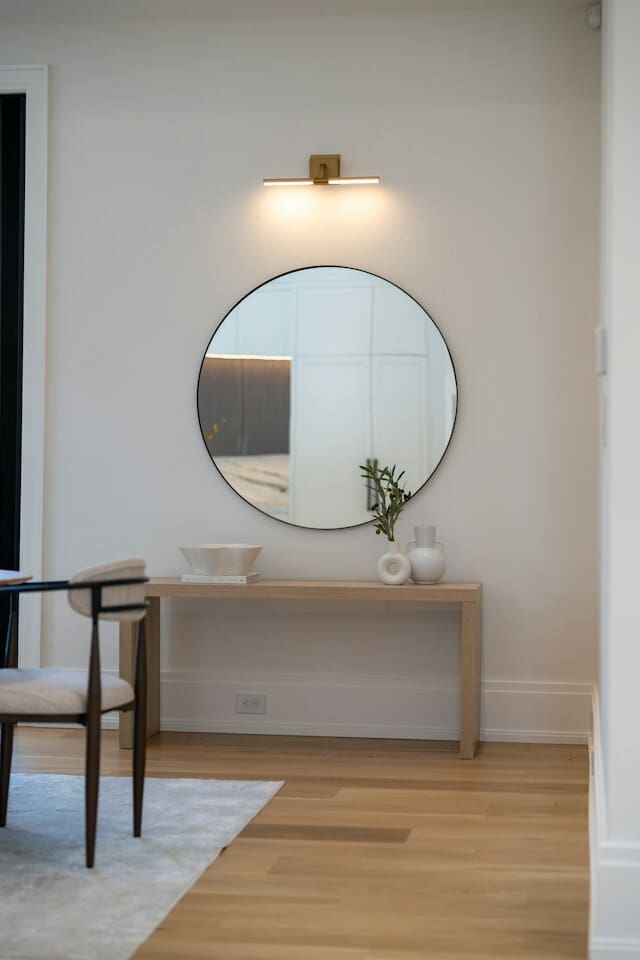
Choosing accessible positions, durable frames and layouts that discourage unnecessary touching can make upkeep more manageable. A mirror installed above a console or away from direct pedestrian movement may retain its appearance longer than one positioned directly beside a busy doorway.
Good Mirror Design Starts With Safe Placement
Mirrors work best in high-traffic spaces when their placement responds to how people actually use the area. By considering mounting security, impact exposure, reflections, lighting and maintenance, you can avoid common problems without sacrificing visual appeal. The aim is not to eliminate mirrors from busy interiors, but to position and specify them thoughtfully so they enhance the space while remaining safe and practical.