
Table of Contents
Tired of fishing yoghurt pots out of the paper recycling every single evening?
Don’t feel bad. Nearly every parent attempting family sorting comes across this hurdle. You explain your expectations, they all agree. Then by Thursday there’s a pizza grease box in with the clean cardboard.
Here’s the thing though…
Children are rarely the problem. The system they’ve been handed usually is.
Fix the setup, and most of the arguing disappears on its own.
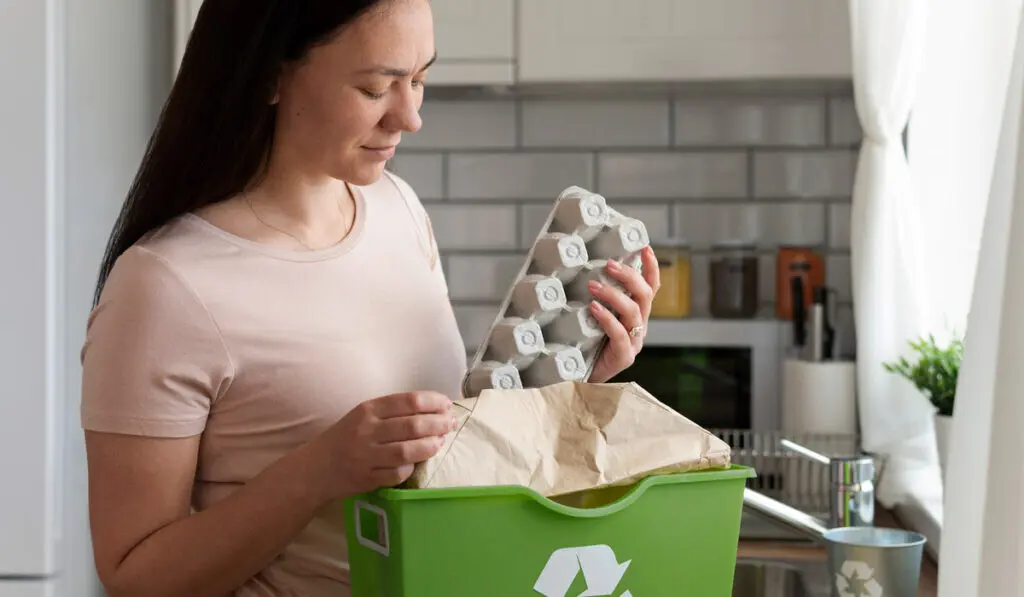
Why Sorting Turns Into A Nightly Argument
Let’s start with the scale of the problem.
The EPA reports that Americans produced 292.4 million tons of waste in one year. That equates to roughly 4.9 pounds per person per day. Only about one third of this waste was recycled or composted.
Scale that back to one kitchen. A four-person family creates nearly 20 pounds of trash daily and the majority of it travels through the hands of the person closest to the trashcan.
Very often, that’s a child.
So why does it fail? Three answers keep cropping up:
- The rules were never really explained — “put it in the recycling” doesn’t mean anything to a seven-year-old who doesn’t know what counts.
- Bins are hidden or awkward — one bin stuffed into a cupboard means that every single piece of garbage has to go into the same hole.
- No one is looking — children imitate. If grown-ups guesstimate, they will too.
None of those are behaviour problems. They’re design problems. Design problems can be fixed in an afternoon.
Setting Up Bins That Do The Thinking For You
This is the stage that most families ignore. This stage does the work.
Before you teach one lesson… Organise your containers. If a kid has to open a cupboard door, heft a heavy lid and reach above their shoulder to sort, that stuff is going in whichever bin is nearest and unlocked. Every single time.
If you really want your kids to recycle, the right waste and recycling receptacles take that choice away completely. Ask for colour-coded lids, big picture labels and a height that’s reachable by your child without any help — websites such as https://www.recycleaway.com/ sell indoor recycling bins, multi-stream bin kits and large outdoor recycling bins designed to fit in a family home rather than an industrial unit, so it’s worth a look around before settling on something. Then place the recycling bin immediately next to the general waste bin. Never hide it in the garage or in another room. If it’s in another place it’s a bin that will never be used.
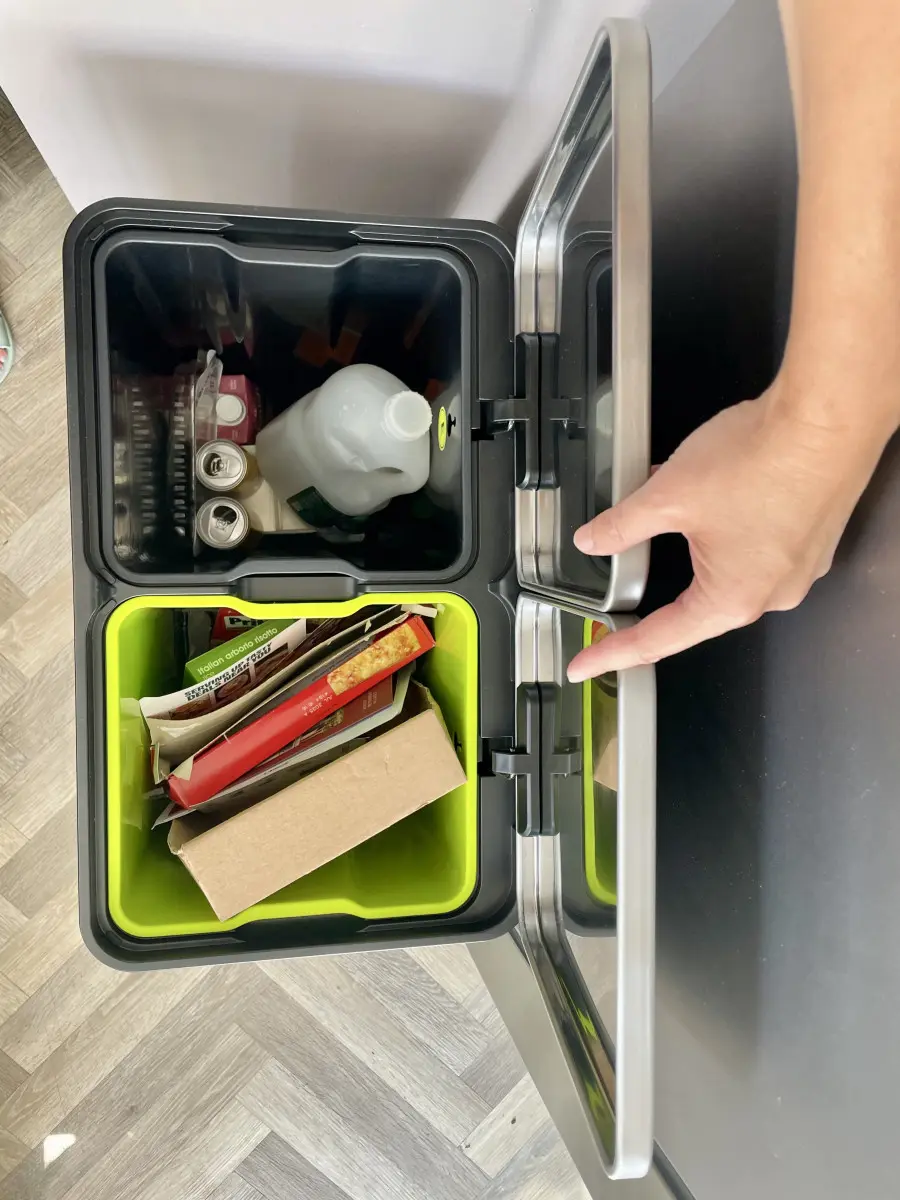
A workable home setup looks like this:
- One container for paper and card
- One container for cans, bottles and plastic tubs
- One small caddy for food scraps
- One container for everything else
Four bins. No more, no less. If you have more it becomes too hard to distinguish between categories and THAT’S when kids resort to guessing.
Teaching The Rules In Under Ten Minutes
Stop talking. Kids learn how to sort by doing it, just like they learn card games.
Dump an empty bag of household goods onto a towel on the floor. Bottles, envelopes, cardboard cereal box, crisp packet, apple core. Allow the kids to put things down one by one while you say yes or try again.
Ten minutes of that beats a month of nagging.
A few things worth explaining while you’re down there on the floor:
- Rinse it first. Food residue can ruin a whole batch of paper.
- Empty it out. Liquid left in a bottle causes the same trouble.
- Flatten the boxes. More space means fewer trips outside.
- If you’re unsure, ask. Guessing is what creates the mess.
Kids this age respond much better to visuals than words. Tape a basic chart above the bins with three or four actual items from each category. Also keep the names simple. “Paper stuff goes here, food stuff goes there” is better than “compostables” or “mixed dry recyclables”.
Building The Habit So It Sticks
Knowing the rules and doing them daily are two very different things.
Studies by The Recycling Partnership revealed that households enrolled in curbside programs only recover an average of 57% of the recyclables in their home. This occurs even when families are willing to recycle.
The fix is routine, not enthusiasm.
Assign each child a specific job, rather than telling them they’re responsible for “the recycling.” One child takes the paper recycling to the curb on collection day. Another dumps out the food caddy after dinner. Switch up these jobs each month so no one child is permanently saddled with the worst chore.
Reward it. You’d be amazed how effective a magnet chart on the fridge (one tick for each day the bins were sorted properly) is with pre-teens. Teenagers care more about having a stake in the outcome. Allow them to keep the deposit money on returned bottles, or let them police everyone else’s efforts.
Least favorite question. The most motivating thing for a nine-year-old is being trusted to correct an adult.
The Mistakes That Undo Everything
Even well-drilled families lose ground to a handful of repeat offenders.
The largest culprit is wishcycling – putting something in recycling because you think it should be. It’s an easy mistake to make and a huge reason why good intentions and actual outcomes can get so far removed from each other. Statistics show that while most people say they recycle, only about 32% is recycled in practice.
Teach your children to check, not to hope.
Watch out for these in particular:
- Plastic bags and film — they clog sorting machines and should go in store drop-off bins.
- Greasy pizza boxes — tear off the clean lid, bin the oily base.
- Batteries — genuinely dangerous inside a collection truck and need separate disposal.
- Unrinsed jars and tubs — food residue contaminates everything packed around it.
- Used paper towels and tissues — these go to compost or general waste.
Oh and another thing…this changes by region. If your one provider will take something, your neighbour’s collection service won’t touch it. Spend five minutes searching your council website, print off the acceptable list and tape it over your bins. Solves 90% of domestic disputes immediately.
Making It Stick
Educating kids about sorting household waste doesn’t actually fall under discipline. It falls under… set-up.
Provide the bins. Explain expectations once using tangible objects. Give each child a tiny, specific thing they can call their own. The nightly war ends because there is no battle to be fought — the correct bin exists, labeled, at the appropriate height and everyone knows what goes inside.
To quickly recap:
- Use four clear categories and no more
- Keep every bin in one place, at child height
- Teach by sorting real items, not by explaining
- Rinse, empty and flatten before anything goes in
- Check your local rules and pin them to the wall
- Give each child one job and rotate it monthly
Do that, and one month later you’ll have kids sorting your waste correctly unprompted. Which is the only way this ever sticks.