
Table of Contents
This is a collaborative post.
Perfectionism might look like control, but it often feels like exhaustion. You plan your meals down to the calorie, your workouts to the rep, and your sleep to the minute—but still feel off. Somewhere along the way, “health” became another pressure point. That’s where tarot, and especially The Fool, can offer something radical: permission to stop gripping so tightly.
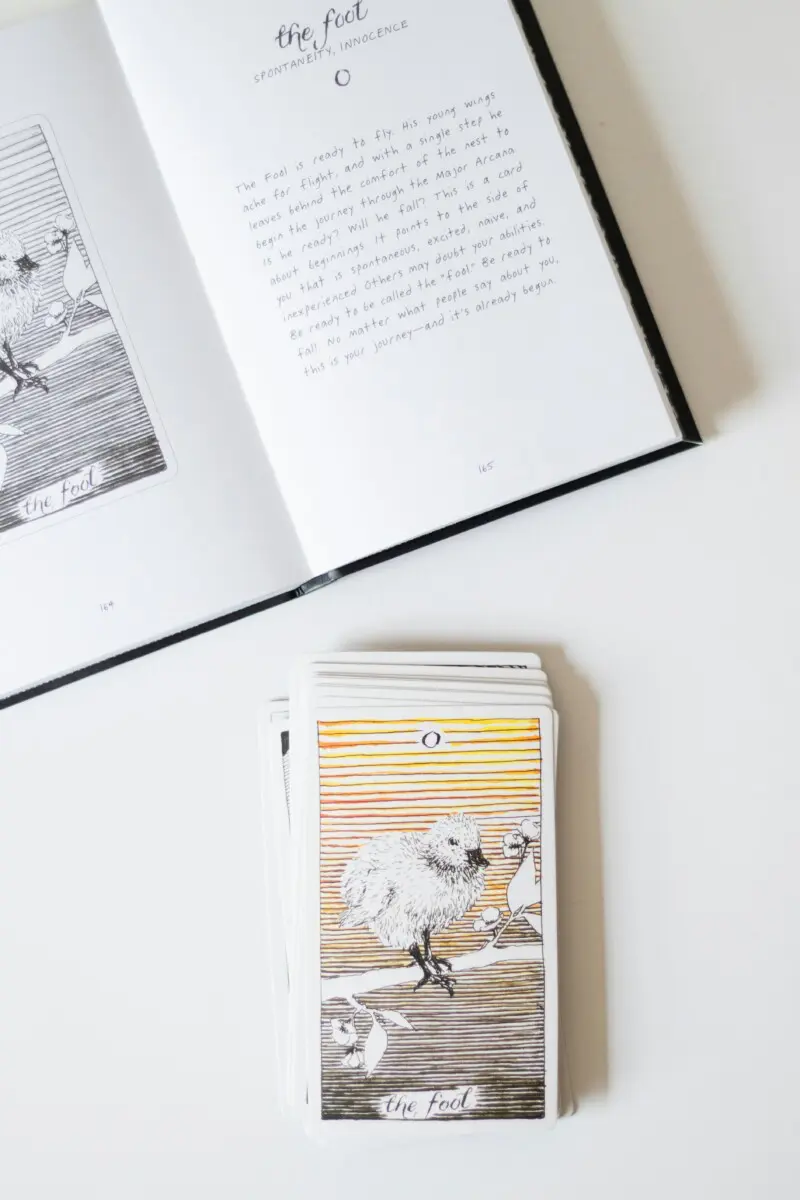
In the world of tarot, The Fool isn’t about foolishness—it’s about faith. It’s about stepping into the unknown, unburdened by what’s expected, and guided instead by trust—especially trust in your body.
That shift—from control to trust—can make all the difference in building a wellness routine that actually feels good. Here’s how.
Why We Resist Letting Go (Even When We’re Burned Out)
Many of us grew up with the idea that health is earned through discipline. If you didn’t follow the rules—whether that meant keto macros, 10,000 steps, or eight glasses of water—you were somehow failing. So it’s no surprise that when we feel exhausted or unmotivated, we try to double down on control.
But strict plans don’t always heal us. In fact, they often lead to the exact opposite: stress, disconnection, and shame. Tarot flips this on its head. It invites us to listen to intuition instead of metrics, to explore instead of correct. That’s why The Fool, as tarot’s first card, is such a powerful symbol for people ready to drop the rulebook and reconnect with their own bodies.
What The Fool Actually Represents in a Self-Care Context
In traditional tarot, The Fool is pictured standing at the edge of a cliff, looking joyful, curious, and slightly unaware. But that’s not naivety—it’s embodiment. He’s not checking his smartwatch. He’s not obsessing over progress. He’s present.
And presence is powerful.
Here’s what The Fool brings to a self-care conversation:
- Trust in the unknown: You don’t need every answer before you begin. Your body’s feedback matters more than external validation.
- Openness to discovery: The path to healing might not look like what you expected. That doesn’t make it wrong.
- Freedom from judgment: The Fool isn’t afraid to look silly or make mistakes. That same lightness can free you from body shame and guilt-driven routines.
Listening to Your Body Without Needing to Fix It
Tarot readings aren’t about diagnosing—they’re about reflecting. Pulling a card like The Fool can shift your focus from “What’s wrong with me?” to “What can I be curious about today?”
That’s a very different kind of self-care. It’s not prescriptive; it’s permissive. You might still meal prep, but you do it with kindness. You might still work out, but not because you “should”—because you want to.
Try these Fool-inspired prompts the next time you’re overwhelmed:
- What am I holding onto that no longer serves me?
- Where can I afford to take a playful risk?
- What does my body want right now—not in theory, but today?
These questions don’t lead to perfect answers. But they lead you back to yourself.
When Control Becomes a Distraction
For some people, perfectionism in wellness is a stand-in for something deeper—like anxiety, grief, or a desire to be seen. And while routines can provide structure, they can also distract us from healing work.
The Fool says: stop distracting, and start experiencing. If your meditation app feels more like a to-do list than a reset, maybe it’s time to walk without headphones. If your diet has become joyless, maybe it’s time to eat something nostalgic just because it makes you smile.
Releasing control doesn’t mean giving up. It means remembering why you started in the first place.
Body Neutrality, Tarot Style
Body positivity gets all the attention, but body neutrality might be more aligned with Fool energy. It’s the idea that you don’t have to love your body every day—you just have to respect it enough to stop punishing it.
Tarot can support this in subtle ways. For example, when you pull cards that reflect emotional patterns (like The Moon for hidden fears or The Star for healing), it encourages reflection over correction. It makes space for emotions without labeling them as failures.
In that sense, The Fool becomes a kind of body-neutrality coach. He doesn’t praise or criticize the body. He simply walks with it.
Building a Self-Care Practice Based on Trust
So how do you apply this to real life? Here’s a simple Fool-inspired framework for self-care that balances intuition with intention:
1. Start Small and Stay Curious
You don’t need a new morning routine. You need five minutes of tuning in. That could be a tarot pull, a body scan, or just stretching while asking, “What do I need today?”
2. Expect Messiness
The Fool embraces imperfection. Let your wellness journey include off days, skipped workouts, and meals that aren’t “clean.” That’s called living.
3. Celebrate Leaps of Faith
Did you try something new without overthinking it? That counts. Celebrate the effort, not the outcome.
4. Use Tarot as a Check-In, Not a Scorecard
When you’re unsure what your body or mind needs, pull a card. Let it offer a perspective shift—not a solution. This builds self-trust over time.
Real Talk: Tarot Isn’t a Shortcut
Let’s be clear—pulling The Fool won’t instantly fix burnout or body image struggles. But it will interrupt the mental loops that keep you stuck in toxic wellness cycles. It will remind you that you don’t need to earn rest, and that healing doesn’t always follow a straight line.
Even seasoned tarot readers don’t look to the cards for answers. They use them as mirrors. And The Fool? He’s the mirror that says: “You are allowed to begin again. No prep required.”
What Would Happen If You Let Go?
The next time you feel like you’re failing at health, pause before you double down on restriction. Ask instead: What if the problem isn’t me—but the pressure I’ve placed on myself?
Maybe it’s time to let go, just a little. To soften. To trust. Not the program, not the plan—but yourself.
Because that’s what The Fool teaches best.