
Table of Contents
This is a collaborative post.
A bathroom renovation involves several decisions and revising the original plans. Part of it is often choosing the right wash basin. It’s important: along with the bathtub and the shower cabin – the wash basin design is a key element in both function and style. Let’s see what type of wash basins are available and the pros and cons of choosing a particular type.
Types of Wash Basins
The first step in choosing is getting to know the different types of wash basins for bathrooms available. From bench mounts to wall-hung basins, the options are many.
Bench Mount
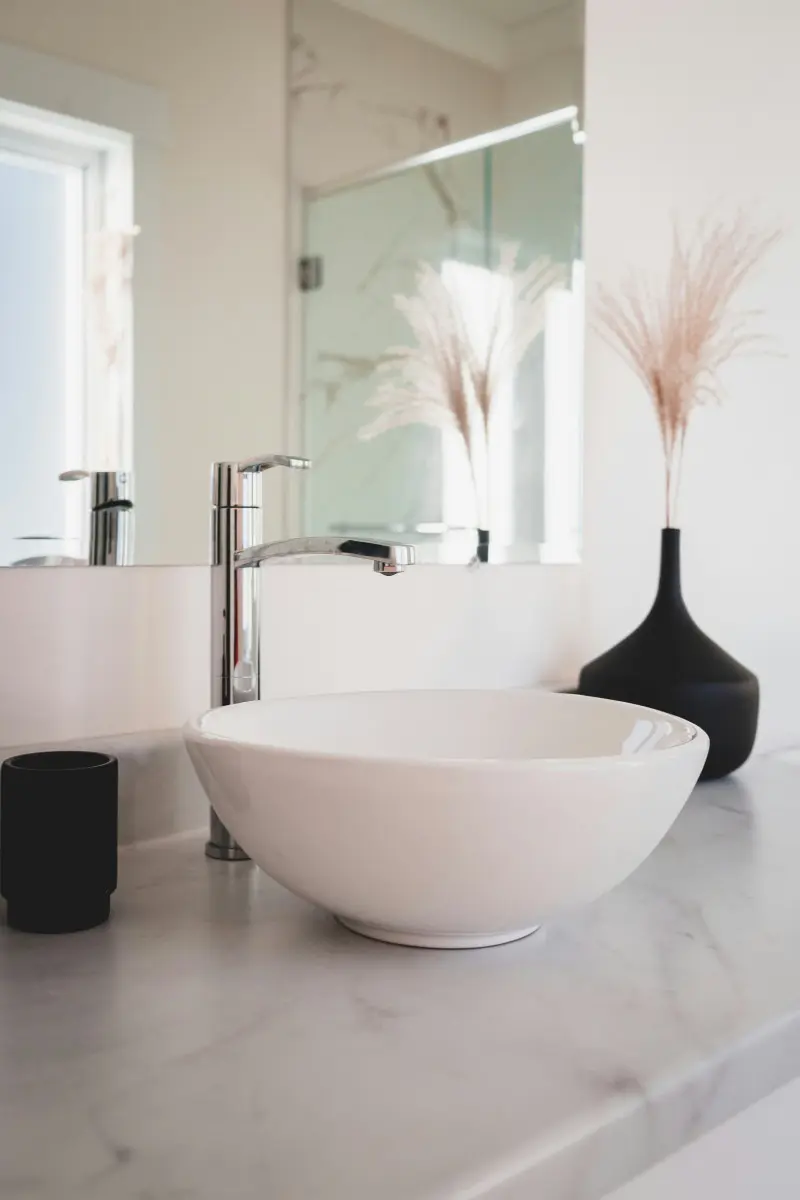
Bench mount basins are currently a popular choice for modern bathrooms. They are installed above the countertop.
The full body of the basin is exposed, and they come in a wide variety of shapes and styles available, bench mount basins can be tailored to suit virtually any design aesthetic, provided there’s enough space to accommodate them.
Another advantage of bench mount basins is their flexibility in tap placement. Taps can be mounted directly on the basin, on the countertop, or even on the wall. Because these basins sit above the counter, their height is often more convenient and comfortable than other types of basins.
Moreover, these basins are easy to install, as the countertop modification required is minimal, typically involving just a waste cut-out, with the basin secured using silicone, a plug, and a waste.
The cons would be that they do tend to take up counter space and that the height of counter is critical.
Insert or Self Rimming
Unlike bench mount basins, insert basins are designed to sit within the countertop. Part of the basin sits above the countertop, while the rest is recessed beneath it. Insert basins offer a minimalist look, seamless integration, and easy cleaning, making them a popular choice for many.
For a flawless installation, the countertop material must be compatible with the basin, ensuring proper support and an accurate cut-out. The edges of the cut-out should also be sealed to prevent water damage, as they will be exposed to moisture.
Insert basins also provide more counter space than fully above-counter basins, making them a practical option for smaller bathrooms. Their partially recessed design helps contain splashes, keeping the surrounding area cleaner and drier.
The cons would be that accurate measurements are vital when installing this and of course it does require a countertop.
Under Mount or Under Counter
If you’re looking for a clean, minimalistic design, an under mount basin could be the perfect option. Installed beneath the counter, with the rim attached to the countertop. With no exposed rim, there are fewer places for dirt or grime to accumulate, making cleaning significantly easier.
Under mount basins are also ideal for saving valuable counter space, making them a great option for smaller bathrooms or those with limited space. Installing the basin underneath the countertop allows the entire surface to be used for storage or other purposes.
Some of the cons are that they require quartz, stone, or synthetic composite countertop, therefore they can be expensive.
Wall Hung Basins
As the name suggests, wall-hung basins are mounted directly onto the wall, eliminating the need for a pedestal or countertop. These basins come in a range of designs to suit different styles and preferences, making them an affordable and accessible option for most bathrooms.
Because they don’t touch the floor, wall-hung basins create a feeling of extra space, particularly in smaller bathrooms where floor space is at a premium. Another advantage is their height flexibility; these basins can be installed at your preferred height, whether high or low.
However, when choosing a wall-hung basin, it’s important to select one that is lightweight. Heavy basins can place additional strain on the wall and mounting brackets, which may require extra support and increase installation costs.
Basin Materials
Wash basins come in a variety of materials, each offering different benefits in terms of style, maintenance, durability, and cost. Here’s a look at some of the most popular materials:
Ceramic
Ceramic is one of the most common materials used for sinks. It is made by firing clay, or a mixture of clay, powders, and water, to create a solid, smooth surface. Ceramic basins are resistant to scratches, chipping, and impacts, making them an ideal choice for both durability and style.
Their glossy finish complements traditional fixtures and vintage-inspired designs. Ceramic basins are also relatively low-maintenance, requiring only occasional cleaning to maintain their shine.
Porcelain
Porcelain is another popular material for sinks, often valued for its smooth, white finish and resistance to moisture. Porcelain is made by combining clay with other materials to create a highly durable, heat-resistant surface. While porcelain is easy to clean, it is more prone to chipping and staining compared to ceramic, so care should be taken to avoid dropping heavy or sharp objects.
While traditionally white, porcelain sinks are available in a variety of colours, so you can really be flexible on your bathroom decor.
Solid Surface
Solid surface materials are man-made stones created by blending resins and minerals. These materials are non-porous, meaning they are easy to clean and resistant to stains, mould, and bacteria. Solid surface basins can be moulded into various shapes and sizes.
The matte, stone-like appearance of solid surface basins adds sophistication to modern, minimalist, and high-end bathrooms. Additionally, these sinks are durable and resistant to wear and tear, making them a great choice for both style and longevity.
Natural Stone
Natural stone basins are crafted from a single block of stone, making each one unique. The colour variation, veining, and natural imperfections—such as tiny pits or mineral specks—give each stone sink its own character, adding a luxurious touch to any bathroom.
Because natural stone is porous, extra care must be taken to protect it from harsh chemicals or abrasive cleaners. These sinks are ideal for rustic, spa-like bathrooms, and their timeless beauty makes them a great investment for anyone looking to add an element of luxury to their space.