
Table of Contents
Want to transform your bathroom into a sanctuary that actually improves your wellbeing? Most people think of bathrooms as purely functional spaces. But here’s the thing… Your bathroom could be the most important room in your house for your mental health and daily wellbeing. With 90% of our time spent indoors, creating spaces that nurture your mind and body isn’t just luxury — it’s essential.
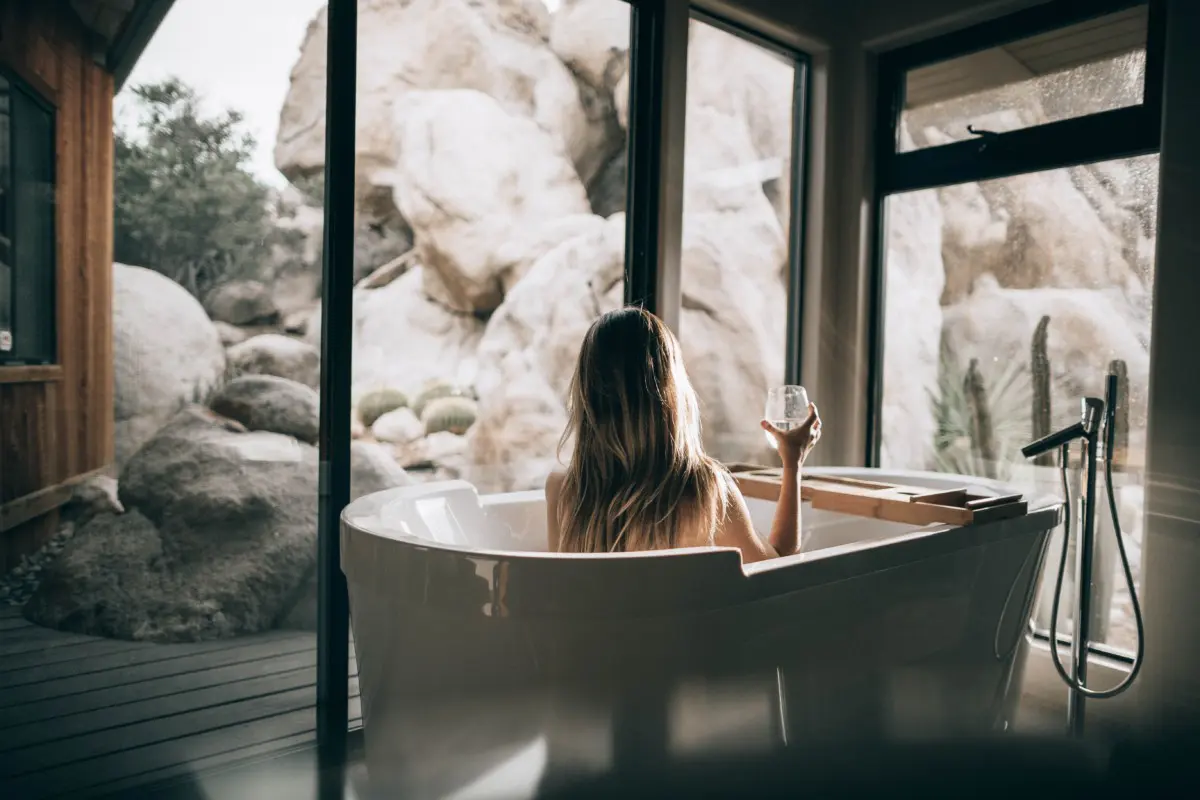
Here’s what’s really happening:
The average person spends about 2-3 hours daily in their bathroom. That’s over 1,000 hours per year in this single space. And if your bathroom feels cramped, dark, or uninspiring…
Those negative feelings compound day after day.
But when you get bathroom design right? The impact on your wellbeing is incredible.
What You’ll Discover:
- Why Your Bathroom Affects Your Mental Health
- The Psychology Behind Relaxing Bathroom Spaces
- Essential Design Elements for Wellbeing
- Creating Your Personal Wellness Sanctuary
Why Your Bathroom Affects Your Mental Health
Your bathroom isn’t just where you get ready each morning. It’s where you start and end your day.
Think about it…
This is the space where you’re most vulnerable and private. The first place you see yourself in the mirror. The last place you visit before sleep.
And here’s what most people don’t realize:
Poor bathroom design can actually increase stress levels. Cramped spaces make you feel claustrophobic. Bad lighting makes you look terrible in the mirror. Clutter creates visual chaos that your brain processes as stress.
Research shows that 70% of homeowners are now willing to take design risks in their bathroom because they understand how much this space impacts their daily experience.
When working with a dedicated bathroom design team, you can create a space that actively supports your mental health instead of undermining it. Professional designers understand the psychological impact of every element — from color psychology to spatial flow.
The truth is that bathrooms have evolved far beyond their basic functions. They’re becoming personal wellness retreats where you can decompress, recharge, and practice self-care.
The Psychology Behind Relaxing Bathroom Spaces
Want to know why some bathrooms feel instantly calming while others feel stressful?
It all comes down to design psychology.
Here’s how your brain responds to different bathroom elements:
Natural light triggers the release of serotonin, which improves mood and helps regulate your circadian rhythm. This is why bathrooms with windows or skylights feel so much better than windowless spaces.
Warm colors like soft blues, greens, and earth tones activate the parasympathetic nervous system — your body’s “rest and digest” mode. Cool, harsh colors do the opposite.
Clutter-free surfaces reduce cognitive load. When your brain doesn’t have to process visual chaos, it can actually relax.
Natural materials like wood, stone, and plants create what researchers call “biophilic” effects — they make us feel more connected to nature even when we’re indoors.
But here’s the kicker…
Most traditional bathroom designs ignore these psychological principles completely. They focus on maximizing storage and functionality while forgetting about the human experience.
Essential Design Elements for Wellbeing
Creating a bathroom that supports your wellbeing isn’t complicated. You just need to focus on the right elements.
Lighting That Heals
Poor lighting is the fastest way to make any bathroom feel depressing. You need natural light whenever possible, layered artificial lighting, warm bulbs (2700K-3000K), and dimmer switches. The goal is lighting that makes you look and feel good at any time of day.
Colors That Calm
The most calming bathroom colors are:
- Soft blues (reduce blood pressure and heart rate)
- Sage greens (promote balance and tranquility)
- Warm grays (create sophisticated calm)
- Cream and off-whites (feel clean without being sterile)
Avoid bright reds, oranges, or harsh yellows — they’re too stimulating for relaxation.
Surfaces That Soothe
Wellness-focused materials include natural stone, wood accents, soft textures, and smooth surfaces. Visual texture is just as important as physical texture. Varied surfaces create interest without overwhelming the space.
Storage That Supports Serenity
Clutter is the enemy of relaxation. Smart storage includes hidden storage behind mirrors, open shelving for beautiful items only, built-in niches, and hooks that keep surfaces clear.
Creating Your Personal Wellness Sanctuary
Now let’s talk about transforming your bathroom into a true wellness space.
The Spa-Like Shower Experience
Your shower should feel like a daily retreat. Key elements include rainfall showerheads, multiple settings, built-in seating, and steam features. 50% of homeowners who renovate do so because they’re tired of their current style. Create a timeless design that will feel good for years.
The Restorative Bathtub
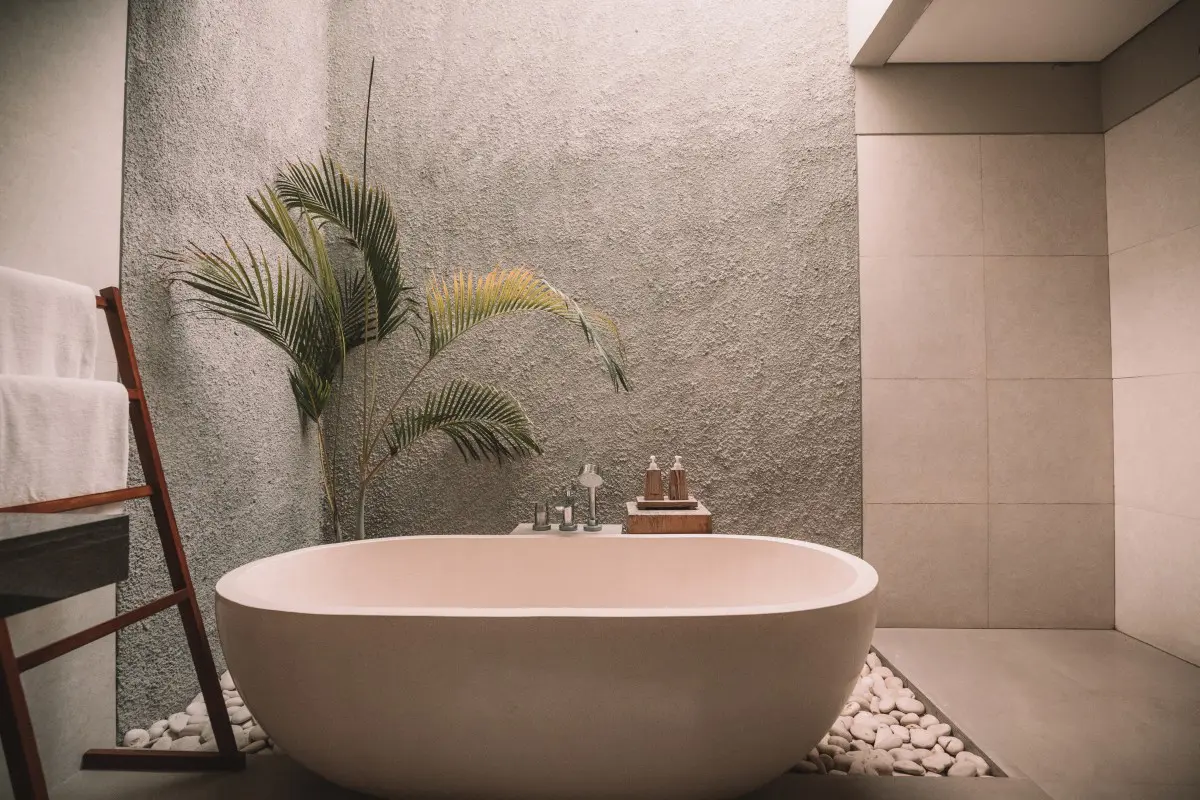
Consider freestanding tubs as focal points, deep soaking tubs, jetted tubs for massage, or Japanese-style tubs for meditation. The key is choosing a tub that fits your space and lifestyle.
Air Quality and Ventilation
Indoor air can be 2-5 times more polluted than outdoor air. In bathrooms, humidity and cleaners make this worse. Improve air quality with powerful exhaust fans, natural ventilation, air-purifying plants, and non-toxic cleaning products.
Technology for Wellness
Helpful tech includes smart mirrors, heated floors, Bluetooth speakers, and aromatherapy diffusers.
Remember: technology should enhance the experience, not complicate it.
Creating a Bathroom That Supports Your Wellbeing
Creating a bathroom that supports your wellbeing isn’t about expensive renovations or trendy features. It’s about understanding how design elements affect your daily experience and making thoughtful choices that support your mental health.
The most important principles are:
- Maximize natural light whenever possible
- Choose calming colors that make you feel peaceful
- Minimize clutter with smart storage solutions
- Include natural materials for connection to nature
- Prioritize air quality with proper ventilation
When you get these basics right, your bathroom becomes more than a functional space. It becomes a daily retreat that supports your wellbeing and helps you start and end each day feeling your best.
Your bathroom should be a place where you feel calm, refreshed, and ready to take on the world. With the right design approach, that’s exactly what it can become.
Your Wellness Journey Start in Your Bathroom
Designing a bathroom for wellbeing isn’t a luxury — it’s an investment in your daily quality of life.
With the right approach, your bathroom can become a true sanctuary that supports your mental health, reduces stress, and helps you feel your best every single day.
The key is understanding that every design choice has a psychological impact. From the colors on your walls to the lighting above your mirror, each element either supports your wellbeing or detracts from it.
Remember these core principles:
- Natural light and calming colors create an instant mood boost
- Clutter-free surfaces reduce stress and create visual calm
- Quality materials and thoughtful storage make daily routines more enjoyable
- Proper ventilation and air quality support your physical health
Your bathroom is where you start and end each day. Make it a space that nurtures your wellbeing instead of just serving basic functions.
The investment in thoughtful bathroom design pays dividends in improved mood, reduced stress, and a more enjoyable daily routine. And that’s something you’ll appreciate every single day for years to come.