
Table of Contents
This is a collaborative post.
Malfunctioning or lacklustre boilers can really make domestic life less enjoyable. Quite annoying in fact, when you have tp face boiler problems. Not only do you have to deal with tepid showers and lukewarm dishwashing water, but when winter comes around, you can also find that it’s practically impossible to keep your home warm. Identifying the root cause of the issue is a must, and it’s not always as easy as you might think. Here, we take a look at a few common reasons why your boiler might not be heating your water to hot enough temperatures, from thermostat settings to faulty boilers.
Check your thermostat settings
Before you call a boiler technician from somewhere like Able Plumbers, the first thing to do is check your thermostat settings. Modern thermostats are notoriously complicated to use, and it can take a while to get the hang of their various different settings.
Try looking up some common troubleshooting videos on YouTube, and look in the user manual if you still have it. There’s also the possibility that the thermostat is actually broken, but this can be a little more difficult to figure out.
Air bubbles in the radiators
While technically not a boiler issue, if you’re having heating problems then there’s a good chance that there are air bubbles in your radiators. A good way of testing for this is by touching the radiators and seeing if there are both cold and hot spots distributed seemingly at random.
If there are, then luckily it’s an easy fix – you’ll need to bleed the radiator. Just find your radiator valve key, put a towel or small bucket beneath the valve, and twist it until you hear the air start to hiss out. After a while, a bit of water will begin to trickle through, which means it’s time to tighten the valve again.
Water pressure issues
Low water pressure can also result in temperature issues in boilers. There should be a pressure gauge somewhere, where you can check how many bar the system is running at. Check the handbook, and if the pressure is outside of the normal, healthy range, you might need to repressurise it. It could also point to another issue, such as a faulty pump.
Faulty boiler
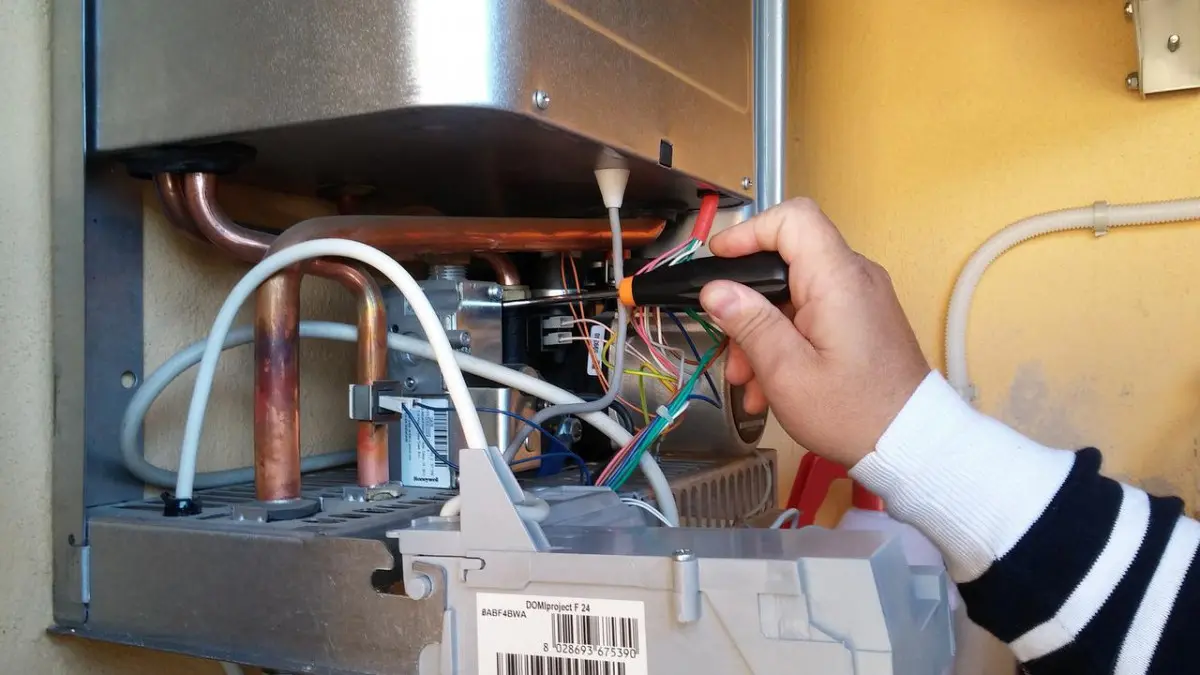
One of the more serious potential issues behind low boiler temperatures could be a fault in the boiler itself. This might be a heat exchange issue that means the heat isn’t transferring from the burner to the water, a sensor problem, or any number of valve problems.
If this is the case, you won’t be able to fix it yourself – you’ll need to get a boiler technician over to diagnose and potentially fix the boiler. This is generally better to sort out sooner rather than later, so don’t put it off.
The chances are high that there’s an easy fix to your boiler temperature issues, and it’s not something that you should put off. By checking these simple potential problems, you can sort out most heating faults in no time at all.