
When visiting my parents in Hungary in summer means lots of fresh food – mostly meat based as per traditional Hungarian cuisine. But also a lot of fresh, and accidentally vegan food. One of them is the proper “kovaszos uborka” aka fermented gherkins. Let’s learn how to make tangy and crisp pickles with cucumbers, vinegar, dill and garlic.
Fermented food is not only truly back and in a popular revival phase these days, but foodies are going nuts about them, as if they never existed before. Sourdough bread, kimchi, fermented and pickled anything. Lately, we’ve learnt a lot about the role of our gut in our digestive system and overall health and fermented food is one of the pillars of looking after and supporting our guts. There are many-many studies conducted over the past few years and it’s been now publicised that fermented food has many health benefits, including strengthening the gut microbiome. The gut microbiome and the hundreds of trillions bacteria and microorganisms that live in our digestive tracts.
The fermentation process uses microbes (bacteria and yeast) and this is how it preserves foods. So fermented food can be stored longer – and this is how it was invented. Fermentation is almost as old and civilisation itself: archaeological studies have shown that fermentation technologies were already used in ancient civilisations like Egypt.
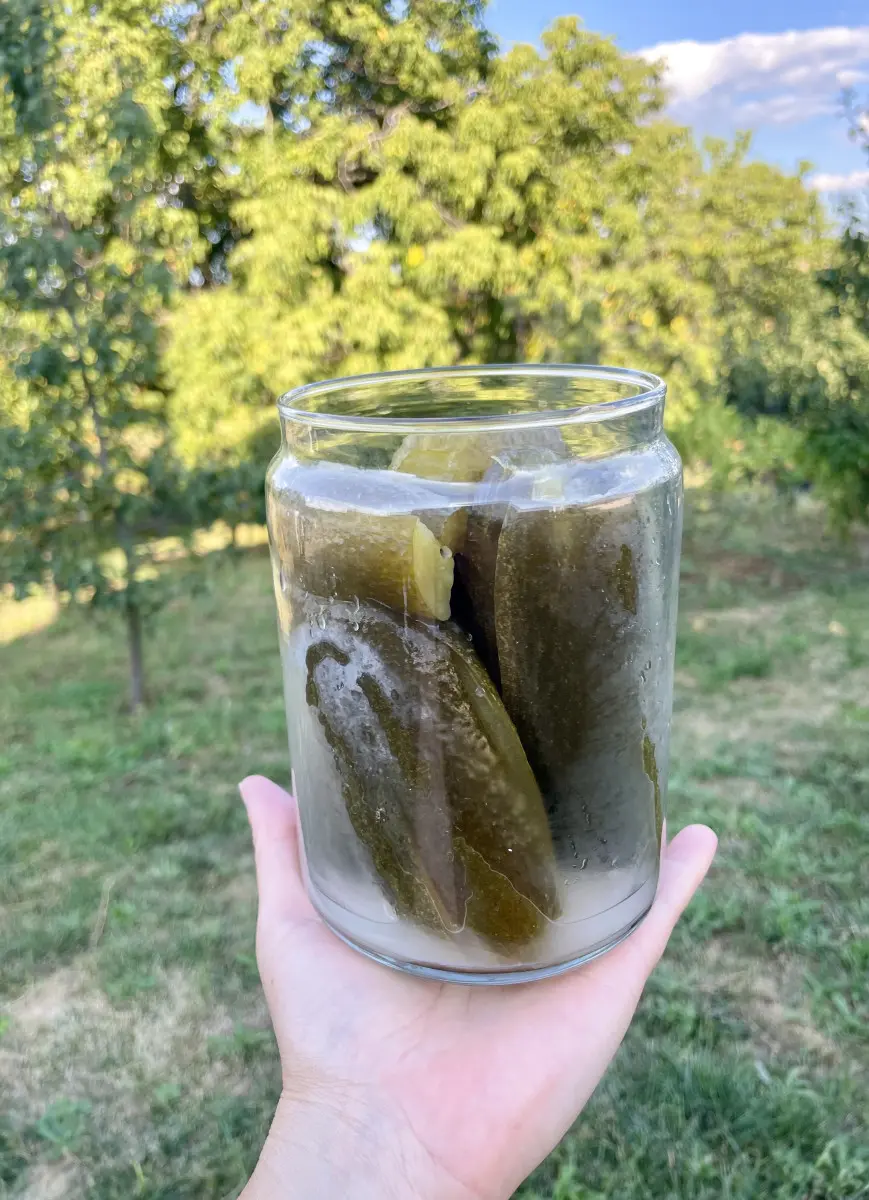
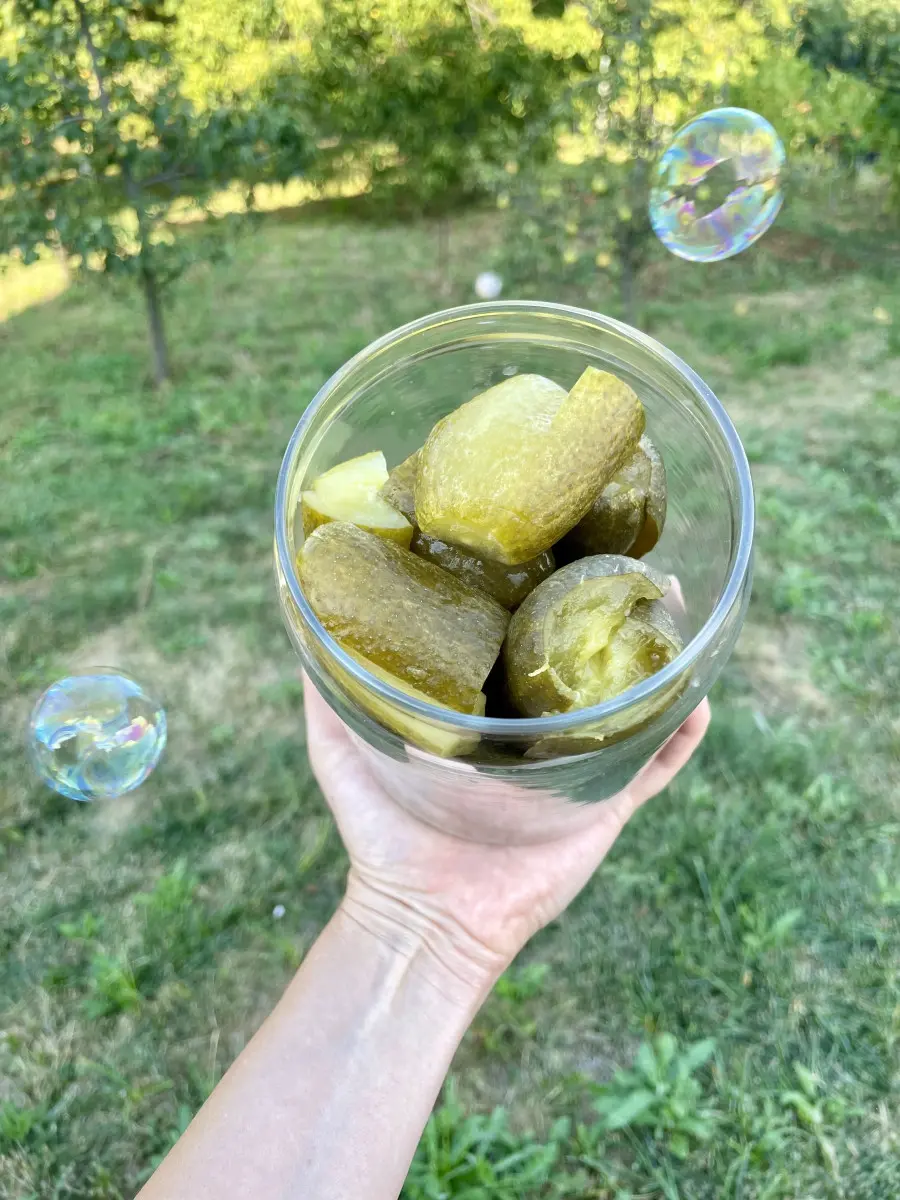
How to make Traditional Hungarian Fermented Gherkins
You will need:
- 5 l pickling glass jar (cleaned)
- 1 plate
-
3 kg pickling cucumber
-
1 big clove of garlic
-
1 bouquet of fresh dill
-
1 slice of sourdough bread
-
4 tbsp of salt (1 for every litre water)
-
4 l water (plus more salty water to replace the evaporated water during the
- sunshine
Method
- Boil the 4 litres water. Add 4 heaped tbsp of salt to the boiling water. The pickling water should taste a notch saltier than the actual gherkins, so don’t worry. After reaching boiling point, let it cool to room temperature.
- Wash and scrub the skin of the cucumber, remove any imperfection. Chop off the ends. Lengthwise, cut them into 2-4 pieces. This is so they soak up the salty, fermented water.
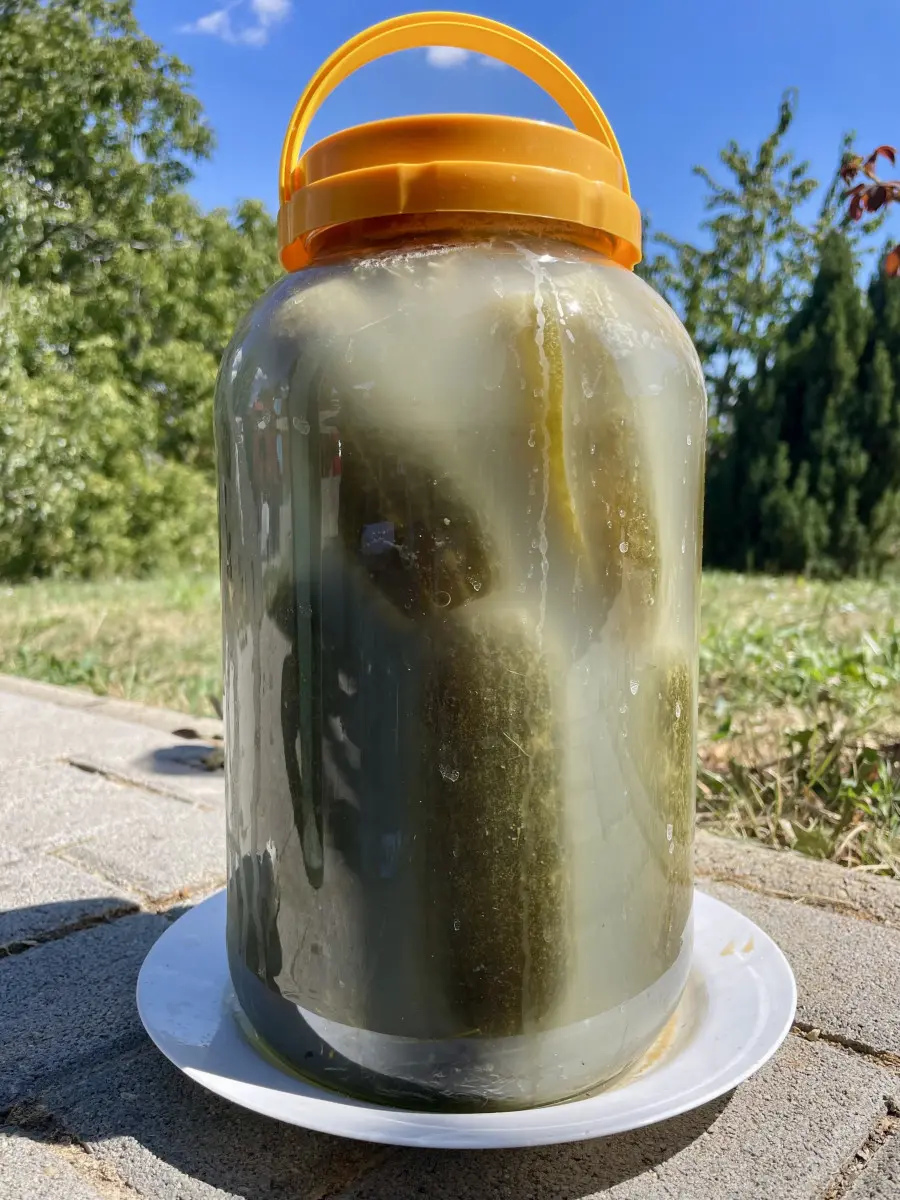
- Peel and halve the garlic and wash the dill. Place half of the dill to the bottom of the glass jar with the one half of the garlic. Start placing the cucumbers into the jar, neatly and vertically, quite tightly and they can bend a little even. Top them with the other half of the dill and garlic. Add the boiled salty water, up to the bottom of the brim. Set the rest of the water aside, for replacing what will evaporate during the pickling process.
- Place the slice of sourdough bread on the very top. Close the lid jar.
- Place the full jar on a plate to catch the seeping pickling water. Leave the whole thing in a sunny spot (but not too hot, just sunny. If it’s too hot, the cucumber will be too soft as it will practically cook) and make sure, the salty water is regularly (daily) replaced, so there is always water up to the top, soaking everything, including the bread slice. This is important – otherwise the bread will catch mold.
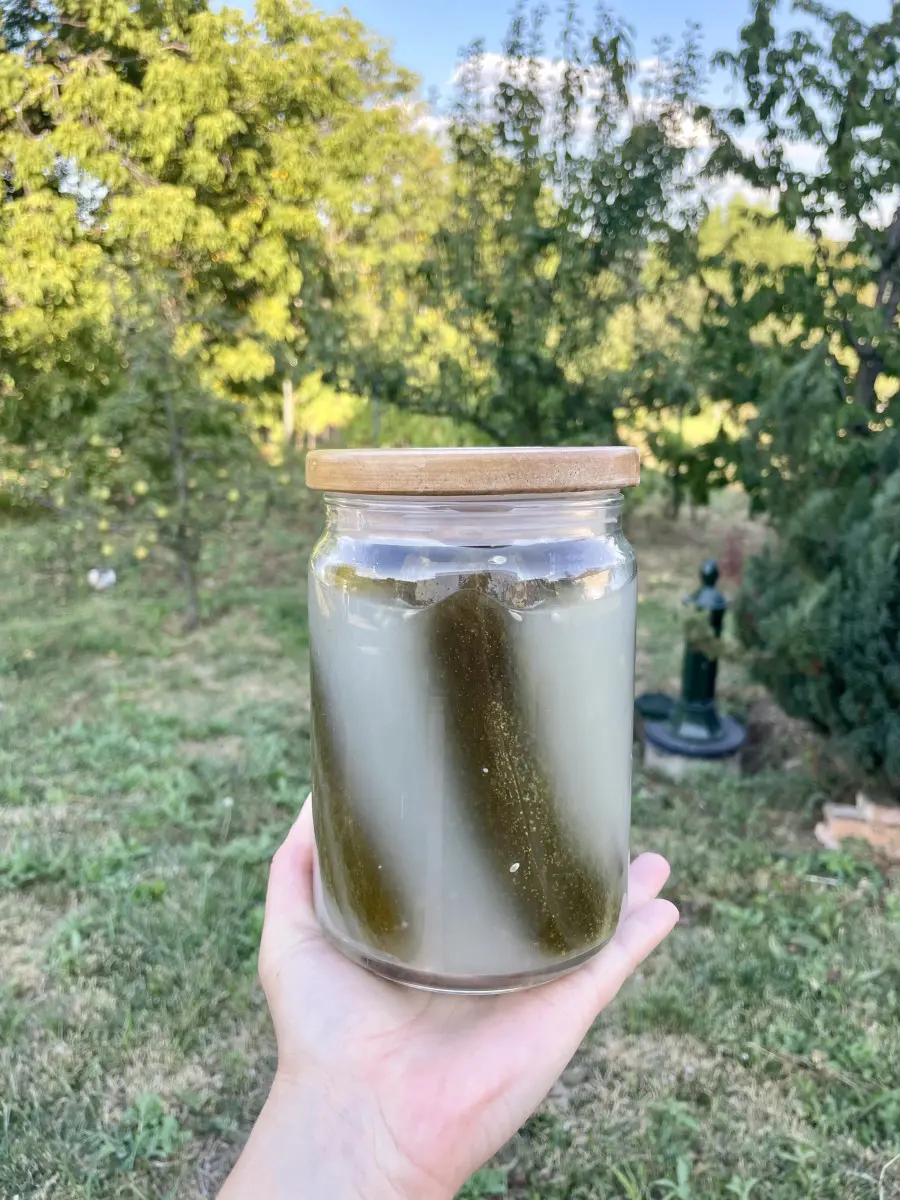
- After 2-3 days it should be ready – just taste it on day two. When it’s ready, divide them into smaller glass jars, together with the pickling water. Discard the dill and bread. Keep them in the fridge.
- If you want to keep them longer in the larder and for longer, all you have to do is sterilise the jars previously, just like with jams and other pickles, and boil the already made-up bottle like with jams.