Table of Contents
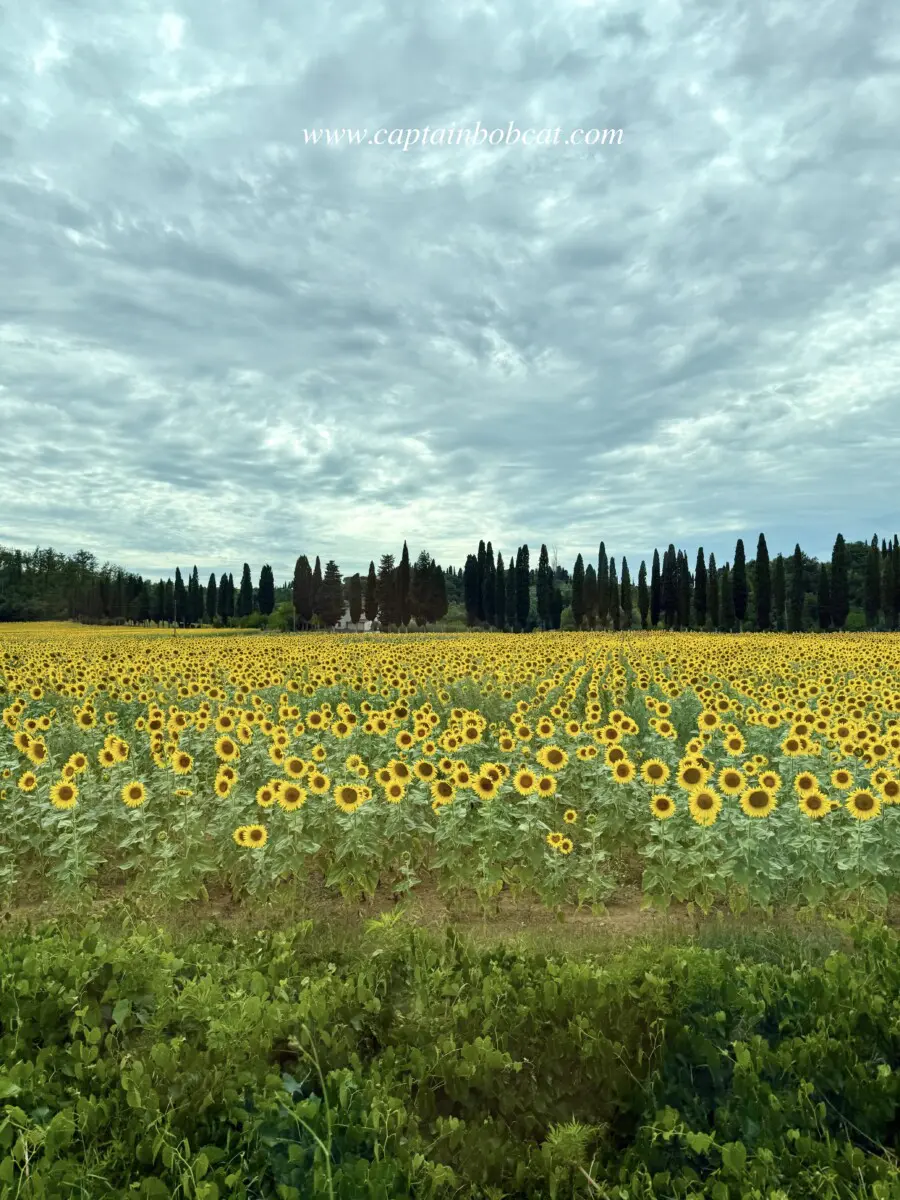
During our Italian holiday in Tirrenia, Tuscany in 2025 July, we had a few mild days of not too hot weather so we went to visit the nearby famous locations like Pisa, Lucca and also – although the farthest of all – Volterra. This little gem of Tuscan towns is located on the top of a hill so amazing views will await, along with historic sights from different periods of the early days of civilisation, fantastic food and 21st century vampires form the Twilight series. (It is the ancient Italian city where the Volturi reside.) Even the route to Volterra with sunflower fields on and cypress trees was like being in a movie. Read what we were up to, when we visited Volterra.
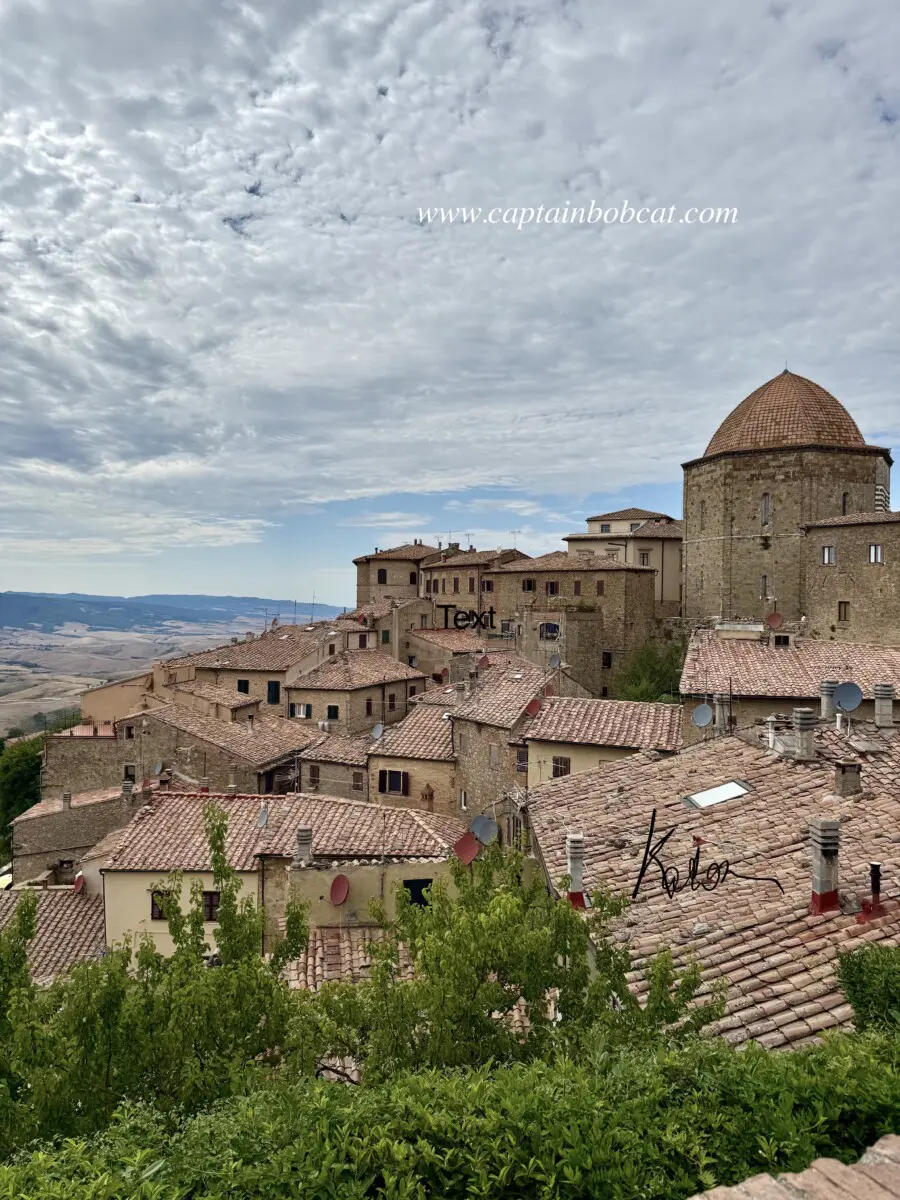
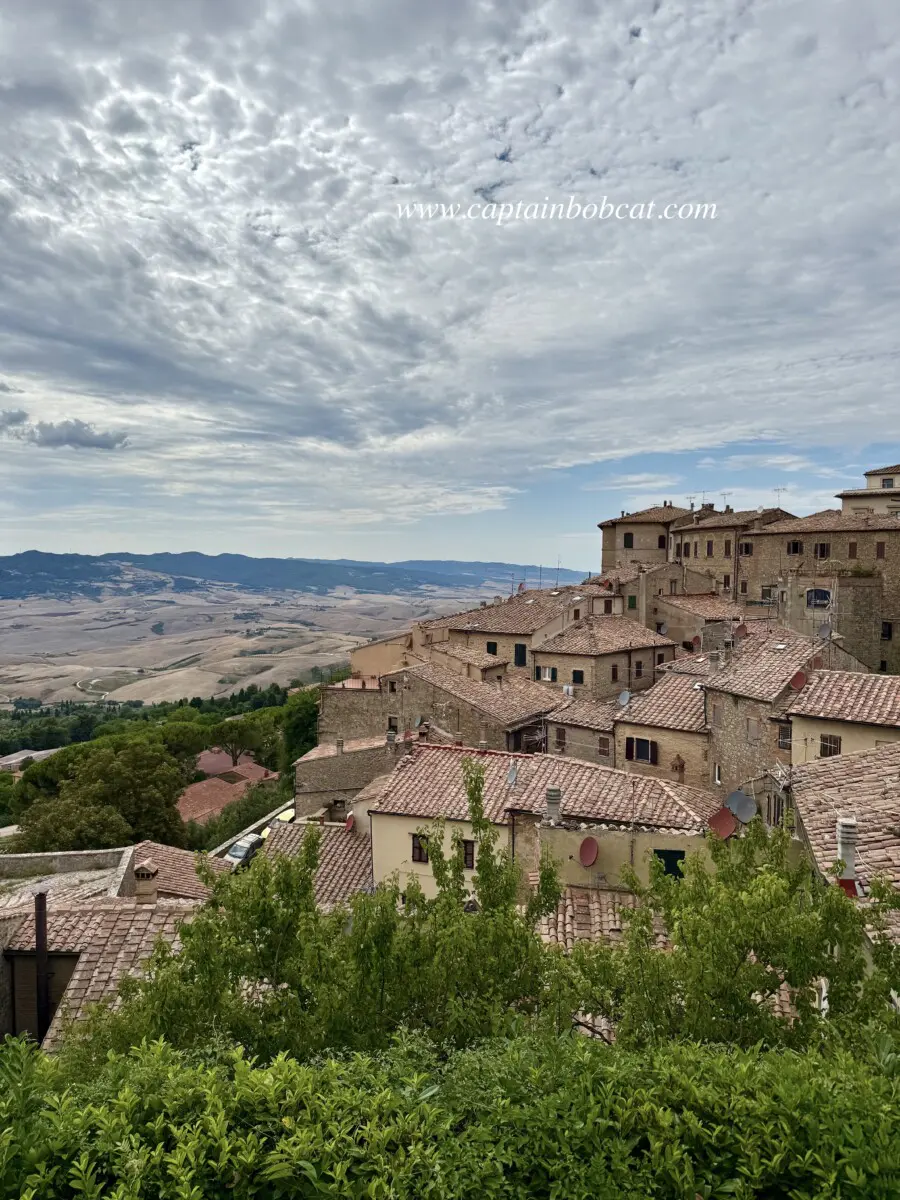
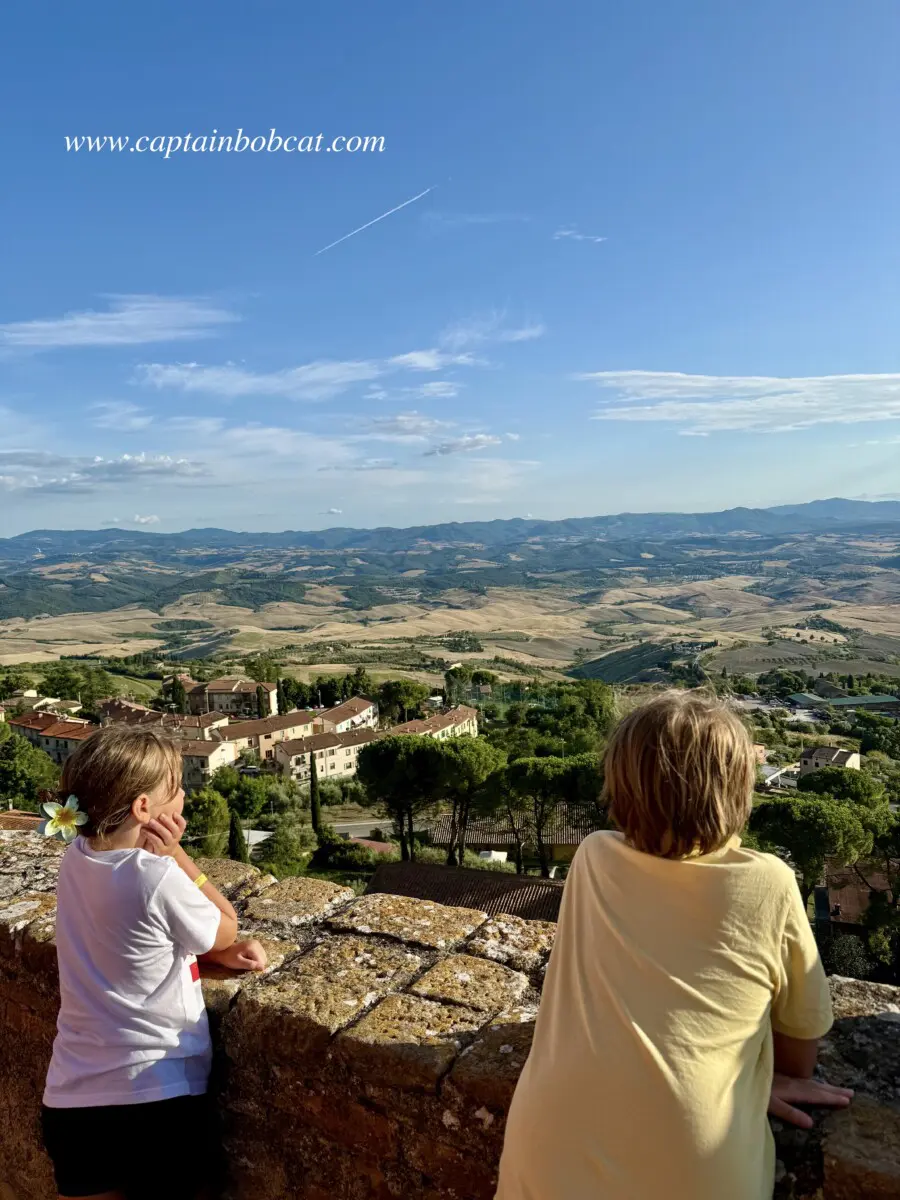
About Volterra
Volterra looks very medieval Tuscan – but it has a rich history beyond that. Dating from before the 8th century BC and remains of the Etruscan, Roman, and Medieval periods are still present and you can visit them. It’s not an average tourist trap, when we visited it wasn’t busy at all. For a small town, it has a lot to offer.
Here’s a list of the sights:
- Roman Theatre/Teatro Romano
- Etruscan Museum, Acropolis and Tombs
- Cathedral/Duomo
- Archeological Park/Parco Archeologico Enrico Fiume
- Medieval Town Centre/Piazza and Palazzo dei Priori
- Baptistery and Diocesan Museum
- Etruscan Arch and Walls/Arco Etrusco
- Medici Fortress
- Palazzo Viti
- Civic Museum
- Alabaster Ecomuseum
- Thermal Baths/Bagnone
- Palazzo Dei Priori
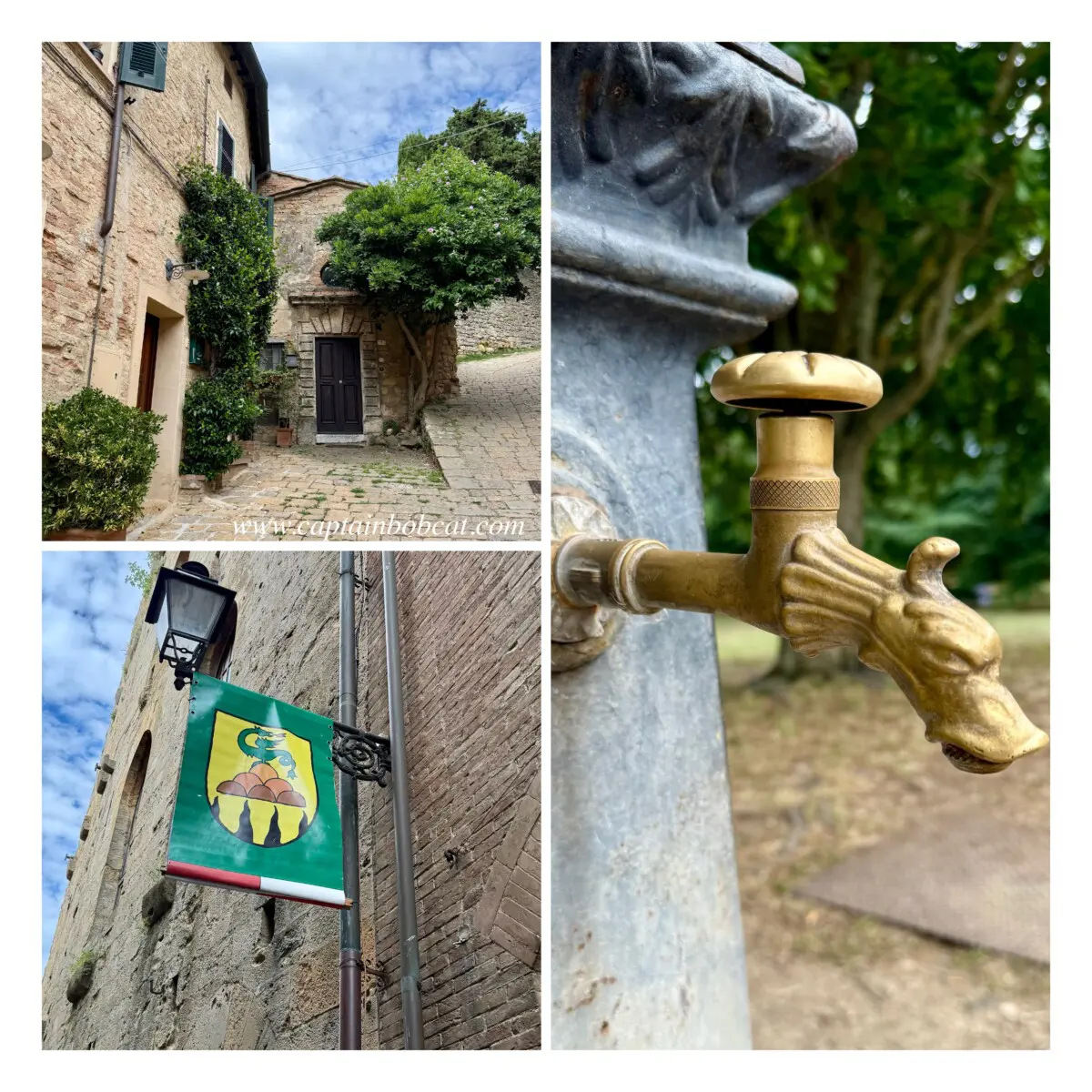
Getting there and parking
You will need a car. Or you can take a bus. Only residents are allowed to park their cars in the old town, but just by the walls of the old town we found a parking house and it was only a short walk from there. Just follow the signs “Centro” Parking fees are very reasonable.
What we visited
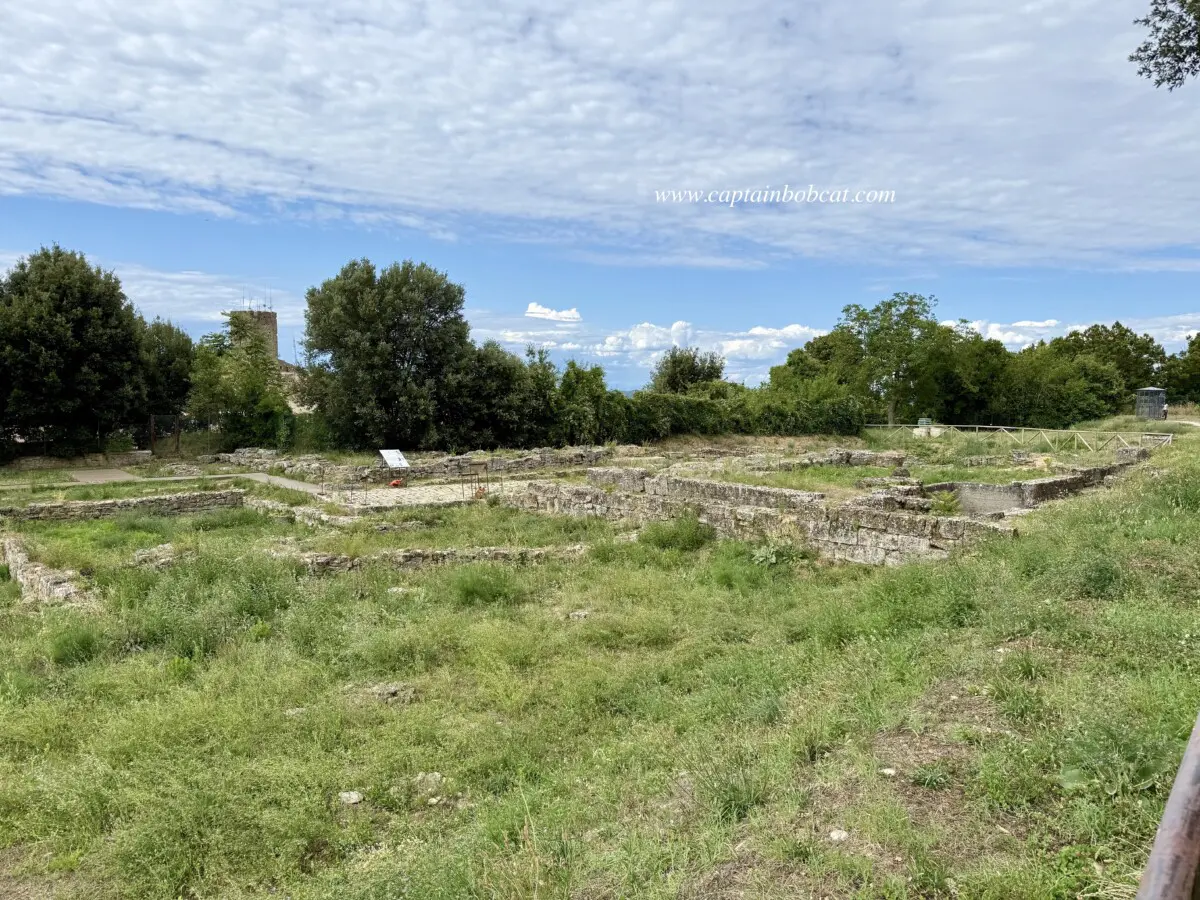
Etruscan Acropolis
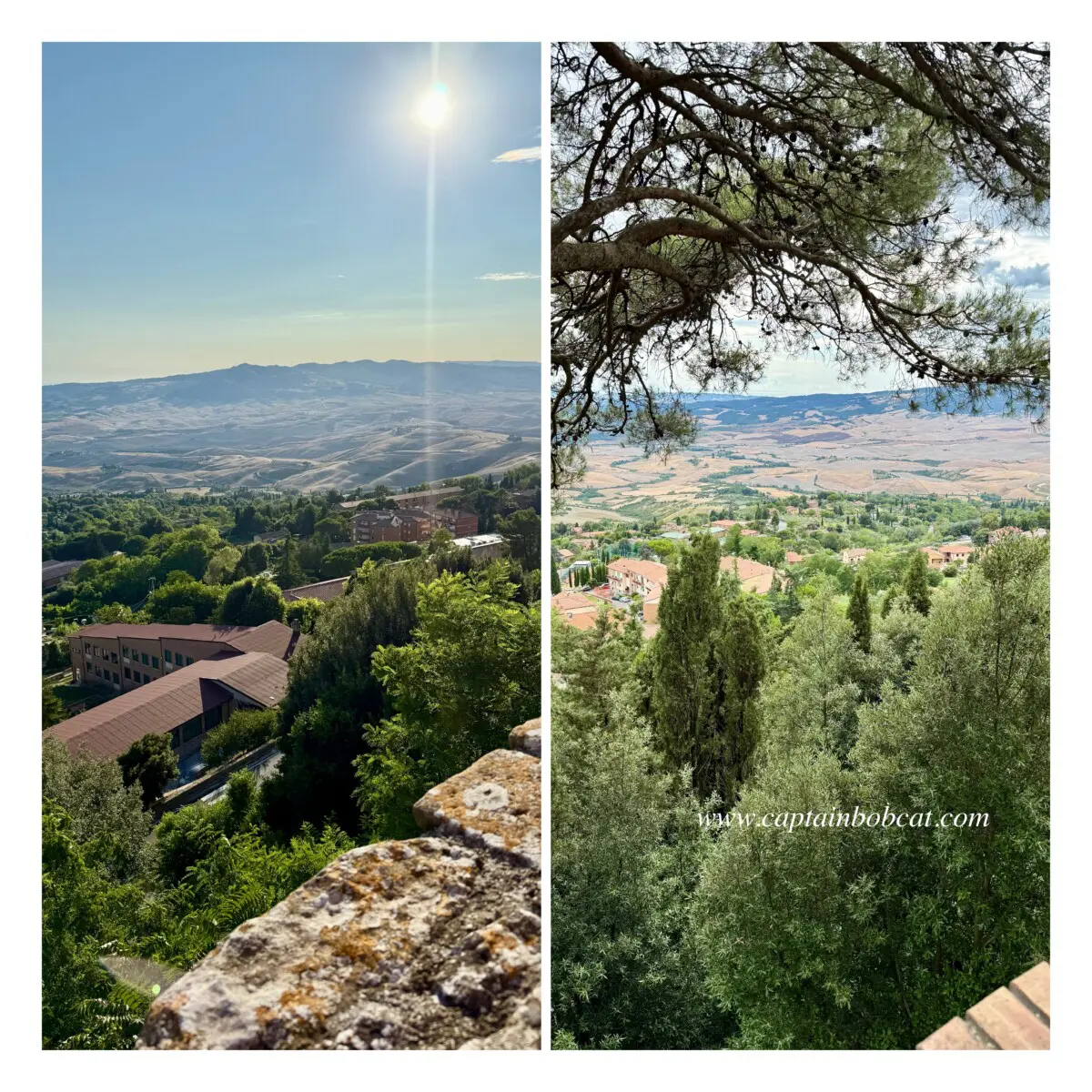
This outdoor part of the museum is home to a sanctuary compound with temple and a Roman cistern, dated back 7th century BC. The Etruscans used to make sure that their temples are built on hills with views because they used the sky to predict the future.
Roman Theatre
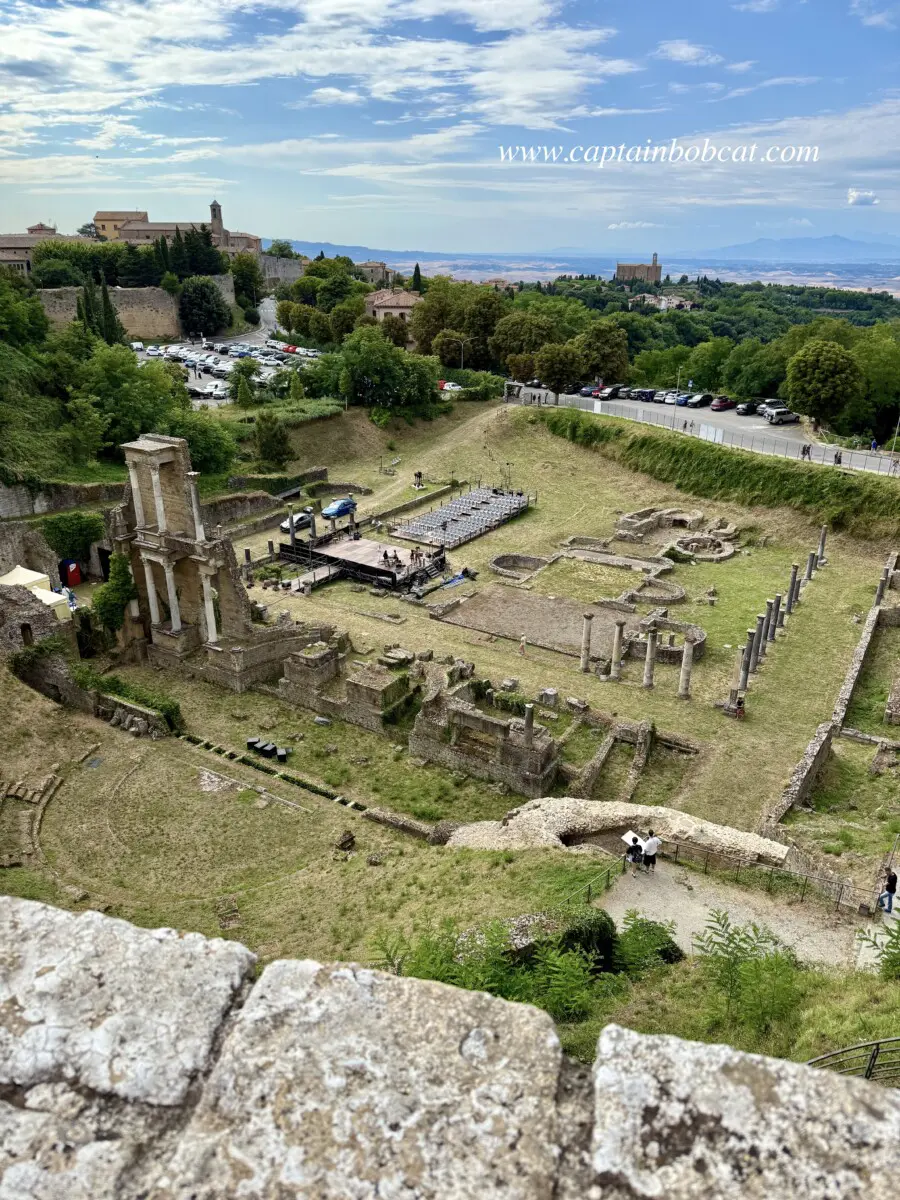
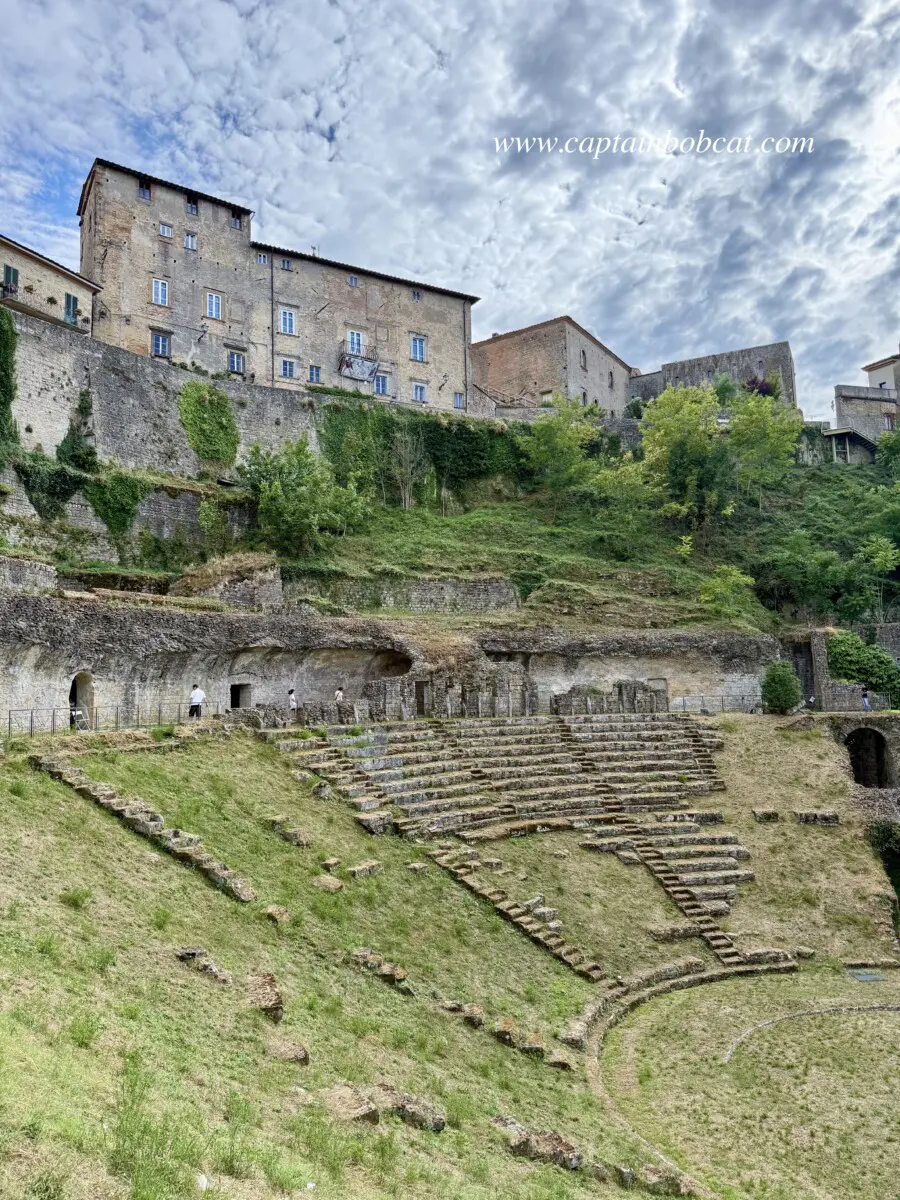
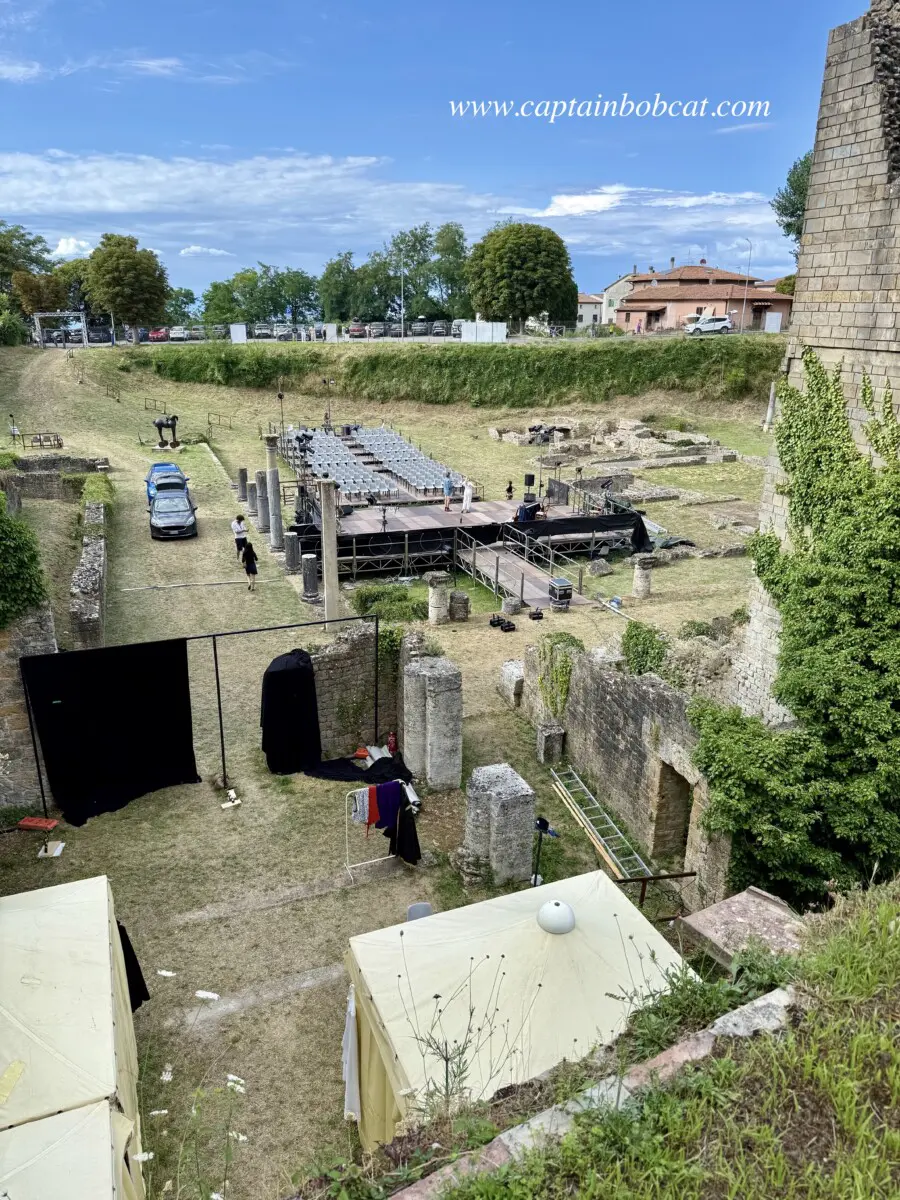
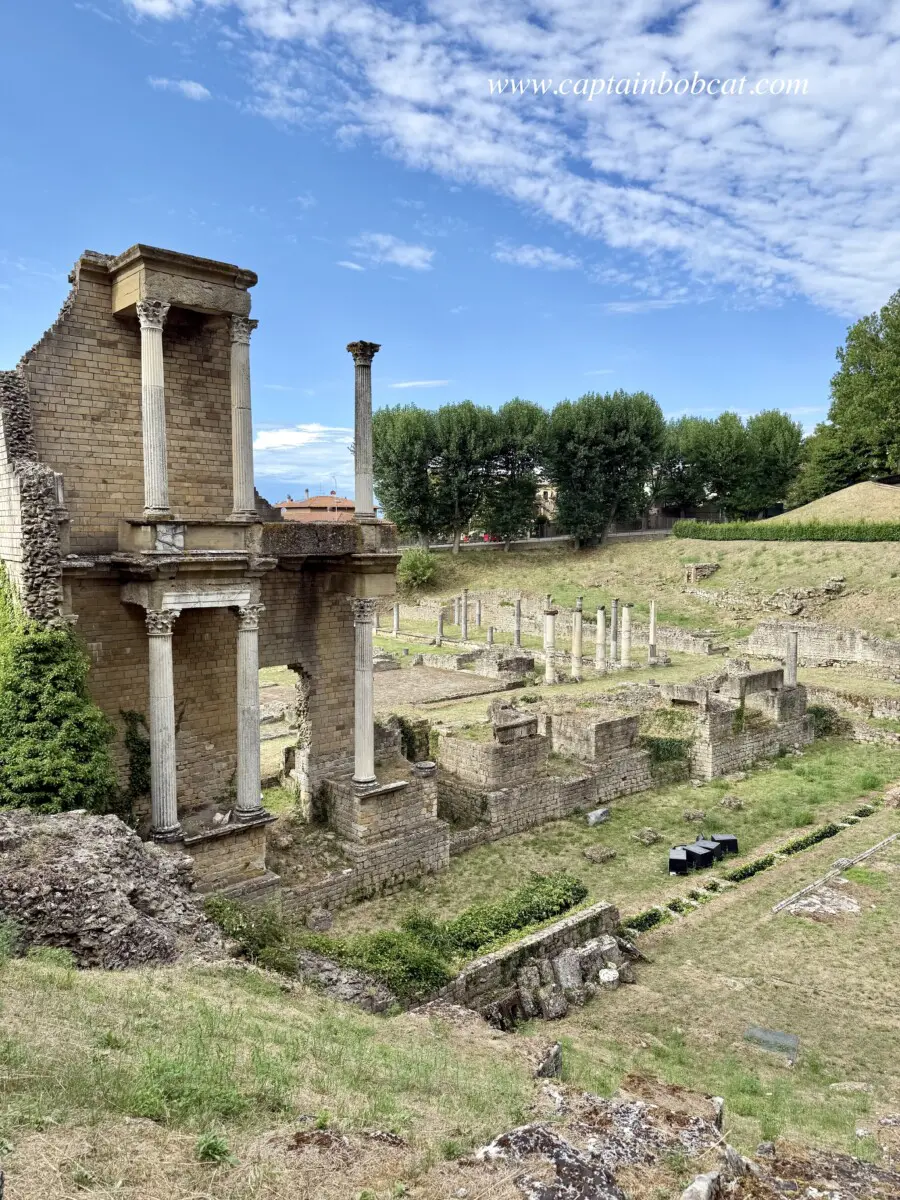
Only been discovered in the 1950s by 1950s by Enrico Fiumi, a historian from Volterra, this Roman Theatre was once able to host as many as 3500 spectators. It is from the Imperial era of at the times of Augustus and Tiberius and one of the most beautiful and best-conserved ones in Italy. Later it was taken over by a Roman Thermal Bath. Today, they often have special opera evenings on in summertime – just like when we visited.
Town Centre
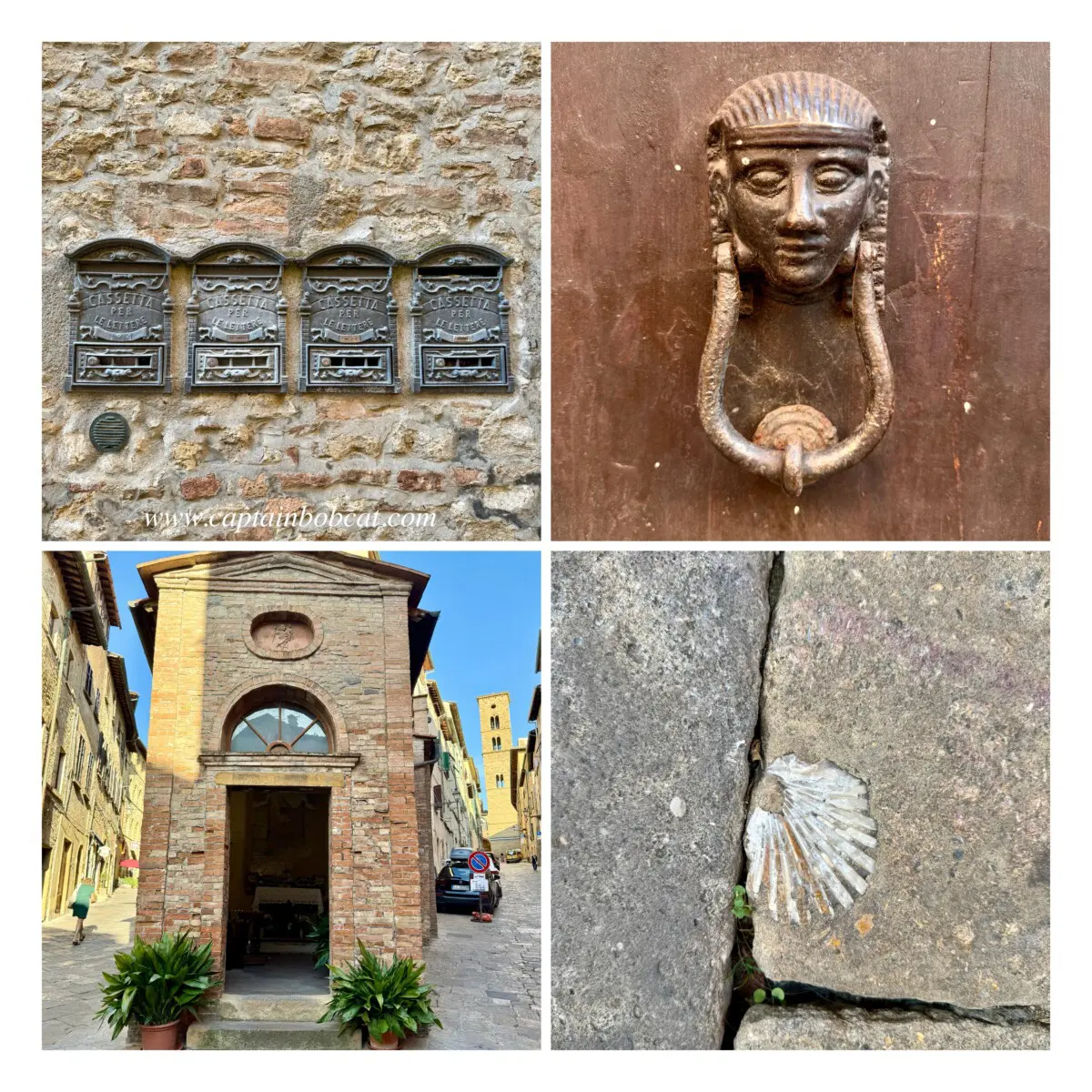
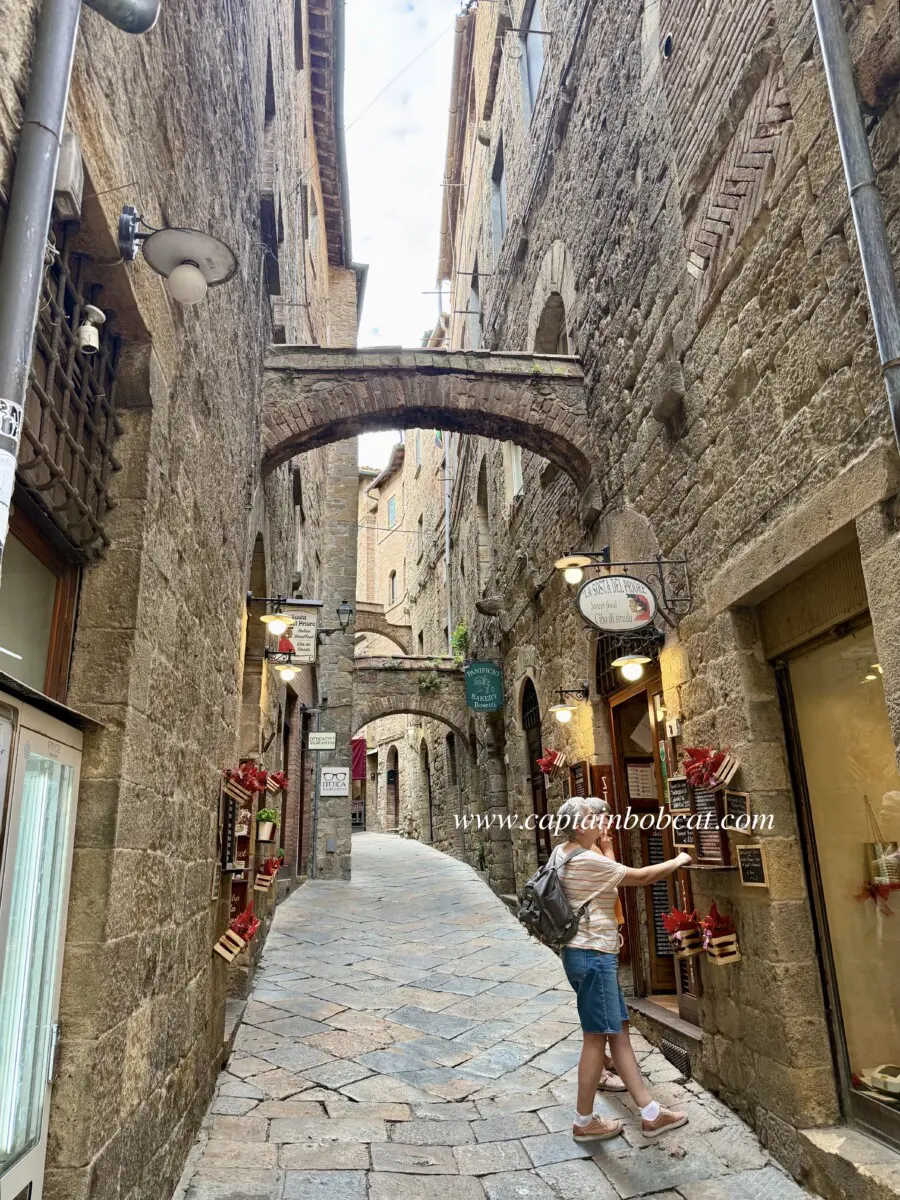
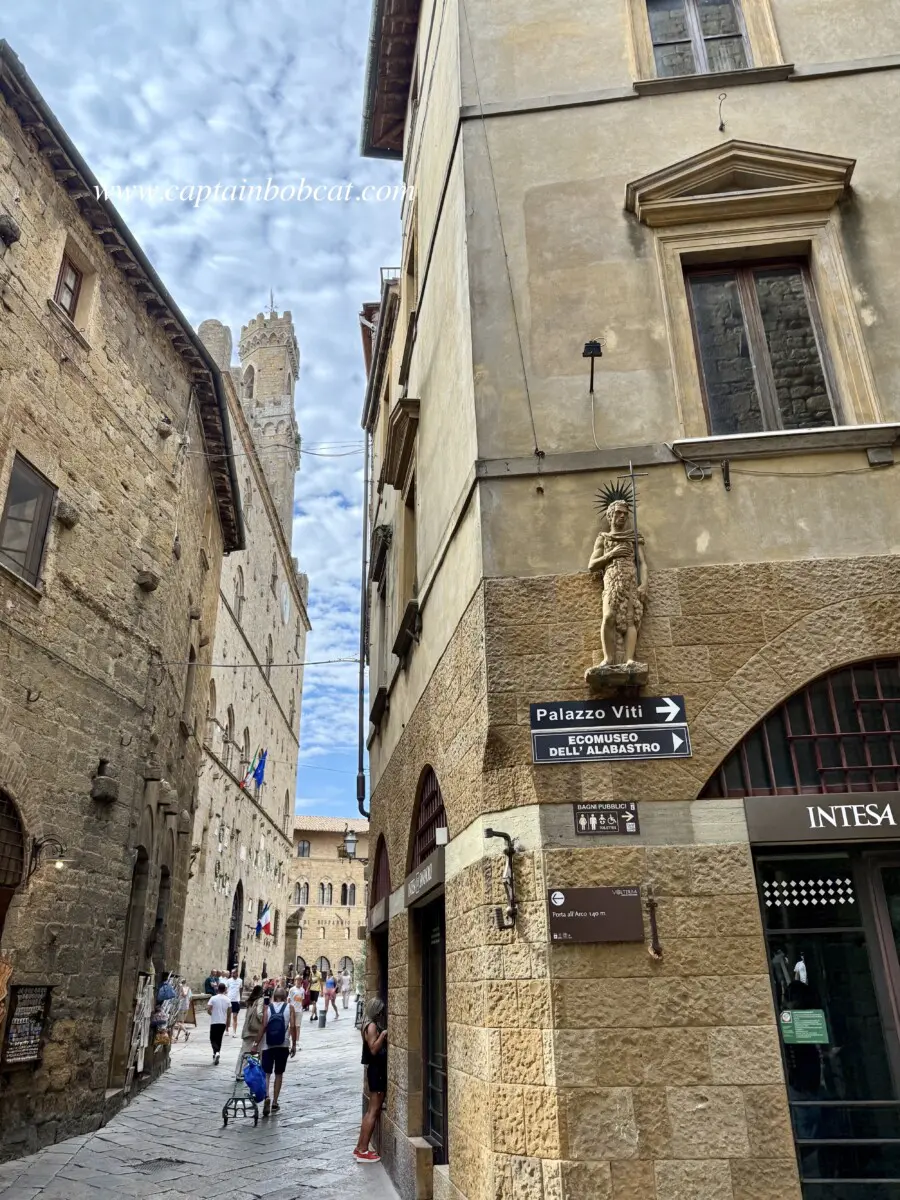
Just by spending a few hours walking around in the medieval old town, you can bump into many of Volterra’s sights. It’s beautifully preserved and maintained, too many souvenir shops and the likes have not taken over the town. Here, you will find the Palazzo Dei Priori aka Town Hall, with Gothic windows and terracotta built in the 13th century (I really just can’t comprehend the age of buildings around here! Absolutely amazing, just how so many different buildings and structures throughout centuries and from thousands of years ago still standing here.)
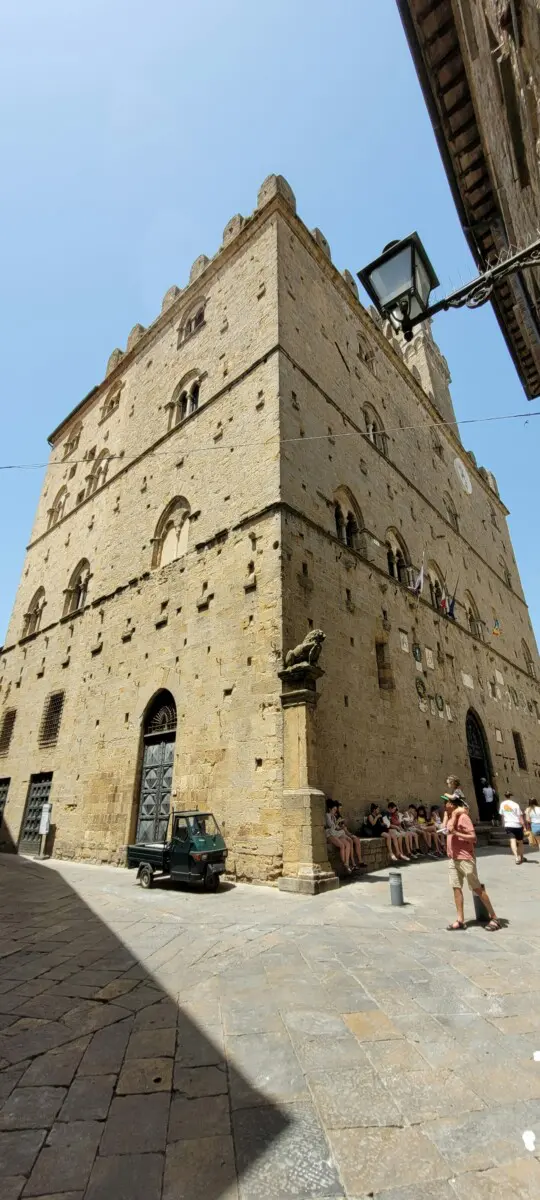
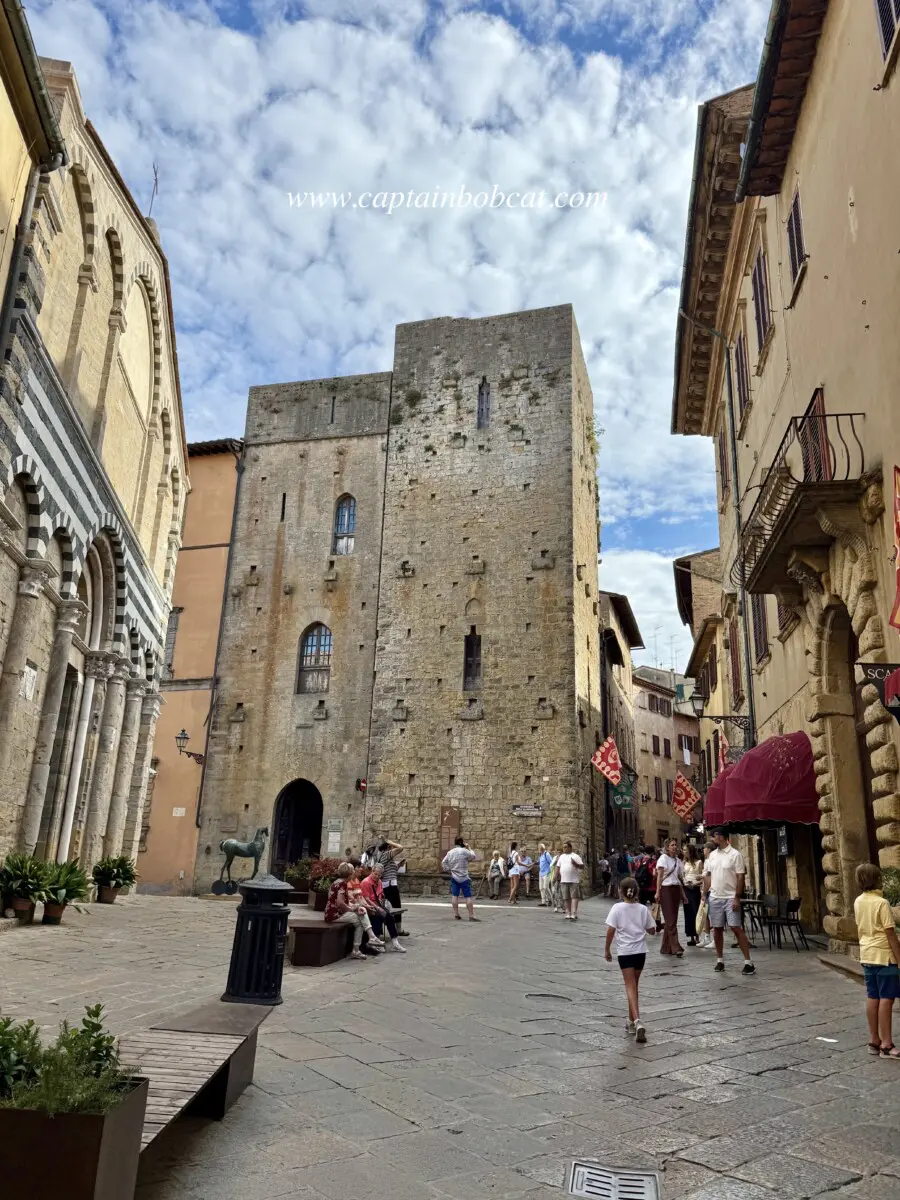
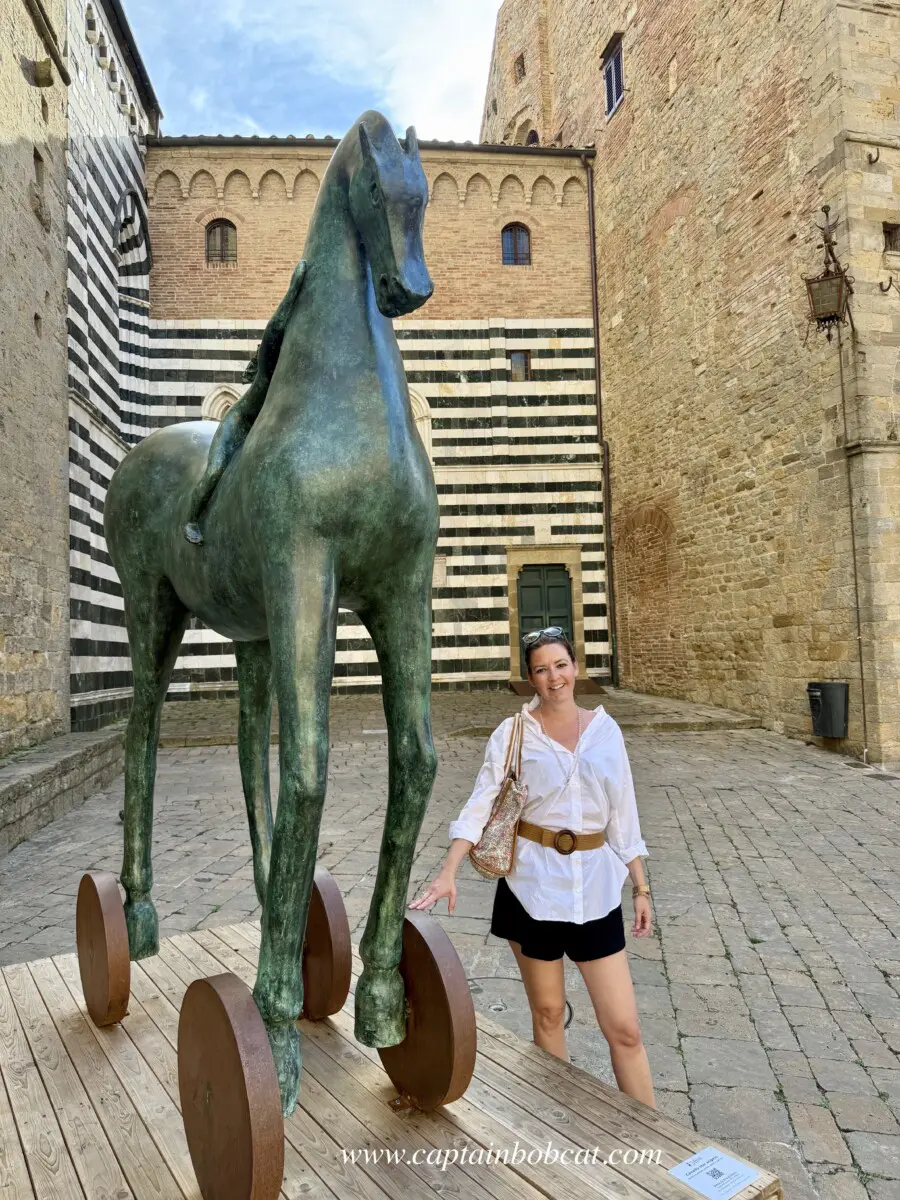
Another stunning example of medieval architecture is on the other side of the main square (Piazza San Giovanni): Santa Maria Assunta Cathedral and the Baptistery. The Baptistery I’m pictured in front of on the photo above dates back to before 1000 a.D.
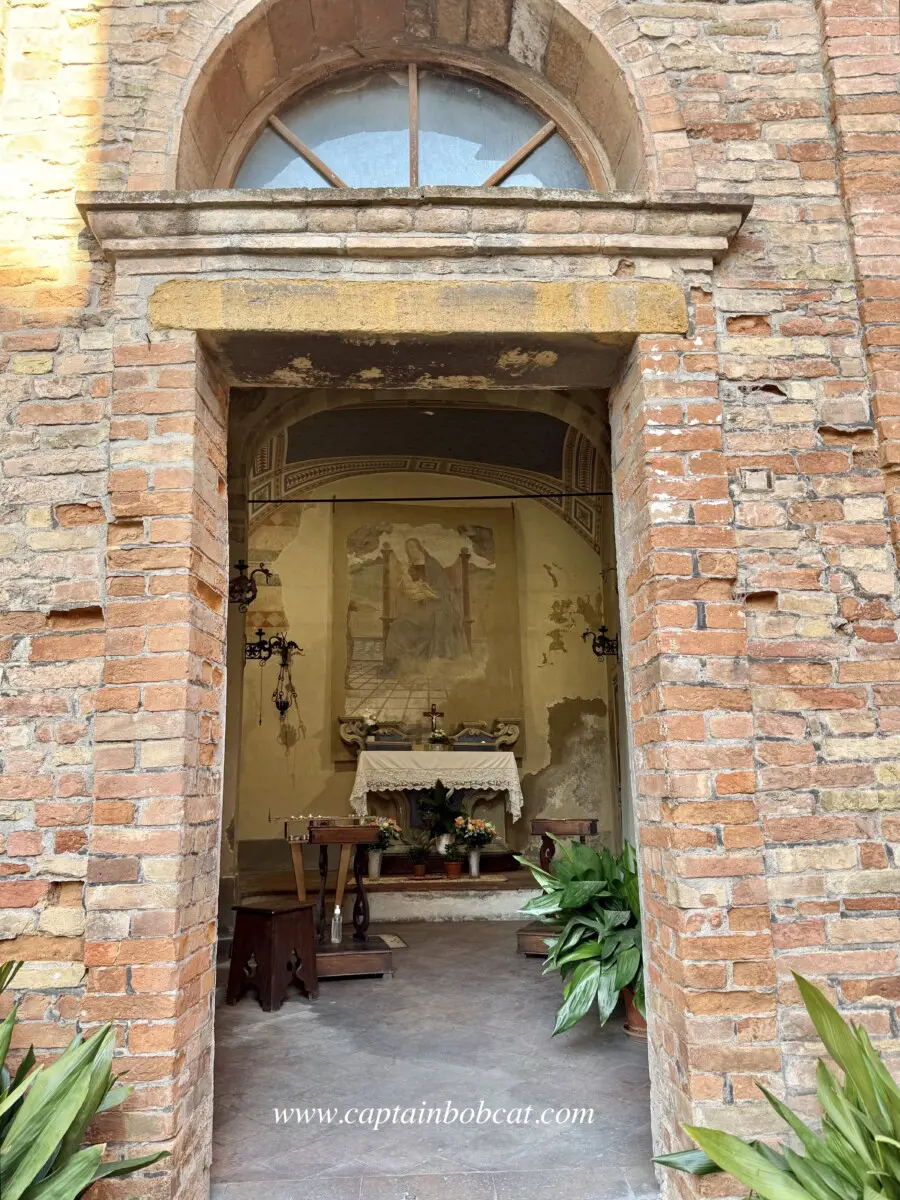
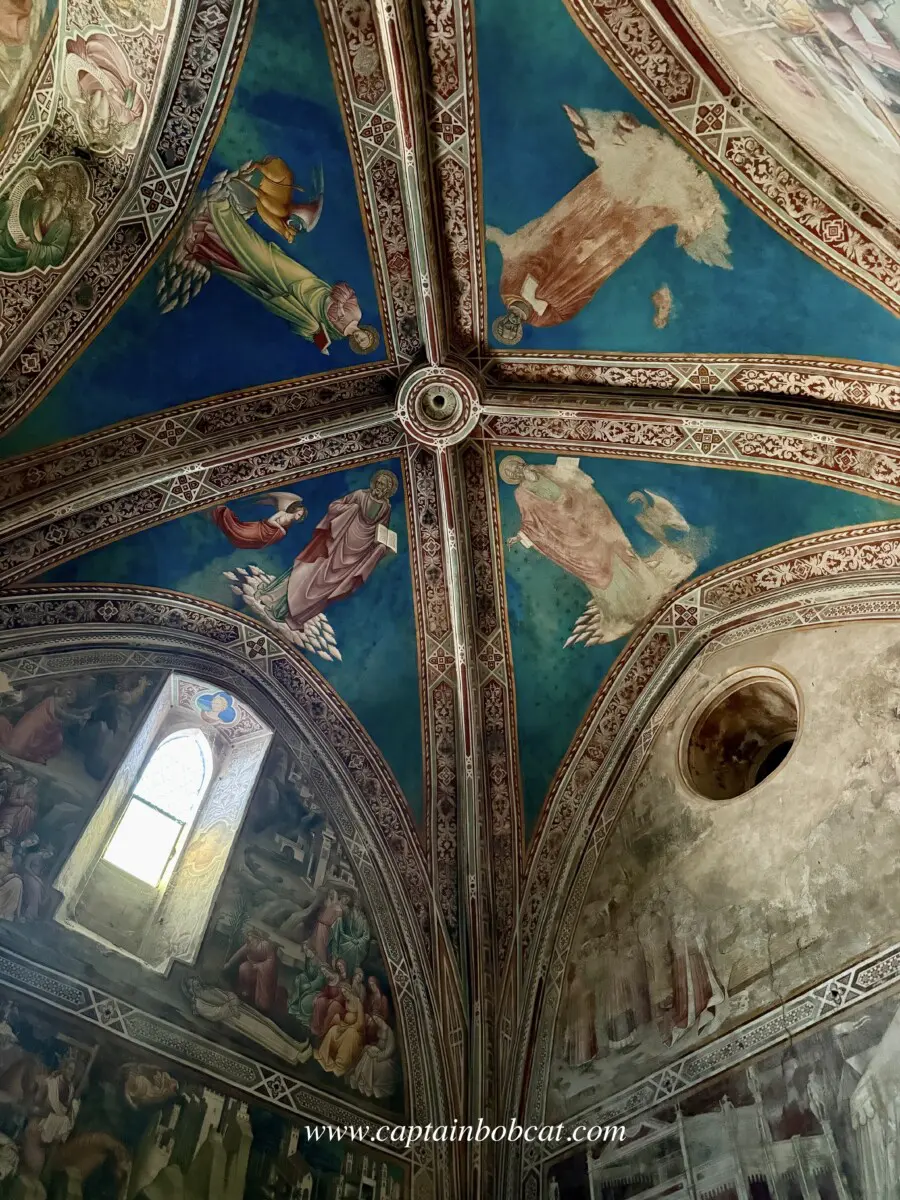
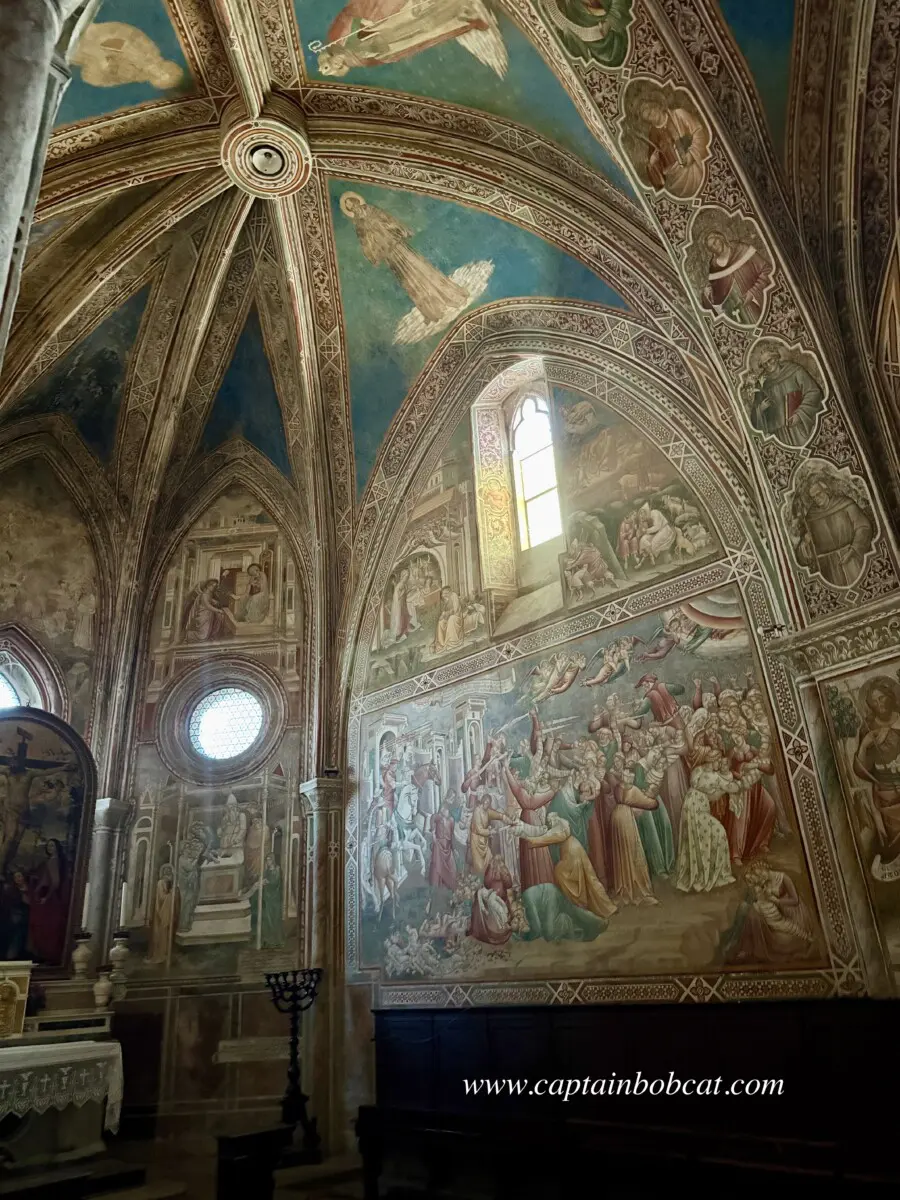
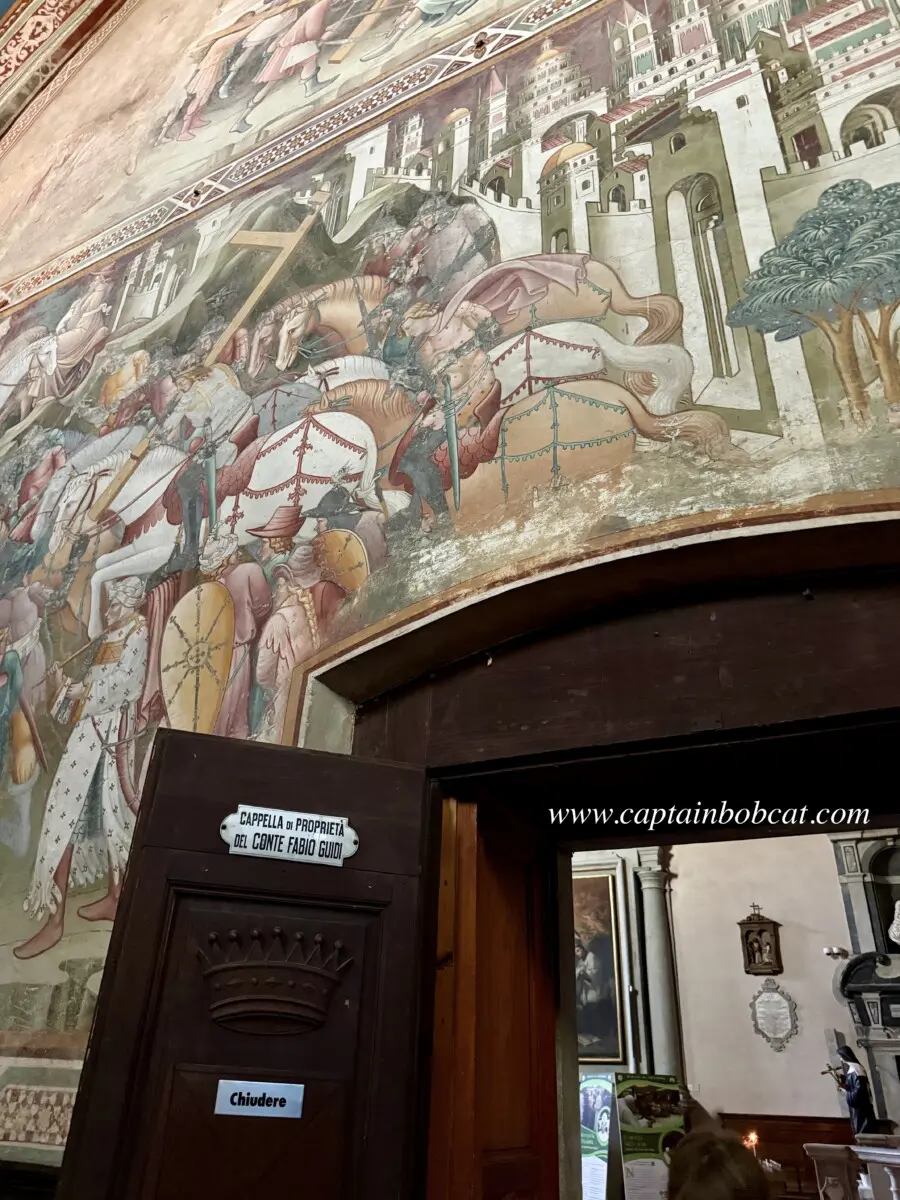
The San Francesco Church is the only one we went inside – I’m not keen on looking at religious relics hours on end and I’m much more interested in the Roman and Etruscan culture than medieval Christians but if you just visit one church in Volterra – let this be it. San Francesco used to be one of the main gates to the city of Volterra in the Middle Ages and it has ancient frescos free to anyone to visit and marvel religious art from 13th century, right on the walls of one of the side rooms of this little church, hidden in plain sight. Literally, no on is around to guard invaluable, centuries-old frescos, also no other visitors. Well strange. If you wander through the church to find the frescos, this is what you’ll see:
Alabaster Ecomuseum and Alabaster Artisan Worshops
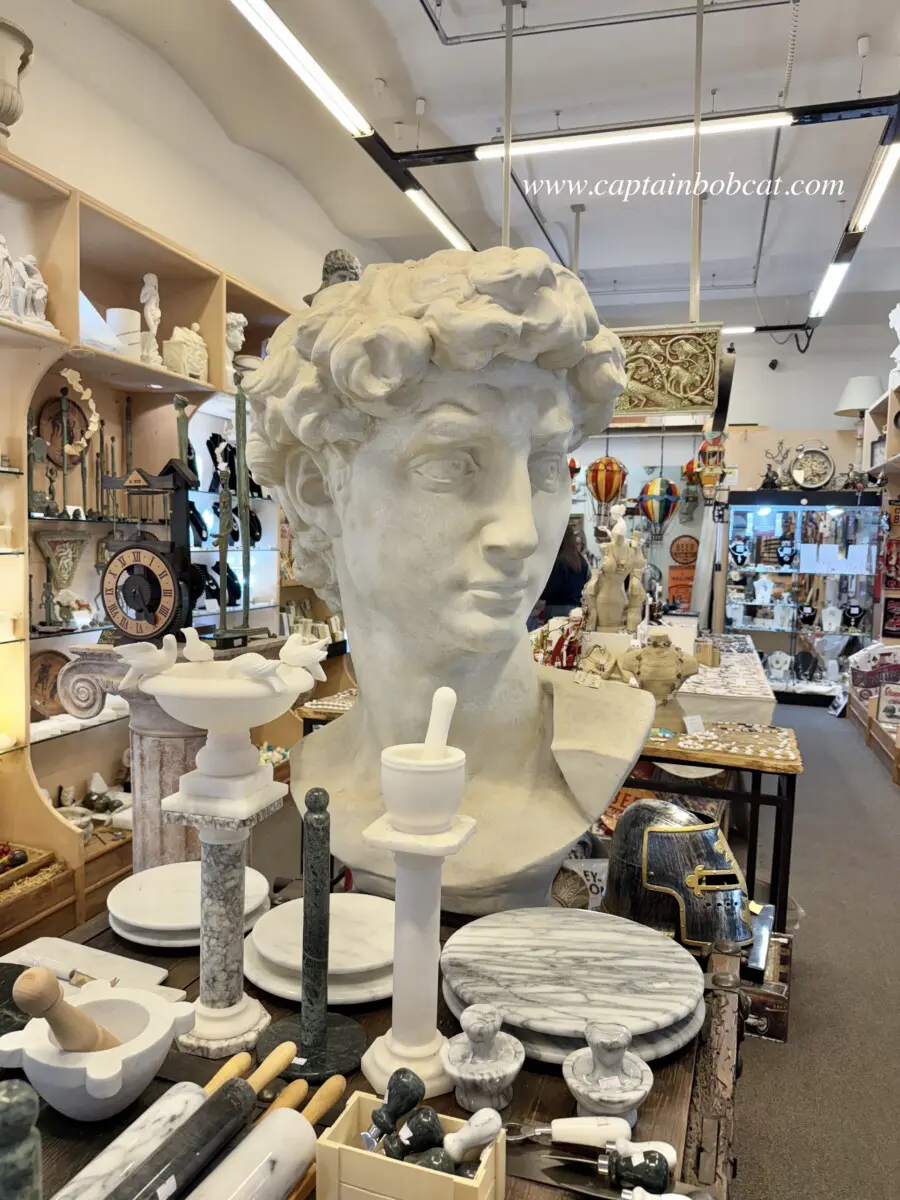
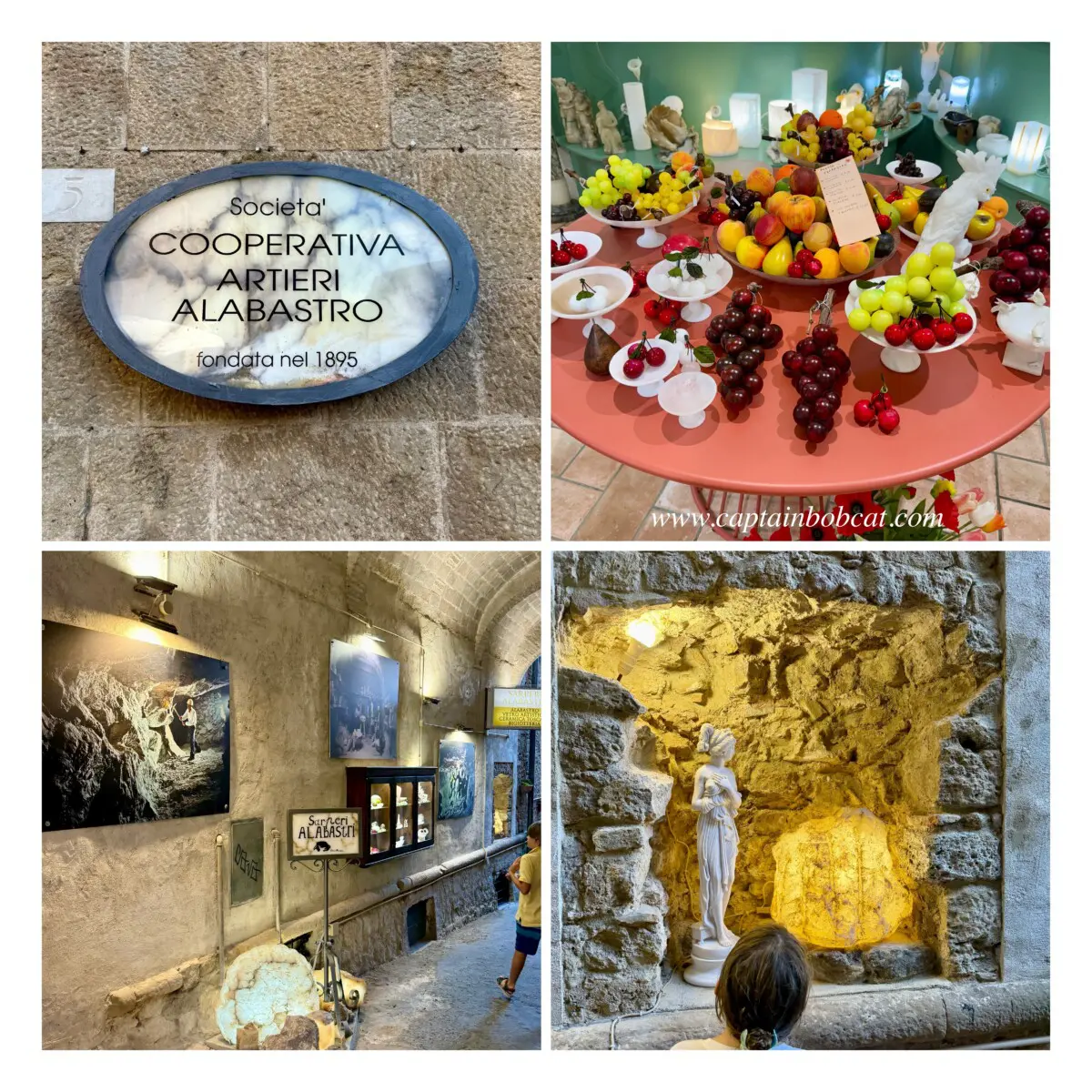
The main craftsmanship of Volterra is no doubt linked to alabaster, generally refers to the objects and art created by lightly coloured, translucent, and soft calcium minerals: gypsum an calcite. The museum is dedicated to the history of alabaster in the Volterra area, the craftsmanship and trade, dating back to the Etruscan era. The workshops around the town are linked through an Alabaster Cooperative, founded in 1895. A couple of workshops has beautiful shops selling their art and objects made of alabaster. Some shops even has a mini museum attached to them and their family’s history of alabaster craftsmanship.
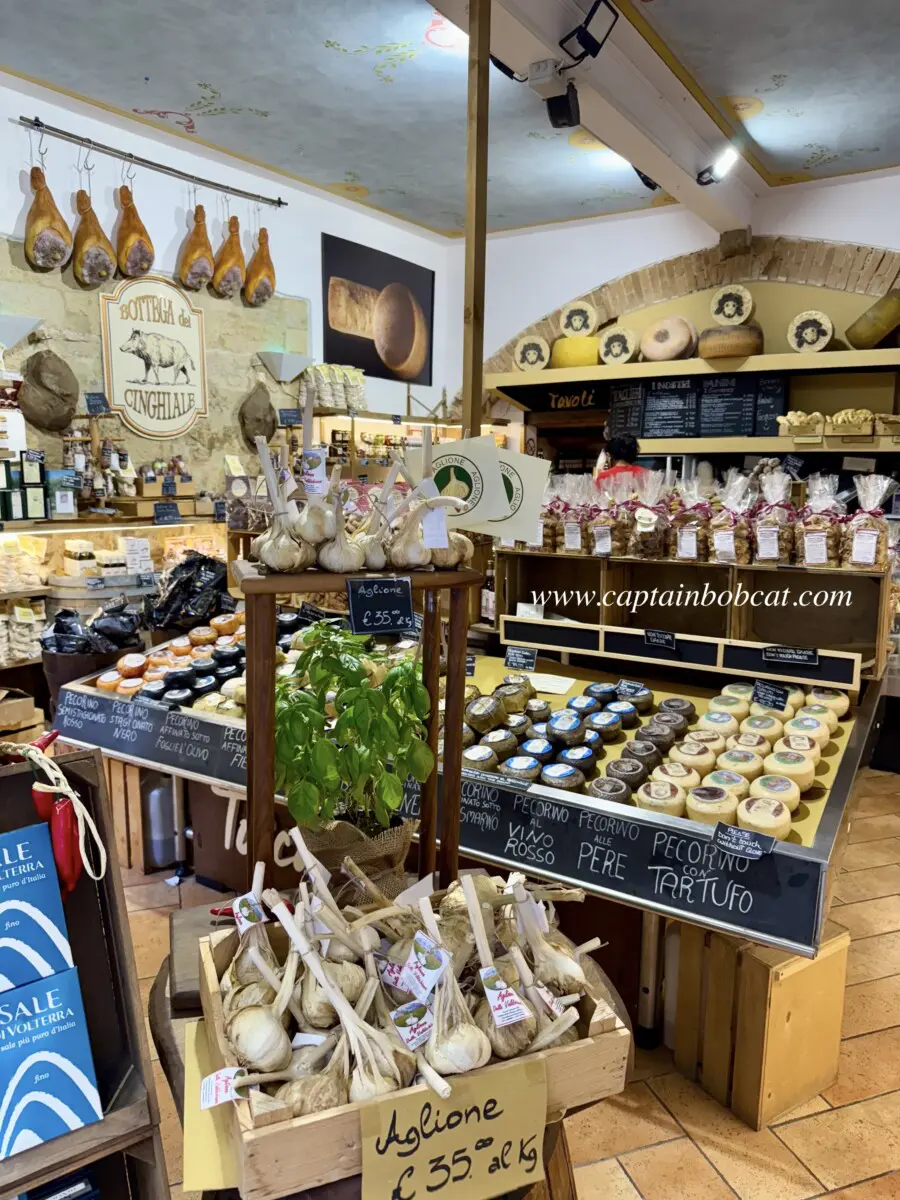
Many other lovely little shops are in the old town selling local produce and gastronomic delights.
Dining in Volterra
There is no shortage of good restaurants in Volterra by the look of it. Traditional Italian ristorantes and osterias are peppered all over the old town. None of them were too busy and they all look popular. No tourist catching tricks, they just sit there doing what they are pretty good at: cooking up local dishes, pizzas and serving local wine with friendly staff that doesn’t look overworked but smooth and professional. You can’t really go wrong in Volterra, plenty of fantastic, family-run restaurants to choose from, from Michelin stars to Italian street food and even plant-based eateries.
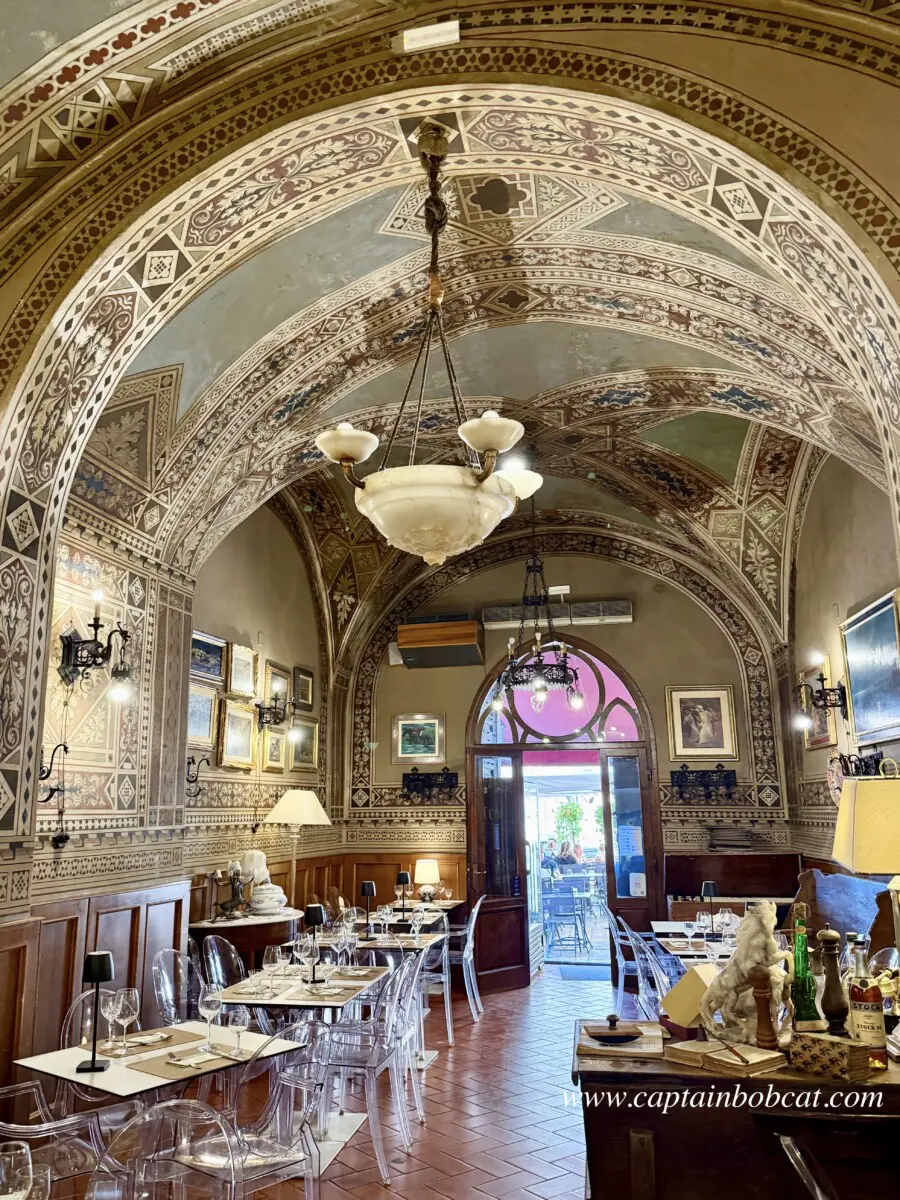
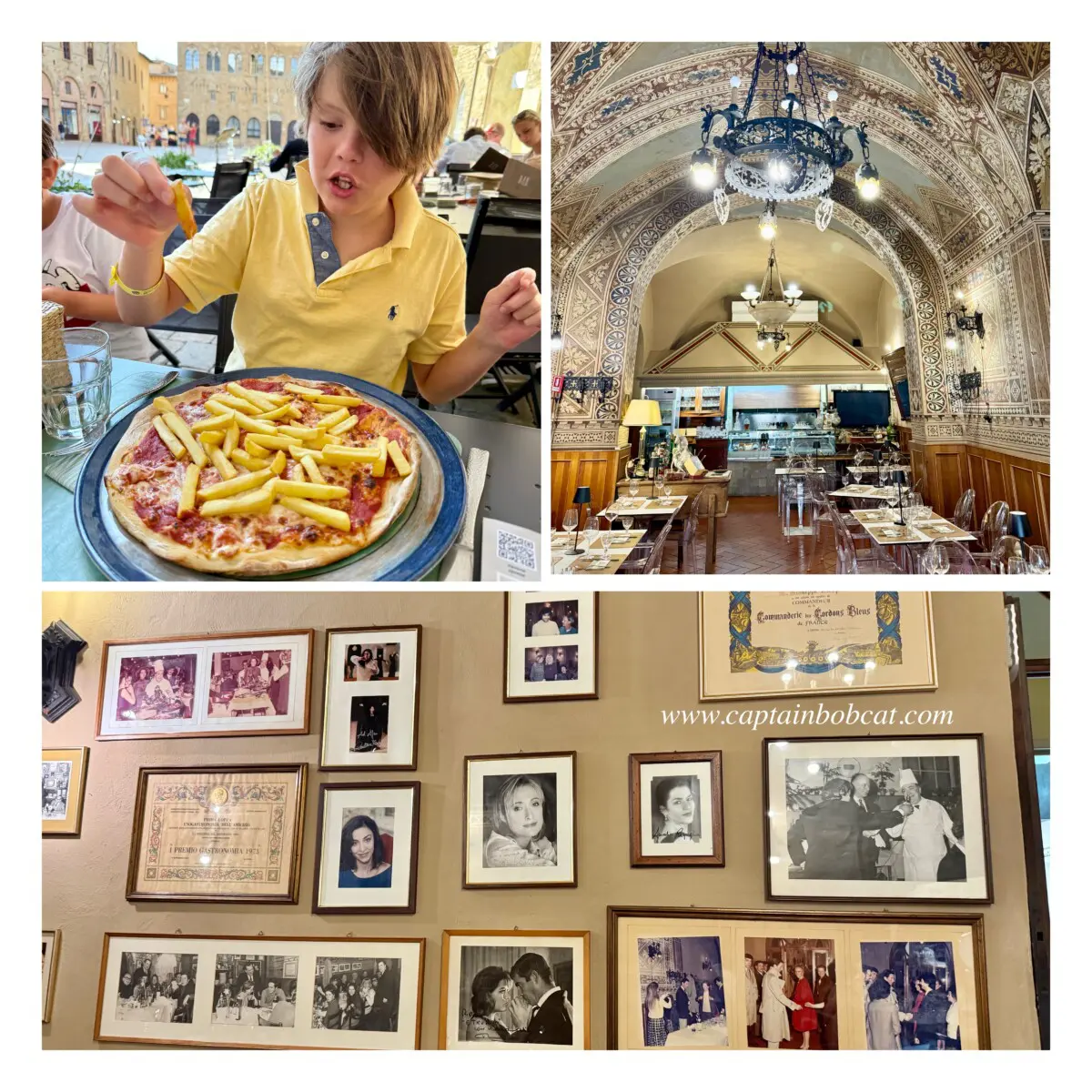
We randomly chose Ristorante Etruria and we were not disappointed. We sat outside on the terrazza but the restaurant was very beautiful! Also, ALWAYS pick the restaurant that has at least a wall of old celebrity visit photos and prizes they won displayed proudly. And finally, our pizza addict family member was able to try the infamous Pizza Patate.
Verdict
All in all Volterra is a very upmarket Italian experience. Cultured, quietly and stunningly beautiful gem of Tuscany. The visible layers of historic eras in a small, contained place like Volterra is unique and I’ve never experienced it before. It’s a real treat to spend an afternoon there – like we did, but I wouldn’t say it’s enough. I think a whole day is definitely needed to tick off the main sights off the must-see list.