
Table of Contents
This is a collaborative post.
Choosing which of the 1,154 UNESCO World Heritage Sites are worth visiting can be tough, especially since they’re spread far and wide across the globe. While each site has been recognised as being internationally important (and worthy of special protection) in its own right, there are a few of these sites that easily make their way right up to the top of any travel itinerary. Here are our top 5 World Heritage Sites we think are worth a visit:
1 Machu Picchu, Peru
For those that have Peru at the top of their travel wishlist, a trip to this magnificent country in South America wouldn’t be complete without a visit to Machu Picchu. Standing a staggering 2,430 metres above sea level, Machu Picchu is the most significant legacy left behind by the Inca civilisation. Don’t miss the impressive religious and ceremonial sanctuary made from roughly 200 structures. And let your mind run wild as you stroll through everything the Lost City of the Incas has to offer.
Secrets the Matchu Picchu holds
Often dubbed the “Lost City of the Incas,” its mysterious origins and advanced engineering have made it a wonder of the world. While many are familiar with its iconic terraces and temples, the secrets of Machu Picchu extend far beyond this.
One of its secrets lies in its construction. Built in the 15th century under the reign of the Inca emperor Pachacuti, the site showcases a sophisticated understanding of stone masonry. The precise fit of the stones, without the use of mortar, has allowed the structures to withstand the test of time and the region’s frequent earthquakes. The agricultural terraces demonstrate an impressive understanding of irrigation and farming techniques, enabling the Incas to cultivate crops in the challenging mountain environment.
And then…the location itself. Machu Picchu was strategically placed, offering not only defensive advantages but also aligning with various astronomical events. The Intihuatana stone—a ritual stone often termed the “Hitching Post of the Sun”—is believed to have had astronomical significance, serving as a calendar or a spiritual guide for the Incas. Visitors can also explore less-traveled paths that lead to hidden ruins and stunning viewpoints.
2 Taj Mahal, India
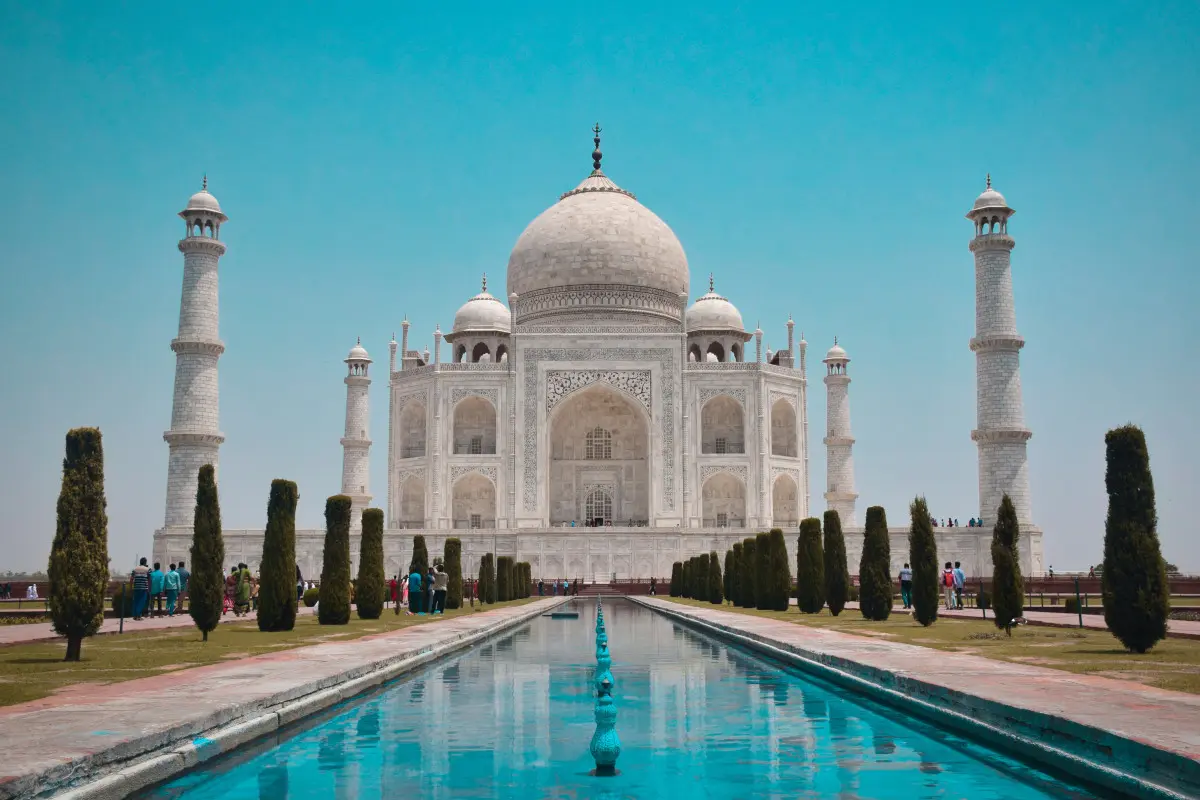
Another World Heritage Site undoubtedly at the top of most travellers’ bucket lists; the Taj Mahal. It was built in the 17th century to honour the favourite wife of a Mughal emperor. Today, between 7 to 8 million people visit this site every year to see exactly what all the fuss is about. Two tips for visiting the Taj Mahal? Visiting in the early morning is a great way to avoid the heat and crowds while looking into travel tours of India means you can visit this breathtaking mausoleum with a knowledgeable guide, as well.
Some secrets of the Taj Mahal…
The Taj Mahal, an epitome of love and architectural brilliance, holds numerous secrets within its stunning white marble façade in Agra, India. Commissioned by the Mughal Emperor Shah Jahan in memory of his beloved wife, Mumtaz Mahal, the structure is often touted as one of the greatest symbols of love in history.
However, beneath its beauty, the Taj Mahal harbors intriguing secrets… One significant secret is its architecture. While it appears to be a perfect symmetrical masterpiece, slight imperfections were intentionally included by the builders. These deviations were believed to be a way to demonstrate the belief that only God is perfect. On this note, let’s also mention that, the Taj Mahal is famed for its optical illusions. From different angles, the monument appears to change its shape. This is primarily due to the use of translucent marble combined with the effects of light that shift throughout the day.
The construction of the Taj Mahal itself is shrouded in mystery. Legends suggest that the emperor planned to build a second identical mausoleum in black marble across the Yamuna River, a project that sadly never came to fruition. Some historians believe this was due to both financial constraints and the emperor’s eventual imprisonment by his son, Aurangzeb.
Another fascinating aspect is the complex symbolism embedded in the Taj Mahal’s design. The gardens, pathways, and the reflecting pool all have profound meanings associated with paradise, fertility, and eternal life, reflecting the Mughal philosophy of a life and garden intertwined.
The Taj Mahal’s preservation remains an ongoing challenge. Pollution and environmental factors have threatened its brilliant white color. Conservation efforts continue to protect this magnificent building.
3 Kathmandu Valley, Nepal
A visit to Nepal wouldn’t be worthwhile without heading to Kathmandu Valley. This stunning specially protected site is located in the foothills of the Himalayas. It is recognised as not just the home of two Buddhist stupas, but also two Hindu temples and three secular sites! Speaking of stupas, don’t miss your chance to see the famous 14th-Century Boudhanath Stupa, whose eyes appear to follow you and watch your every move…
Some things you might have not known about Kathmandu
One fascinating thing to know about Kathmandu Valley is its extraordinary biodiversity. While often associated with urbanization, the valley also hosts a variety of ecosystems. From forests to terraced fields and rivers, these natural habitats are home to numerous flora and fauna species, many of which are endemic to the region. This diversity makes the valley a vital part of Nepal’s ecological system.
Another intriguing fact is the valley’s role as a melting pot of cultures long before the modern blending of global societies. Kathmandu, Bhaktapur, and Patan, the three major cities, have been interconnected through trade routes for centuries. Each city boasts its own distinct festivals and customs, rooted in traditions that intertwine Hindu and Buddhist practices. You might be surprised to learn that the Kathmandu Valley is also an architectural wonder. It is home to seven UNESCO World Heritage Sites, including the iconic Swayambhunath Stupa (also known as the Monkey Temple) and the stunning Durbar Squares of the three cities. While many people flock to see these prominent sites, the valley is dotted with countless lesser-known temples and monuments, each with its own story waiting to be uncovered. The valley’s history dates back over 2,000 years, making it one of the oldest continuously inhabited regions in the world.
4 Great Barrier Reef, Australia
Want to visit the world’s largest collection of coral reefs? What about seeing over 1,500 species of fish and around 240 species of birds? Or every crustacean, anemone and marine worm under the sun? Well then, the Great Barrier Reef is your answer. Snorkel at the breathtaking Michaelmas Cay National Park. Or get up close and personal to giant clams and sea turtles on a glass-bottom boat.
Some interesting facts about the reef
Stretching over 2,300 kilometers along the coast of Queensland, Australia, this natural wonder is not only the largest coral reef system in the world but also a UNESCO World Heritage Site. However, beyond its stunning visuals, the reef presents fascinating secrets.
One of the most interesting aspects of the Great Barrier Reef is its sheer age. Estimates suggest that some of the corals have existed for over 20 million years, making them older than many of the surrounding landscapes. This is partly why the reef has become a hotspot for marine research. Scientists believe that studying the reef could lead to breakthroughs in climate resilience and biodiversity conservation.
In addition to its age, the reef is home to an astonishing range of species. While many are familiar with iconic creatures like clownfish and sea turtles, it’s less known that the reef hosts over 400 species of coral and more than 1,500 species of fish. The biodiversity does not stop there; it also includes various species of dolphins, dugongs, and around 6,000 species of mollusks.
The Great Barrier Reef acts as a natural barrier against storm surges, protecting the coastal communities from severe weather events—something often overlooked in discussions about its environmental importance. It also generates significant economic activity, contributing billions to the local economy through tourism and fishing.
The reef is under constant threat from climate change, coral bleaching, and human activities. Efforts are ongoing to protect and restore this marvel, because it also requires our commitment to its future preservation. Understanding these lesser-known facts can enhance our appreciation for the Great Barrier Reef and underscore the importance of actions needed to safeguard it for generations to come.
6 Petra, Jordan
It’s hard to get much more impressive than a UNESCO World Heritage Site. But what about one that’s also a new Seven Wonder of the World? Also known as the rose-red city because of the striking red sandstone surrounding the half-carved rocks. The ancient city of Petra is just one of the most beautiful landmarks in Jordan. It is waiting to be discovered by travellers and tourists alike.
Lesser known facts about Petra
Petra, the breathtaking archaeological site in Jordan, is famous for its rock-cut architecture and water conduit system. While many people are familiar with its stunning facades and historical significance, there are lesser-known facets of Petra that make it even more intriguing.
We all know about Petra’s classification as a UNESCO World Heritage Site. While this may not seem obscure, the reason behind its designation is fascinating. Petra is not just an archaeological mystery; it showcases the ingenuity of the Nabataeans who inhabited the area over 2,000 years ago. They were remarkable traders who adapted to their arid environment, creating sophisticated systems for collecting and storing water. This allowed the city to thrive in a location that might otherwise be deemed uninhabitable. The advanced hydraulic engineering displays their exceptional ability to harmonize with nature, which is often overshadowed by the impressive facades of the monuments.
Another interesting detail is that Petra was largely forgotten by the Western world until its re-discovery by Swiss explorer Johann Ludwig Burckhardt in 1812. Before this, the site was lost to time, known only to the local Bedouin tribes, who valued its hidden treasures but did not share its secrets with outsiders. Burckhardt’s journey into Petra opened the doors to archaeological exploration, sparking interest in the site that would eventually lead to extensive studies and conservation efforts.
Thinking of ticking all 1,154 UNESCO World Heritage Sites off your travel bucket list? Why not start with our first five favourites? And if these five leave you hungry for more, South Korea has a wealth of UNESCO-listed sites of its own, the royal palaces of Seoul and the temple-dotted hills of Gyeongju, and tours to South Korea let you explore them with a knowledgeable guide.