
Table of Contents
Cambodia, also known as the Kingdom of Cambodia – the kingdom of ancient wonders and timeless charm in Southeast Asia located on the Indochinese Peninsula. A a travel destination that truly has something for everyone. Throughout the country’s long history, religion (Hinduism and Buddhism) has been always major source of cultural inspiration. Cambodian art, architectures, music and dance was an inspiration and an influence on the surrounding countries since the early centuries of humanity. Today, the legacy of ancient Khmer culture can be experienced in Cambodias magical temples and hidden gems.
Go Beyond the Beaten Path to Find Hidden Gems
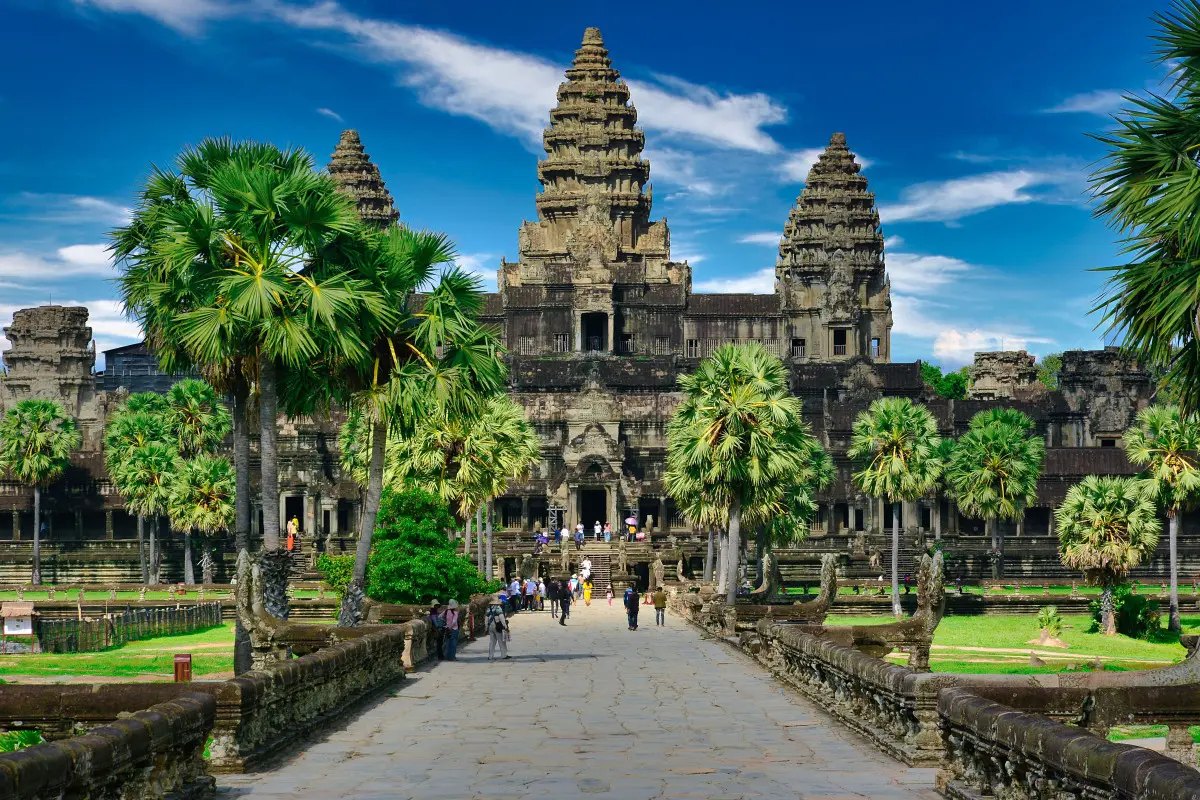
While the grandeur of Angkor Wat draws millions of travellers interested in culture, Cambodia’s lesser-known treasures are also beautiful and interesting places to visit.
- Beng Mealea, often dubbed the “Indiana Jones Temple,” is a sprawling complex primarily reclaimed by the jungle. Visitors can navigate its moss-covered ruins and tangled vegetation.
- The remote temple of Preah Vihear, perched atop a cliff on the Dangrek Mountains, provides panoramic views of the surrounding plains. Also recognised as a UNESCO World Heritage Site.
- For an opulent journey along the Mekong River, travellers might consider the best Mekong luxury cruises, renowned for its modern design and luxurious amenities.
- Koh Rong Sanloem: island escape to pristine beaches, ideal for snorkelling and relaxation.
- Cardamom Mountains: A wilderness adventure destination, home to dense rainforests and rare wildlife, perfect for trekking and eco-tourism.
- The laid-back riverside town of Kampot known for its colonial architecture, pepper plantations, and proximity to Bokor National Park.
- Mondulkiri Province: Cambodia’s highland region with beautiful rolling hills, waterfalls, and ethical elephant sanctuaries.
- Koh Kong: A coastal paradise with unspoiled beaches, mangrove forests, and the Tatai River, ideal for kayaking and staying in eco-lodges.

Temples: Guardians of Ancient Glory
At the heart of Cambodia’s find the Angkor Archaeological Park, home to Angkor Wat. Constructed in the early 12th century by King Suryavarman II, Angkor Wat stands as the world’s largest religious monument, symbolising the zenith of Khmer architecture. Its bas-reliefs depict Hindu epics, celestial dancers, and other historical events.
Beyond Angkor Wat, the temple complex of Bayon stands with its enigmatic stone faces. The 54 towers feature 216 colossal stone faces symbolizing the spiritual nature of the bodhisattva Avalokiteshvara – who sees all. The temple’s labyrinthine corridors and detailed carvings narrate tales of battles, daily life, and mythological scenes.
Ta Prohm, often referred to as the “Tomb Raider Temple” referring to its appearance in the Hollywood blockbuster movie featuring Angelina Jolie. Here, ancient trees intertwine with temple ruins, it is an ancient Buddhist monastic complex that was constructed in 1186 AD. Visiting this temple is truly akin to time travel.
Culture and Traditions
Dance-drama
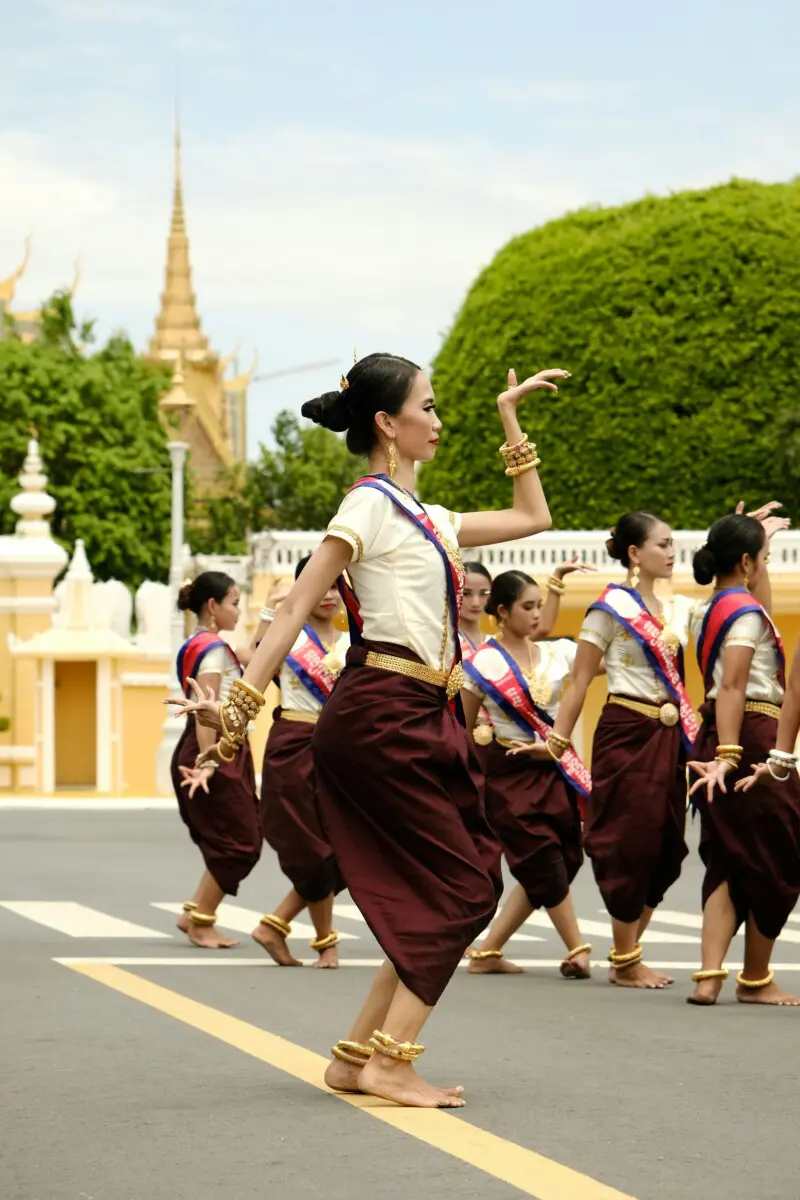
The essence of Cambodia’s culture is deeply rooted in its religious history and traditions that are pretty unique within the region. The traditional dance as often referred as “dance-drama” which is rather a theatrical event, particularly Apsara, is a cornerstone of Khmer cultural expression. There are 3 main genres: Classical Dance for the royal court, Folk Dance portraying cultural traditions, and Shadow Puppet. Performers adorned in ornate costumes and golden headdresses enact stories from Hindu and Buddhist mythology are coming alive at a performance where centuries-old choreography passed down through generations.
Craftsmanship
Traditional crafts such as silk weaving, pottery, and stone carving remain integral to Cambodian culture. Artisans employ techniques honed over centuries, producing detailed textiles, sculptures, and ceramics. Visiting local workshops provides insight into these crafts and supports preserving these invaluable skills.
Culinary Adventures: A Feast for the Senses
Cambodian cuisine is a delightful blend of flavours and textures. It blends sweet, sour, salty, and bitter tastes. Signature dishes like Amok, a fragrant coconut milk curry steamed in banana leaves, and Lok Lak, stir-fried marinated beef served with fresh vegetables. Street markets are a great way to try them all: everything from tropical fruits to grilled delicacies.
Beyond well-known dishes like Amok and Lok Lak, adventurous foodies can explore local specialities such as Nom Banh Chok, a traditional Khmer breakfast noodle soup, and Kuy Teav, a flavorful broth noodle dish.
In the village of Preah Dak, visitors can engage in traditional rice noodle-making processes.
Festivals Celebrating Heritage and Faith
One of the most significant is Bon Om Touk, the Water Festival, celebrated annually in November to mark the reversal of the Tonle Sap River’s flow. This three-day event features boat races, illuminated floats, and fireworks, drawing crowds to Phnom Penh’s riverside.
Another major celebration is Pchum Ben, or Ancestors’ Day, held in September or October, where Cambodians pay respects to deceased relatives through offerings at pagodas. The Khmer New Year, celebrated in April, is marked by traditional games, dances, and ceremonies to usher in prosperity.

Natural Wonders of Cambodia
Cambodia’s natural beauty is a rarity on the planet. The Cardamom Mountains, one of Southeast Asia’s largest rainforests, is rich in wildlife, including elephants, gibbons, and clouded leopards. Eco-tourism initiatives offer guided treks, allowing visitors to experience the wild beauty of Cambodia while also supporting conservation efforts.
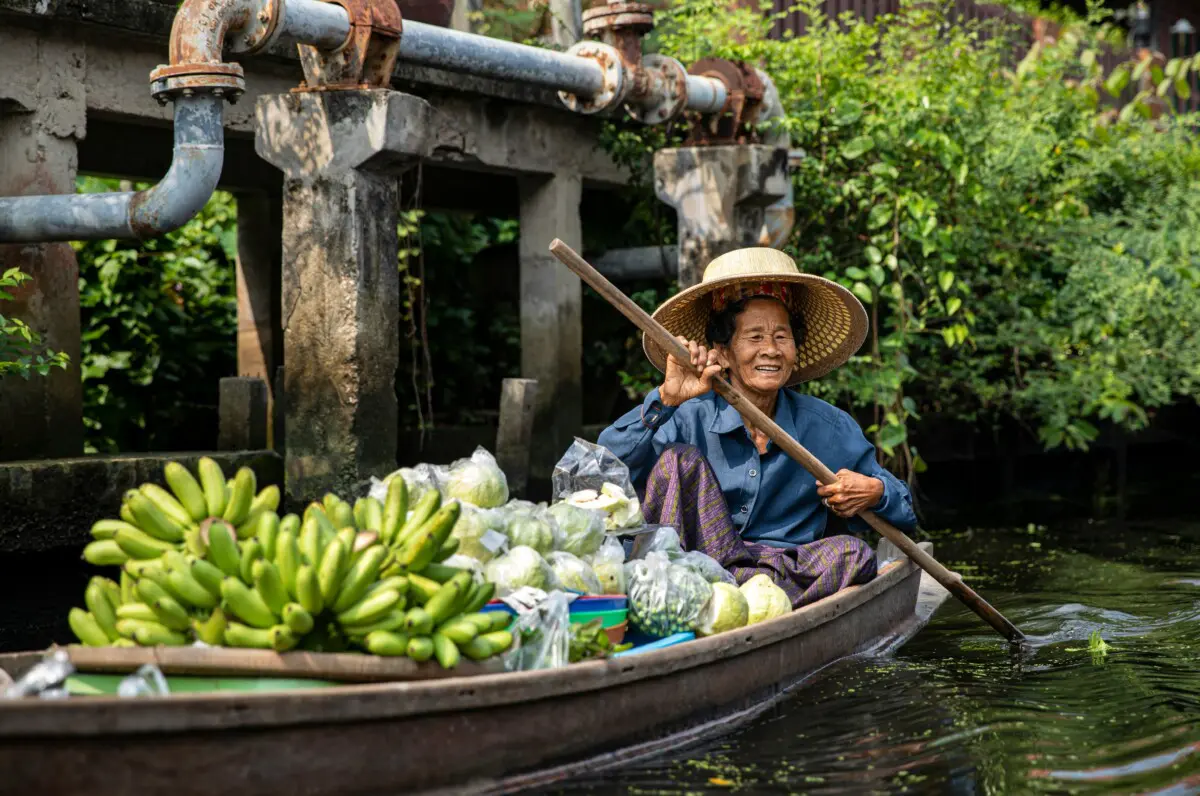
The waters of Tonle Sap Lake, Southeast Asia’s largest freshwater lake, sustain floating villages where communities live in harmony with the ebb and flow of the seasons. Exploring these villages by boat provides insight into this unique, water based way of life.
Resilience and Revival: A Testament to the Human Spirit
Cambodia’s recent history can be really described with one word: resilience. The scars of the Khmer Rouge era are evident, yet the nation’s spirit remains unbroken. Sites like the Tuol Sleng Genocide Museum and the Killing Fields stand as sombre reminders of past atrocities. The Cambodian people’s unwavering optimism and dedication however, helped them to rebuild their nation from the ruins. This optimism and celebrating life is evident in their warm hospitality and how they welcome tourists.