
Table of Contents
This is a collaborative post.
I have a confession that will not shock anyone who has stood in a British supermarket in February, holding a plastic-wrapped tomato that has flown further this year than I have. Sometime last winter I started leaving a tab open on my laptop.
Not shopping, not recipes. A weather forecast for a small town on the Silver Coast of Portugal, on the western coast. Mainly, because we do travel there once in every year or two, so I know Portugal very well, and this little town was not yet included in our travels in Portugal. We normally go to the Algarve. I would glance at it between edits, the way you check on something you love but will not admit to yet. Eighteen degrees. Sunny. Again.
Obviously, we have not sold everything and moved (probably will not happen ever, unless the UK goes to a very unfavourable political direction) and I am suspicious of those stories anyway. This is a smaller, more honest one, about the daydream that a lot of us in the slow-living, grow-your-own, make-do-and-mend corner of the internet quietly share, and what happens when you finally let yourself look at it properly.
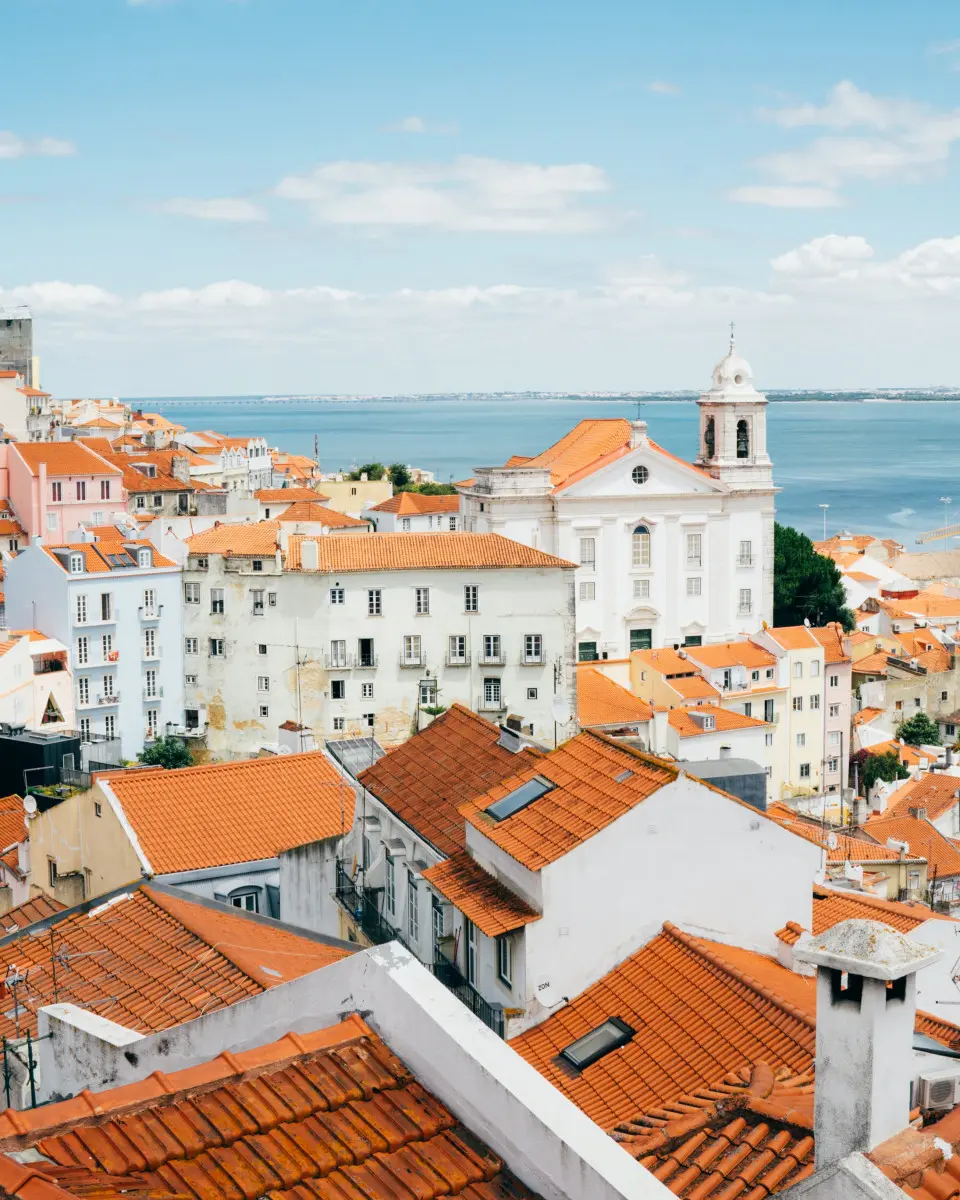
Why the daydream is always somewhere warmer
The green life I write about is, if I am honest, easier in a kinder climate. I can preach about seasonal eating, but our English growing season is short and stubborn. I can bang on about drying laundry outdoors, then watch it rain sideways for three weeks. There is a reason so much of the sustainable-living inspiration online seems to come from people with a lemon tree in the garden and a compost heap that actually breaks down before Christmas.
My own compost heap spends four months of the year as a soggy, ambitious failure, and I have made peace with photographing it only from flattering angles.
Portugal kept surfacing in my feeds (mainly also, because I just often research for our next trip) not because of beaches but because of gardens. People my age growing their own citrus, keeping chickens, restoring old stone houses with lime plaster and cork insulation, cooking with what the market had that morning. It looked less like escape and more like the thing I was already trying to do, just with the weather on its side.
That is a dangerous kind of envy, the productive kind. It sent me down comment threads and property listings I had no business browsing, the way you look round a house you cannot afford just to see how the kitchen is laid out.
The unglamorous middle bit nobody posts about
Here is where the fantasy meets the spreadsheet, and where most of the honest accounts go quiet. Moving your life to another country is not a Pinterest board. It is paperwork, and tax residency, and working out whether your income even qualifies you to stay.
I fell down this particular hole for a whole weekend. For people who are not moving for a job, who have some capital rather than a fixed local salary, the route into Portugal that keeps coming up is not a work visa at all; it is a residency-by-investment permit that lets you earn the legal right to live there while, for now, still building your actual life somewhere else. I read forum thread after forum thread about the investment visa most of them end up researching, and the detail that stopped me mid-scroll was how little time you actually have to spend in the country to keep it. Then I closed the laptop and went to make tea, which is the British response to any large feeling (also a bit weir to me as I’m not even British, but seems like I turned into one over the past decades living here).
The visa itself isn’t really the point. What’s true is that the daydream, examined closely, doesn’t evaporate. It just gets more specific, and more adult. You stop imagining a beach and start imagining a tax year.
What the exercise actually taught me
I did not book a one-way flight. What I did was quieter and, I think, more useful. Forcing myself to look at the real version of the fantasy, the logistics, the costs, the loneliness that expat blogs politely skip, did two things.
First, it made me appreciate what I already have. My slightly feral garden, the neighbours who take my parcels, the fact that I can read every form that lands on my doormat. There is a sustainability to community that no amount of sunshine replaces, and you only see it clearly when you imagine leaving it. I know which neighbour to knock on when the boiler dies. I know which bin goes out on which Tuesday, which sounds small until you picture explaining it in a language you barely speak.
Second, it turned a vague ache into a plan with a timeline. Not this year. Maybe not the next. But we started learning the language, badly, over dinner. We started saving in a different way. We started treating the daydream as a project rather than a comfort blanket, and that changed how it felt to hold.
The greener life is a direction, not a postcode
I write a lot about small changes: the banana skins in the compost, the jumper worn twice more before washing, the meal built from the sad vegetables at the back of the fridge. The move-abroad fantasy sits oddly next to all that, because it is the least small change imaginable. For a while I felt like a hypocrite for wanting it.
But I have made my peace with the daydream. Wanting a life more in step with the seasons is the same instinct behind the compost heap and the twice-worn jumper, just pointed at a bigger canvas. Whether we ever actually go is almost beside the point. The wanting made me plant more, waste less, and pay attention to what a good life is actually made of.
Leaving the tab open
The weather tab is still there. I glance at it less obsessively now, more like a friend I am keeping in touch with than a lover I am pining for. Eighteen degrees today. Of course it is.
If you have your own version of that tab, some small window into a life you are not quite brave enough to claim yet, my advice is to open it wider rather than close it. Look at the boring parts. Do the sums. Learn ten words of the language. Not because you will definitely go, but because then you will actually know, instead of just wondering.