
Table of Contents
This is a collaborative post.
Interactive learning has become a pivotal tool in transforming education for all students, especially those with hearing impairments. As teaching methods have evolved to incorporate more hands-on and participatory activities, students with diverse learning needs benefit significantly.
Interactive learning offers a dynamic and engaging approach for learning for hearing impaired children. It fosters inclusion, comprehension, and development and breaks down communication barriers that often exist in traditional educational settings.
The Power of Visual and Kinesthetic Learning
Hearing-impaired children rely heavily on visual cues and other sensory input for effective learning. Interactive learning environments are inherently visual, incorporating multimedia presentations, animations, diagrams, and other visual tools to enhance understanding. For instance, using digital platforms with captioned videos or animated learning sequences can help hearing-impaired children easily grasp complex subjects.
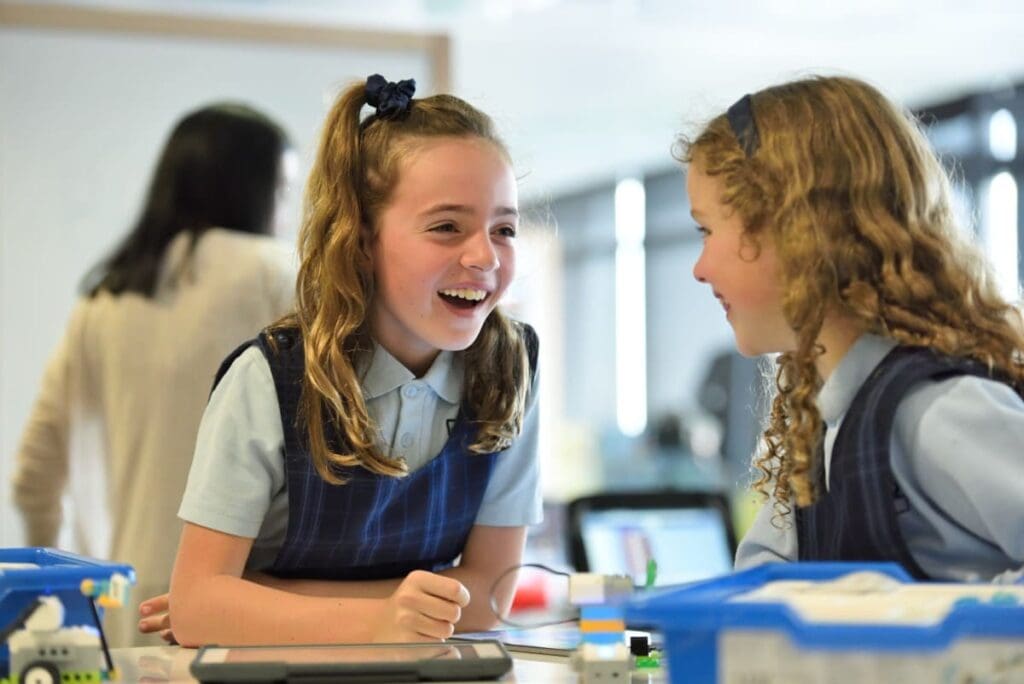
Moreover, kinesthetic learning—learning through touch and movement—is an essential component of interactive teaching methods. Many children with hearing impairments engage better when learning activities involve tactile elements, such as using manipulatives in math or building models in science. By involving their sense of touch and sight, students comprehend abstract concepts better and retain information more effectively.
Incorporating Technology to Support Interactive Learning
The role of technology in interactive learning cannot be overstated, particularly for hearing-impaired students. Assistive technologies such as real-time captioning, speech-to-text applications, and hearing aids paired with Bluetooth devices have enabled students to engage more actively in classroom discussions and group activities.
In addition, educational software designed to support children with disabilities, such as interactive apps that emphasize visual storytelling or gamified learning experiences, help bridge gaps in communication. These tools allow students to control their pace, repeat lessons as needed, and access material that is designed with accessibility in mind.
For example, apps like Seesaw, which allows students to create digital portfolios and share their learning progress through multimedia tools, are widely used in inclusive classrooms to promote personalized learning experiences.
Collaboration and Peer Interaction
Interactive learning strongly emphasizes collaboration and peer interaction, which is vital for hearing-impaired children’s social and emotional development. Group work encourages them to communicate with their peers, problem-solve, and feel a sense of belonging in the classroom. By participating in interactive projects and group tasks, hearing-impaired students are less likely to feel isolated and more likely to develop strong social skills.
Teachers can facilitate communication between hearing-impaired and hearing students by incorporating sign language or gestures into group activities. Educating all students about sign language can also promote inclusivity and empathy, making it easier for hearing-impaired children to interact with their classmates.
Tailored Support from Educators
Interactive learning also enables teachers to personalize education to fit the specific needs of hearing-impaired students. In a traditional classroom, a teacher may have difficulty gauging the comprehension level of a hearing-impaired child during lectures. However, with interactive learning tools like quizzes, hands-on projects, and real-time feedback, teachers can better assess how much a child has understood and make adjustments accordingly.
Teachers trained in special education often use interactive whiteboards, digital learning platforms, and tactile learning materials to ensure that students with hearing impairments are fully engaged. By adapting lessons to be more interactive, educators create a more inclusive learning environment where every child, regardless of their hearing ability, can thrive.
Building Confidence and Independence
One of the most significant benefits of interactive learning for hearing-impaired children is its boost in confidence and independence. When these students are allowed to actively participate in learning—whether through technology, hands-on activities, or collaborative tasks—they are more likely to develop self-confidence. Interactive learning shifts the focus from passively receiving information to actively exploring and understanding it, allowing hearing-impaired children to take ownership of their education.
With tools that allow them to control the pace of their learning, access content in a format that suits them, and receive instant feedback, these students become more autonomous. This independence is crucial in academic settings, their social lives, and future careers.
Conclusion
Interactive learning is reshaping the educational landscape for hearing-impaired children, offering them a vibrant, inclusive, and accessible learning environment. Through visual and kinesthetic teaching methods, technology integration, collaboration with peers, and personalized support from educators, these students are empowered to succeed academically and socially. By fostering a deeper level of engagement and breaking down communication barriers, interactive learning ensures that hearing-impaired children can thrive in and out of the classroom, unlocking their full potential.