
Table of Contents
This is a collaborative post.
Summer evenings should be the best part of the day. You finally sit down outside, drink in hand, and then it happens. The mosquitoes show up, the heat refuses to let go, and within twenty minutes you are back inside with the AC cranked up. If this sounds familiar, you are not alone. Most of us treat our patios and decks as decoration rather than a real living space, simply because they get too hot or too buggy to enjoy after sundown. The good news is that one simple fix can solve both problems at once, and it is probably already on your wish list. Best of all, it does not take a big renovation or a fat budget to get there.
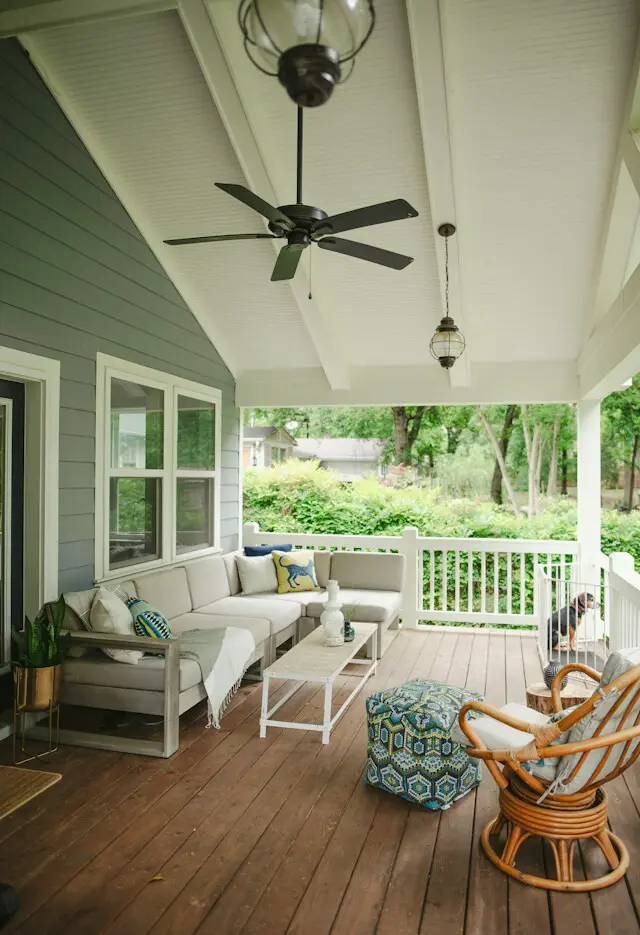
The Simple Power of Moving Air
Let’s talk about airflow first, because it is the root of the whole problem. Still air traps heat close to your skin and gives bugs an easy path straight to you. Moving air changes everything. This is exactly why outdoor ceiling fans help cool down a covered patio or porch so effectively. They pull the hot, sticky air up and away while pushing a steady breeze down where you are actually sitting. Unlike a portable fan you have to drag out and plug in every time, a ceiling-mounted option stays put, runs quietly, and becomes part of the space instead of an afterthought. Once you feel the difference on a humid night, it is hard to imagine going back to sitting still and sweating it out. Many homeowners are surprised to learn that a well-chosen fan can also help candles and outdoor lights burn a bit steadier, since the breeze keeps hot air from pooling right above your head.
The Bill You Didn’t See Coming
There is also a financial side to this that people rarely think about. Many households end up leaning harder on indoor air conditioning simply because their outdoor space is unusable in the heat. Every extra hour spent indoors with the AC running adds up on your bill. If you have ever pulled up a statement and wondered why the number looks higher than it should, you are not imagining things, since it is worth checking whether your home is quietly using too much electricity behind the scenes before assuming a fan or two will fix everything. Small, steady drains like old appliances or poor insulation often hide in plain sight, and fixing those alongside adding outdoor airflow gives you a much bigger win overall. Think of a patio fan as one piece of a larger comfort puzzle rather than a stand-alone gadget.
Picking the Right Spot
Choosing the right spot for a fan matters just as much as choosing the fan itself. A covered porch, a pergola with a solid crossbeam, or a shaded section of deck all work well, since the fan needs something sturdy to mount to and a bit of protection from direct sun and rain. Aim for a blade span that actually matches your seating area rather than picking whatever looks nice in a showroom, because a fan that is too small will barely stir the air past the first chair. Height matters too, since mounting it too high above your head weakens the breeze exactly where you need it most.
The Bug Secret Nobody Mentions
Now here is the part almost nobody talks about, and it happens to be my favorite. A moving fan does not just cool you down. It also makes your patio far less appealing to mosquitoes. These insects are surprisingly weak fliers, and even a gentle, steady breeze is enough to throw off their flight path and scatter the carbon dioxide trail they use to find you in the first place. Health and lifestyle writers have pointed this out for years, and expert advice notes that mosquitoes are weak fliers, which is exactly why a strong fan on your deck works as a low-tech repellent. So instead of lighting citronella candles that barely cover a few feet, or spraying yourself down every single time you step outside, a well-placed fan quietly does double duty in the background.
Small Habits, Big Difference
A few practical habits make the whole setup work even better. Look for a fan rated specifically for outdoor or wet locations so the weather does not shorten its lifespan, and run it on a slightly higher speed right when guests arrive, since that first burst of air discourages mosquitoes from settling in before anyone even notices them. Pair it with simple things like removing standing water nearby, since stagnant puddles are where these pests actually breed, and tidy up any dense shrubs close to your seating area, since mosquitoes tend to rest in shaded, still greenery during the day before venturing out at dusk. None of this requires a full backyard renovation. It just means paying attention to airflow the same way you already think about lighting or seating.
At the end of the day, your outdoor space deserves the same thought you put into any room in your house. A good fan brings comfort, cuts down on unwanted guests of the six-legged variety, and might even ease the pressure on your energy bill by giving you a reason to stay outside longer. Try it for one season, and there is a good chance you will wonder why you waited so long.