
Table of Contents
Most balconies end up as storage. Fact.
A dead plant in one corner. A folded drying rack in the other. A plastic chair that no one has sat in since the day it was purchased. Easily the most wasted square footage in the whole home.
But here’s the thing…
You can make that space function like an actual room. A place to have breakfast, take a phone call, unwind with a drink after work or entertain two friends on a nice night. You just have to approach it as a room rather than an afterthought.
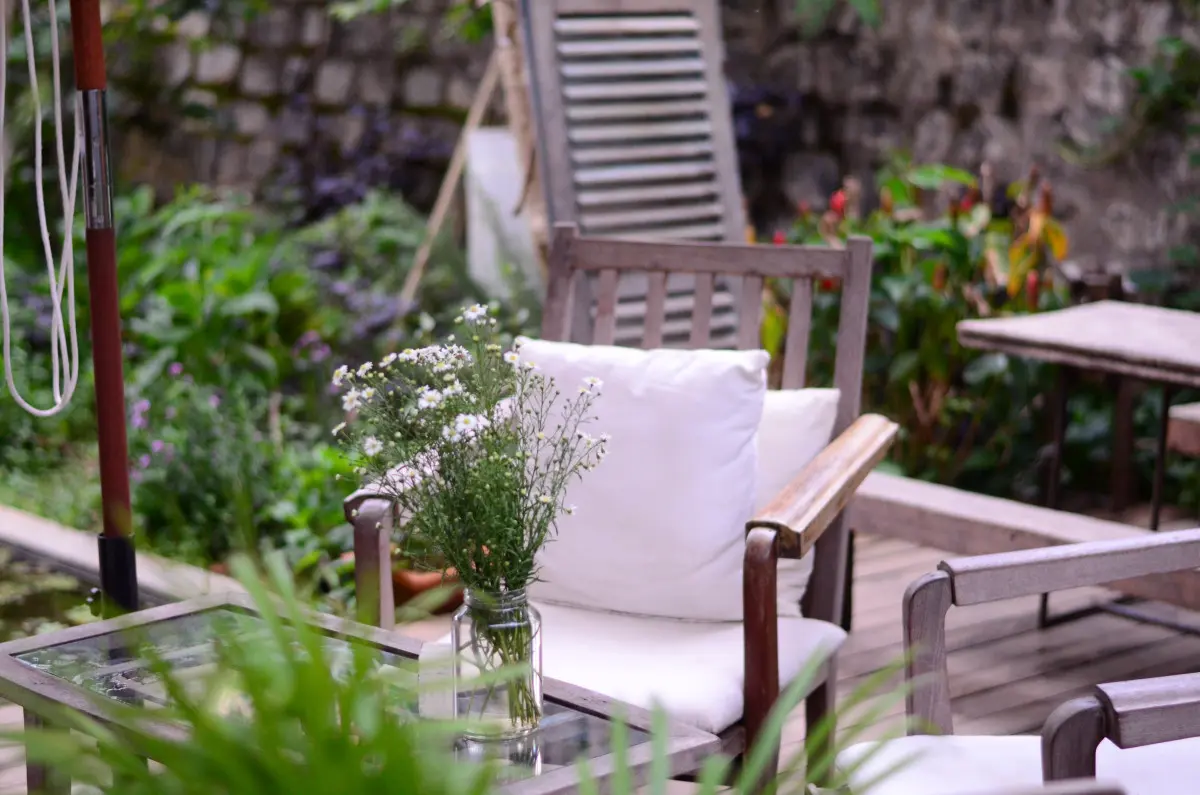
Why Most Balconies Sit Empty
Space itself is rarely the issue. Industry research conducted in the casual furnishings market revealed that 77% underuse their outdoor space, spending far less time out there than they would like to. Over half of those surveyed said they had almost no outdoor furniture or needed to completely replace all of their furniture.
Read that again…
There’s a balcony. There’s no furniture. It’s that one missing piece that leads to so many balconies being neglected for eleven months out of the year with your living room picking up all the slack.
Outdoor furniture is what bridges the gap. That entails weather-rated furniture that has cushions and is built to live outside — think lounge chairs that laugh in the face of the sun, low tables that won’t warp, and cushions that dry in twenty minutes after being dumped on. Oh, and it doesn’t necessarily have to be by the pool to justify its existence. All that stuff that can withstand chlorine, splashing, and brutal afternoon rays will hold up just fine on a fifth-floor terrace without complaint. If you’re starting from scratch, make sure to sit in a few sofas before you spend any money because comfort and seat depth are difficult to determine by pictures. Visit a great patio furniture store in Las Vegas and they will let you test out the cushions, how much it reclines, and the weight of each item. You get the idea. If you nail that element, the rest of the patio will come together.
Then the real work starts.
Plan The Layout Before Buying Anything
The single biggest mistake with small outdoor spaces is shopping first and measuring second.
Measure with a tape measure and record length, width and door swing. Subtract your walkway. All balconies require a walkway of about two feet from the door to the railing. Otherwise your balcony becomes a maze and nobody uses it.
What’s left is the usable footprint. That’s the number that decides everything else.
After that, choose one primary job for that space. Not four. If your balcony is a dining room/gym/home-office/lounge it becomes mediocre at all four. Select the activity that will realistically take place most frequently:
- Morning coffee: one bistro table and two light chairs
- Evening lounging: a deep-seat chair, a footstool and a side table
- Small dinners: a narrow table pushed against the railing with benches
- Working outside: a proper chair with back support and a stable surface
After you pick the job, the shopping list pretty much writes itself. That “keep it simple” mentality at work.
Resist the temptation to push furniture against walls. Even moving a chair four inches away from the wall can make a small terrace feel wider. (That’s how they squeeze more furniture into tiny apartments.)
Choosing Poolside Furniture That Fits A Small Footprint
Outdoor furniture made for the poolside was designed for this very scenario: brutal sun, sweaty cushions, and items that can stand up pretty but don’t require babying. The trick is proportion.
Scale Beats Style Every Time
If it fits in their showroom, it will devour your 5×12 balcony. A patio sofa that appears tiny will… Look for furniture that features:
- Slim arms or armless frames
- Raised legs so floor shows underneath
- Backs no higher than the railing
- Stackable, folding or nesting designs
The eye reads the little terrace as a room instead of a cupboard due to visible floor space. Large frames that sit on the ground confuse the eye.
Materials That Survive The Weather
Powder-coated aluminium is your best bet for balcony railings: It’s lightweight enough to haul indoors, doesn’t rust, and isn’t as easily toppled by high winds as plastic. Teak and all-weather wicker are warm-toned options that just require slightly more maintenance. Solution-dyed acrylic is worth investing in for cushions — it fades less and dries quickly rather than absorbing moisture for two days.
Gravity has more pull than most realize upstairs. Wind-blown furniture should be heavy, or light enough to secure indoors within 10 seconds.
Layering In Shade, Light And Comfort
Furniture alone doesn’t make a room. Layers do.
Shade comes first. An umbrella that clamps on, a roll-down side awning or just a shade sail can transform an otherwise unusable afternoon-glare hotspot into a seat people will actually use. In hot climates it’s the difference between a terrace that gets used twice a summer and one that gets used every day.
Lighting. Warm, low, abundant. Drape string lights across the ceiling line, add a solar lantern to the table, and stick a tiny outdoor-rated floor lamp in the corner. It’ll improve my mood more than another chair ever will. Bonus: most balcony time happens at night, so lighting isn’t just decor — it’s basically the entire reason your outdoor space functions past 7pm.
Then the soft stuff. Place an outdoor rug under your seating area. It instantly lets everyone know this is a “room” and not a “ledge.” Add cushions, a throw for when it cools down, and two or three planters in varying heights to complete the look. Plants soften hard lines and drab concrete better than anything else.
Homeowners are already doing this anyway. When looking at recent trend studies, 38% now include a TV in their outdoor spaces, and 33% want extended living space as their number one reason to renovate outdoors. Outdoor spaces are no longer just gardens. They’re rooms.
Mistakes That Ruin Small Outdoor Spaces
A few things quietly sabotage otherwise good terraces:
- Oversized furniture. The number one killer. Measure, then measure again.
- Indoor furniture used outside. It looks fine for three weeks, then it’s ruined.
- Zero storage. Cushions have to have somewhere dry to go home to, or they never leave your couch.
- Disregarding building policies. Apartment buildings often do not allow grills, drilling into walls, hanging weights from railing. Research beforehand.
- Too many small items. Three good pieces always beat nine cheap ones.
Speaking of value… The value case is strong too. 98% of experts agree that an updated outdoor space can increase home value.
Bringing It All Together
Turn a balcony into a room. Treat it like one: Add architectural intent with a scaled layout, a singular function, long-lasting poolside furniture that fits its proportions and blankets of shadow, brightness and texture.
Begin with a tape measure. Select one purpose for the space. Invest in fewer, higher quality items that are built to withstand sun and rain. Layer in shade followed by light and then comfort.
Transform that and the most neglected square footage in your home becomes the most utilized.