
Table of Contents
For the second winter, I love watching the the birds (mainly brave wood pigeons and crows because of the proximity of our little dog) feeding on the ivy berries. They last all winter! We also have holly and elderberry which they like. So, I thought it would be nice to plant more evergreen shrubs that can offer some extra food for the birds in the cold months.
Can birds find food in winter?
Winter can be a challenging season for all wildlife including birds. With temperatures dropping and natural food sources dwindling, providing sustenance for our feathered friends becomes increasingly important. Whilst offering them bird food all year round is a good idea, you can even make them a yummy Christmas treat made with apple and nut butter, it is even better if the birds can also access to their natural winter diet sources. In the middle of winter, their natural diet of mainly insects and fresh fruits disappear, so they need to find other sources to survive. This scarcity forces birds to work harder, travel farther, and spend more energy searching for fewer calories.
What do birds feed on in winter?
To support our feathered friends during this difficult season, it’s helpful to know what they typically eat. Many birds rely on seeds in bird feeders. So have a few of them around the garden, you can even place them on your balcony if you don’t have a garden. Sunflower seeds, peanuts, and millet are excellent options. Additionally, suet is a fantastic source of fats and energy, ideal for those birds that need extra calories to stay warm. Offering fruit, like apples or berries, can be a treat.
How can your garden provide essential food for birds in winter?
It’s not just feeders that can help; keeping your garden tidy can encourage birds to forage. Having some native plants with seeds or berries can provide the essential nutrition. One way to achieve this is by planting the right shrubs in our gardens or yards.
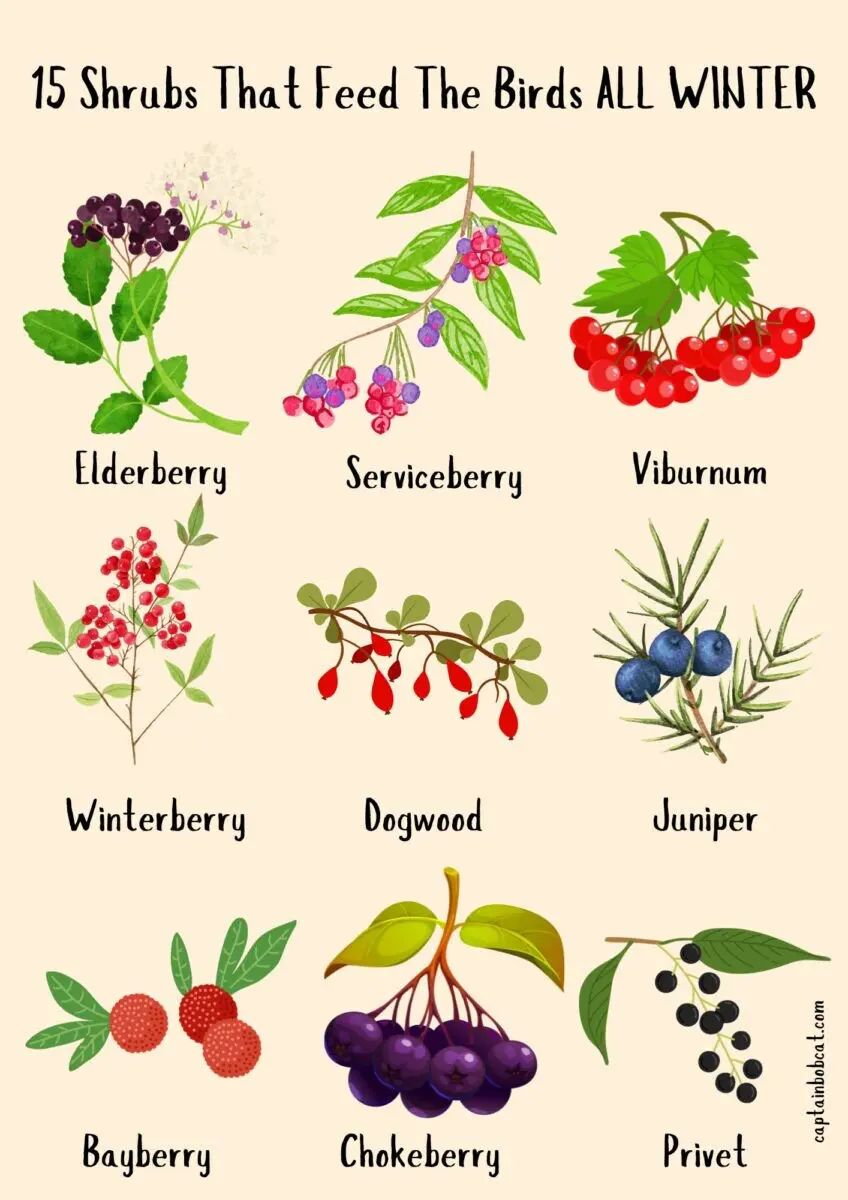
15 Shrubs That Will Feed The Birds in Winter
1. Elderberry (Sambucus canadensis)
Elderberry is a fantastic choice for attracting various bird species. The small, dark berries produced in late summer and autumn last into winter and are a delicacy for many birds, including bluebirds, robins, and cardinals. Beyond providing food, this shrub also offers beautiful white flowers in spring and can grow up to 12 feet tall.
2. Serviceberry (Amelanchier spp.)
Often the first shrub to bloom in the spring, serviceberry is well-loved by birds. Its sweet, edible berries ripen in early summer but persist through early winter, making them a reliable food source. Birds like waxwings and thrushes are particularly fond of these small, sweet berries.
3. Holly (Ilex aquifolium)
A classic winter favorite, European or English (but also American holly!) not only provides a festive foliage with its spiky green leaves and bright red berries but also serves as a food source for various birds during the cold months. Besides, it offers excellent shelter for birds looking to stay warm.
4. Bayberry (Myrica pensylvanica)
Bayberry shrubs produce small, waxy berries that are loved by many songbirds. These berries are typically high in fat, providing essential energy to birds during winter. The shrub also offers aromatic leaves (perfect for picking a few and drying them for cooking!) and is a favorite for wildlife gardens.
5. Dogwood (Cornus spp.)
Dogwoods are lovely shrubs that attract a wide range of wildlife. Their bright red berries in the autumn and winter are consumed by birds such as jays, sparrows, and cardinals. Also, the shrub’s bark and structure provide excellent shelter for nesting birds.
6. Winterberry (Ilex verticillata)
Winterberry is a deciduous holly that is a fantastic source of food for various bird species in winter (it’s in the name!). While it loses its leaves, its bright red berries remain, providing pretty color and sustenance throughout the colder months. Birds such as robins enjoy these berries.
7. Viburnum (Viburnum spp.)
Viburnum shrubs are excellent for attracting wildlife with their clusters of berries. Different species produce berries at various times, but many remain through winter, offering food to birds like thrushes and woodpeckers. Plus, their fragrant flowers attract pollinators in the spring.
8. Spicebush (Lindera benzoin)
Spicebush is an overlooked shrub that offers rich benefits. Its small berries are feast-worthy for various birds, and both the foliage and branches provide excellent cover. Besides attracting birds, it has aromatic leaves that release a pleasant spice fragrance when crushed.
9. Carolina Cherry Laurel (Prunus caroliniana)
This shrub offers small black berries that are particularly appealing to birds in late winter. Its dense foliage not only provides shelter but also serves well as a hedge, making it both functional and attractive in any landscape.
10. Chokeberry (Aronia spp.)
Chokeberries come in various species (the name references its tart and bitter berries. They are edible but are so astringent they may cause choking), each producing berries that persist well into winter. These berries are rich in antioxidants and can be a vital food source for birds. The shrub also contributes lovely white flowers in spring.
11. Juniper
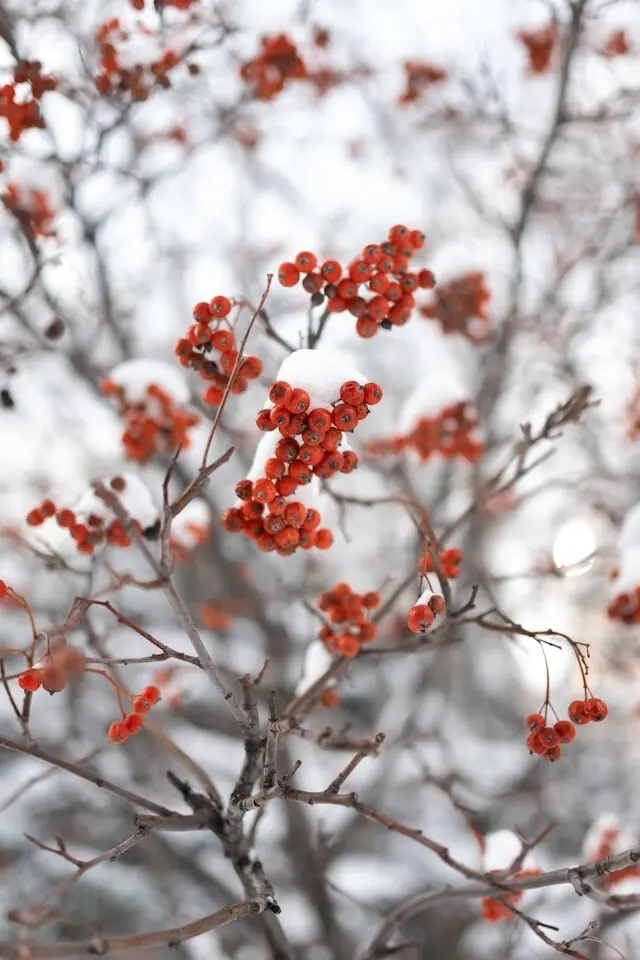
An evergreen with small, navy-black berries, known for its traditional role in gin-making. Juniper has also been valued in traditional medicine for treating a wide range of complaints. The birds love the aromatic berries. Once common in the wild, it is now much rarer due to habitat loss. Which makes it a perfect choice for cottage gardens ad for those planning their garden with local wildlife in mind.
12. Blackcurrant (Ribes nigrum)
Blackcurrants produce dark berries that are a true treasure for many bird species. They are rich in nutrients and flourish in various soil conditions. The flowers attract pollinators, making them a beautiful addition to any garden ecosystem.
13. Snowberry (Symphoricarpos albus)
Snowberry provides small, white berries that are particularly appealing to birds during winter when other food sources are scarce. The shrub’s arching branches and beauty make it a charming landscaping choice that supports local wildlife.
14. Beautyberry (Callicarpa americana)
Beautyberry is known for its striking, little purple berries that adorn the shrub in clusters. These berries provide food for many birds, and the plant’s attractive look (they really are beautiful in my view) makes it a valuable addition to gardens.
15. Privet (Ligustrum spp.)
While privet is often used for hedges, its dark berries can attract various bird species in winter. If you choose a native variety, it can also provide shelter and nesting material. It’s a practical shrub that brings life to your garden.