
Table of Contents
This is a collaborative post.
The best road trips are the ones where the driving itself becomes the activity rather than merely the method. The UK has more of these routes than its size suggests: mountain passes in Scotland and Wales, moorland roads in Yorkshire and Dartmoor, coastal routes that drop from clifftop to harbour and back again, forest tracks through Northumberland and the Kielder. A properly planned road trip in a quality hire car is one of the better ways to spend a week in this country.
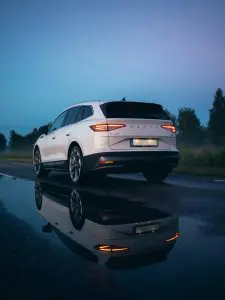
Defining the Adventure Road Trip
The term covers a range of ambitions. At one end, a road trip is a sequence of driving days with accommodation and eating planned as seriously as the route. At the other, it’s an empty week with a map and no fixed itinerary. Both approaches have merit; they require different types of planning.
The structured road trip suits drivers who want to guarantee accommodation, restaurants, and specific destinations within a finite time. It requires booking ahead but delivers the security of knowing where the day ends. The open-ended road trip suits drivers who want to follow a promising sign without obligation, extend the time at a place that turns out to be better than expected, or retreat entirely when a planned route looks less interesting in person than it did on screen.
For either approach, the common requirement is a vehicle that can handle whatever the route delivers: varied surfaces, exposed highland conditions, tight coastal lanes, long motorway sections between different types of country. The hire car chosen determines a great deal about what’s possible.
The Case for Hire on an Adventure Trip
Using a personal vehicle for an extended road trip involves putting significant mileage on a car that you’ll need for everyday use afterwards. Depreciation, service interval advancement, and tyre wear all apply. A hire car absorbs those costs into the hire period, keeping the personal vehicle’s condition intact.
The other advantage is category choice. The car that’s right for a week of Highland driving may not be the car that’s right for daily commuting. A hire vehicle lets you choose the appropriate category for the trip without committing to owning it. For a week that includes a mix of motorway travel, B-road exploration, and potentially some unpaved track access, a well-specified SUV with all-wheel drive is the right vehicle in a way that a compact city car is not.
Great Britain’s Adventure Routes by Region
The UK’s adventure road trip potential organises naturally by region, and each region offers a different character.
Scotland: The Summit of UK Road Trip Ambition
Scotland is the most compelling adventure driving destination in the UK without serious competition. The North Coast 500, starting and finishing in Inverness, covers around 500 miles of the northern Highlands on roads that include some of the most dramatic scenery in Europe. The route through Torridon toward Shieldaig, the road over the Bealach na Bà above Applecross, the approach to Duncansby Head on the far northeast tip of mainland Britain: these are experiences that drivers remember specifically.
The NC500 is increasingly well-known, but the Scottish road network beyond it offers equivalent quality with less traffic. The roads of Ardnamurchan and the Morvern Peninsula, the route from Glencoe toward Ballachulish, the back roads of Galloway in the southwest of Scotland: the country’s driving riches extend well beyond its most famous itinerary.
Wales: A Concentration of Difficulty and Beauty
Wales packs remarkable variety into a compact geography. The Brecon Beacons, Snowdonia, and the Cambrian Mountains offer mountain road driving that rivals Scotland in character if not in scale. The B4391 across the Berwyn Mountains, the B4520 through the Brecon Beacons from Brecon to Builth Wells, the coastal road on the Llyn Peninsula: these routes involve gradients, hairpins, and open exposure that genuine adventure driving requires.
Wales is also under-visited relative to Scotland, which means the roads carry less traffic and the sense of discovery remains intact. The small market towns of mid-Wales, the fishing villages of the Ceredigion coast, and the castle landscapes of the north combine with road access that rewards the driver who has gone looking.
England: The Overlooked Chapters
England’s adventure road trip potential is concentrated in the north and south of the country. In the north, the high Pennine routes through the North York Moors, the Yorkshire Dales, and the North Pennines provide some of England’s most demanding and rewarding driving. The A686 over Hartside, the road down Arkengarthdale from the A66 toward Richmond, the B6270 along the full length of Swaledale: these are not tourist routes. They’re the roads that drivers who know England find and return to.
In the south, the New Forest, Dartmoor, and the lesser-known roads of Exmoor provide a different scale of adventure. Narrower, more intimate, and interrupted by livestock with the right of way, these are roads that demand attention and reward patience.
Choosing the Vehicle for Adventure Hire
The vehicle matters significantly for an adventure route. The checklist for an adventure hire vehicle includes: sufficient ground clearance for road surfaces that deteriorate in rural and highland areas; all-wheel drive for exposed highland roads in autumn and winter; sufficient luggage space for a week’s gear including walking boots, waterproofs, and camping equipment if relevant; and the in-car technology, navigation, tyre pressure monitoring, and blind-spot assistance, that reduces the cognitive load of driving on unfamiliar roads.
Autofusion Hire offers vehicles across the categories that adventure road trips require, including premium SUVs with the capability to justify their specification on the kind of roads where it matters. The fleet is maintained to manufacturer standards, which provides the reliability assurance that matters on a remote highland road significantly more than on a motorway between cities.
The brand section of the booking process is worth understanding before departure. Confirm the breakdown assistance coverage and procedure, understand what happens if the vehicle sustains minor damage on a rural road, and know the contact number for out-of-hours support before you need it in an area without guaranteed phone coverage.
Emergency Preparedness on Remote Routes
Remote road trips require a level of preparation that shorter or more urban driving doesn’t. Carrying a printed emergency contact list in the vehicle, knowing the procedure for roadside breakdown assistance with the hire company, and informing someone of your planned route before setting off into genuinely remote areas are all straightforward steps with disproportionate value if something goes wrong.
Phone coverage across parts of the Scottish Highlands, mid-Wales, and the North Pennines is inconsistent. Identifying the locations of the nearest hospitals and emergency services relative to your planned route takes a few minutes in the planning stage and matters considerably if the information is needed quickly.
Navigation and Mapping
GOV.UK provides guidance on driving in areas with limited phone signal, recommending that drivers download maps for offline use before entering areas of intermittent connectivity. For adventure road trips in Scotland, Wales, and the more remote parts of northern England, this is not optional advice. The OS Maps app with downloaded tile sets for the relevant areas provides the most comprehensive coverage, including rights of way and paths that Google Maps doesn’t show.
Paper OS maps remain valuable backup for the areas where even downloaded maps behave unexpectedly. The 1:25,000 Landranger series covers the UK comprehensively; carrying the relevant sheets for your planned area is the preparation that experienced road trippers take seriously.
Building the Itinerary
The most satisfying adventure road trip itineraries build in flexibility rather than optimising for efficiency. A rough plan that covers the destinations and routes of interest, without a fixed arrival time at each, allows the trip to respond to what it finds. The waterfall that wasn’t on the map. The cafe in the village that was too good to leave. The light on the loch that made a viewpoint worth stopping for twenty minutes.
The hire car’s daily cost is fixed whether it covers two hundred miles or fifty. Using that freedom to slow down when the route rewards it is one of the advantages of a hire trip over the kind of tour that tries to tick destinations rather than experience them.
Returning with Something
The best road trips return with more than photographs. The understanding of a landscape that comes from driving through it attentively, the knowledge of which roads are better than they look on paper and which routes to avoid, the names of places that deserve another visit: these accumulate across a week’s driving in a way they don’t across a week of any other kind of travel. The UK’s road network, underestimated by most who haven’t explored it properly, has more to give than a single trip can take.